2026 Entertainment Services Advertising Outlook

How entertainment marketers are reallocating spend, embracing AI, and closing the orchestration gap
STREAMING & CREATORS DRIVE ENTERTAINMENT SPEND
CTV, social, and creator ecosystems lead budget growth in 2026
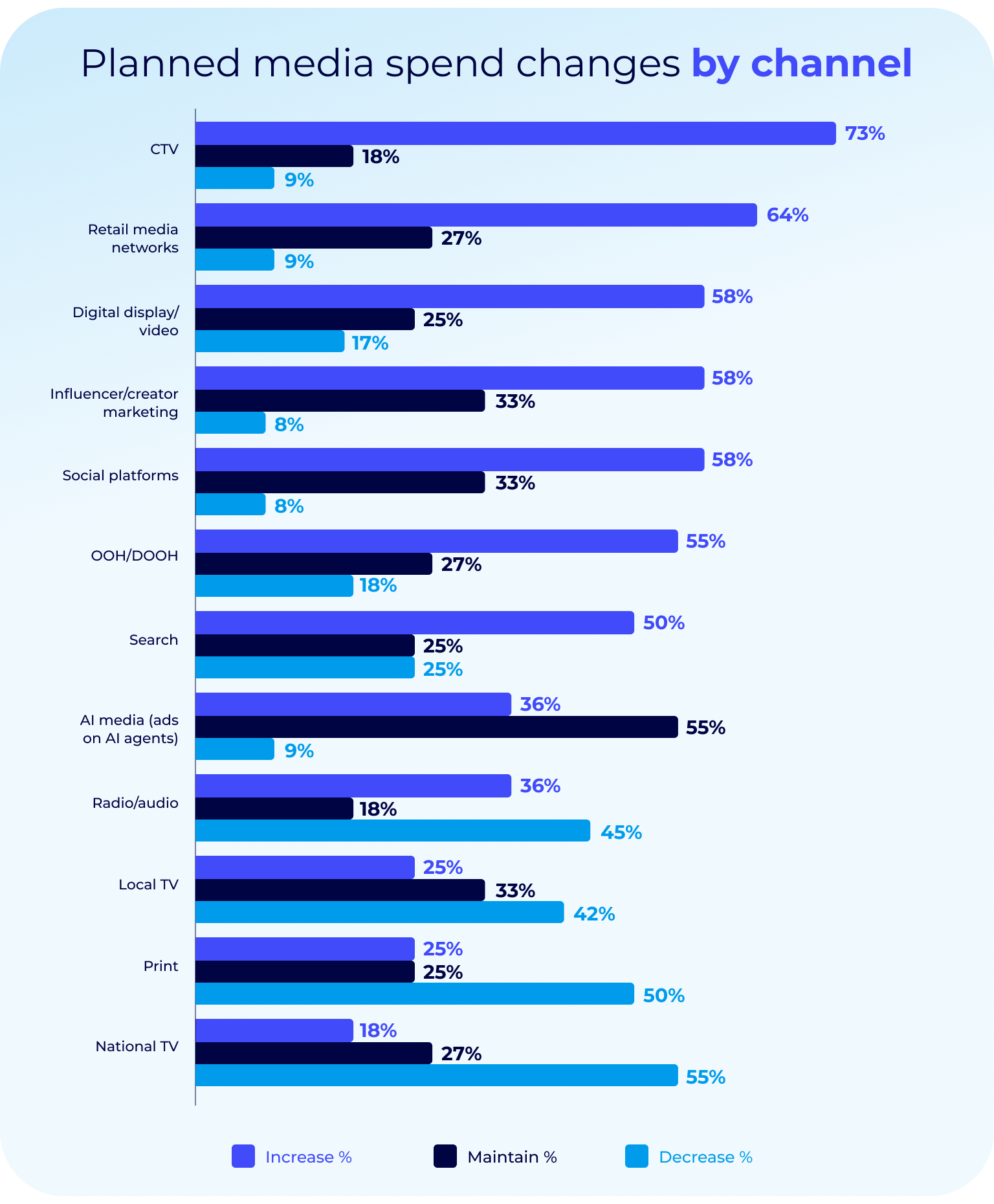
Entertainment marketers are prioritizing platforms where audiences actively discover and consume content, led by CTV (73% increase). Growth across social platforms, influencer marketing, retail media, and digital video (58% each) shows a clear focus on performance-driven audience engagement, while investment continues to shift away from traditional TV, print, and radio.
CTV & GAMING SHAPE ENTERTAINMENT CONSUMER BEHAVIOR
Streaming, gaming, and social video dominate consumer attention
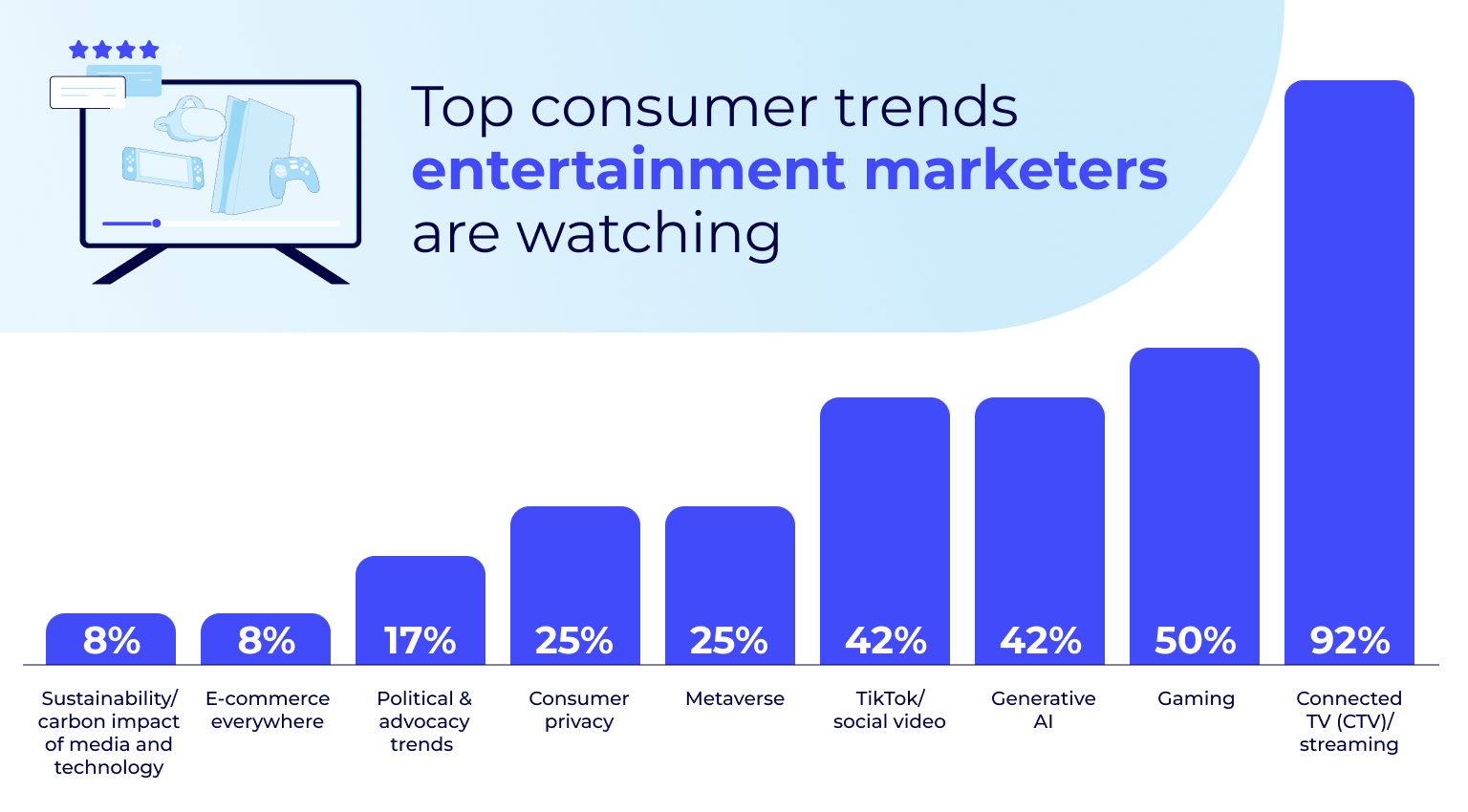
For entertainment marketers, CTV and streaming (92%) remain the most important consumer trend, reflecting ongoing shifts toward on-demand viewing. The growth in gaming (50%), alongside social video and Gen AI (42% each), highlights how entertainment discovery increasingly happens across interactive and algorithm-driven environments.
MEASUREMENT TAKES CENTER STAGE
Marketers prioritize proving performance across channels
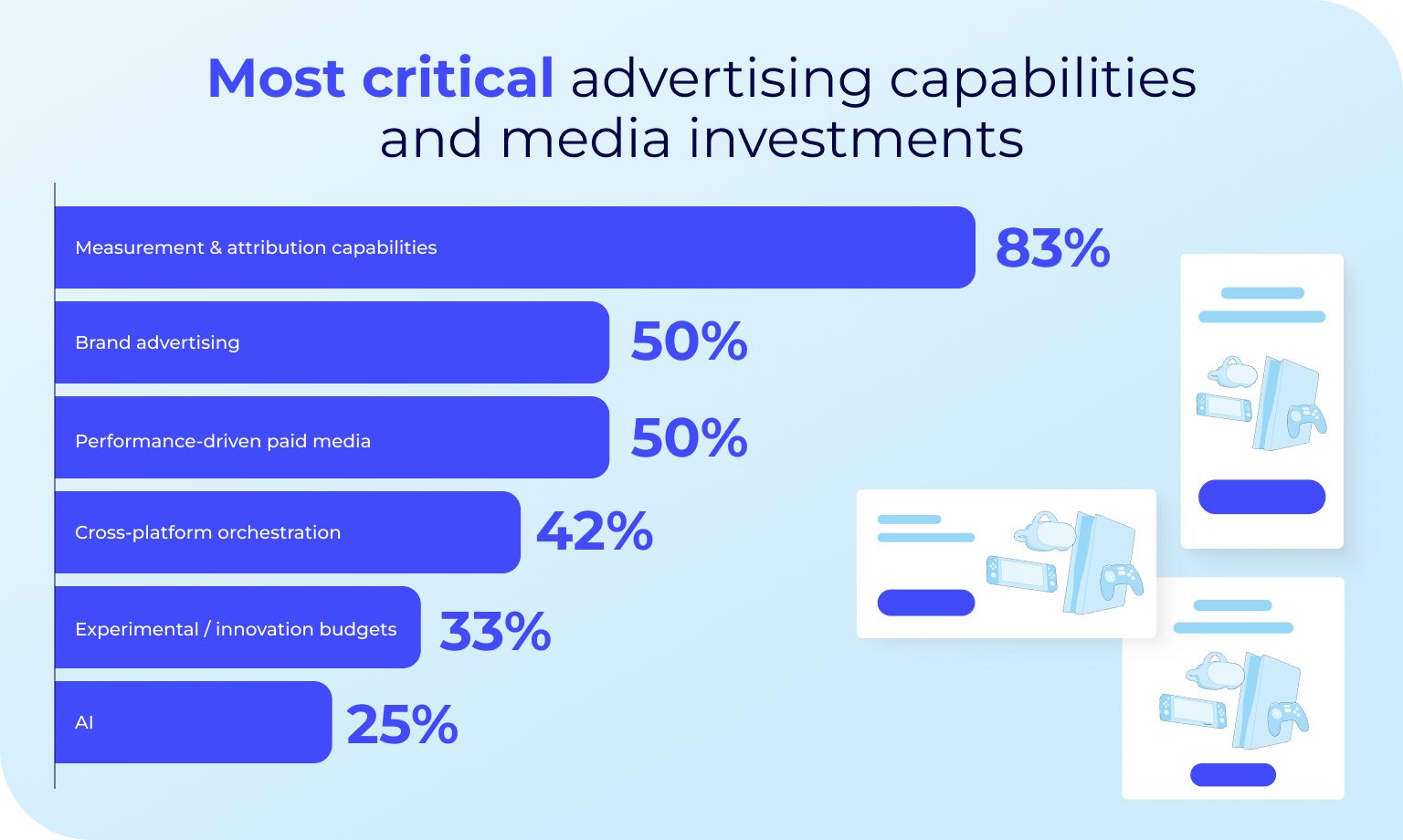
Entertainment marketers are prioritizing measurement and attribution (83%) above all else to better prove performance across today’s expanding media mix. Brand and performance investments remain equally important, with greater focus on orchestration (42%) and innovation budgets (33%) helping teams connect engagement across channels while continuing to test new formats.
AI SUPPORTS CREATIVE & CAMPAIGN PERFORMANCE
Optimization and creative production lead AI use cases
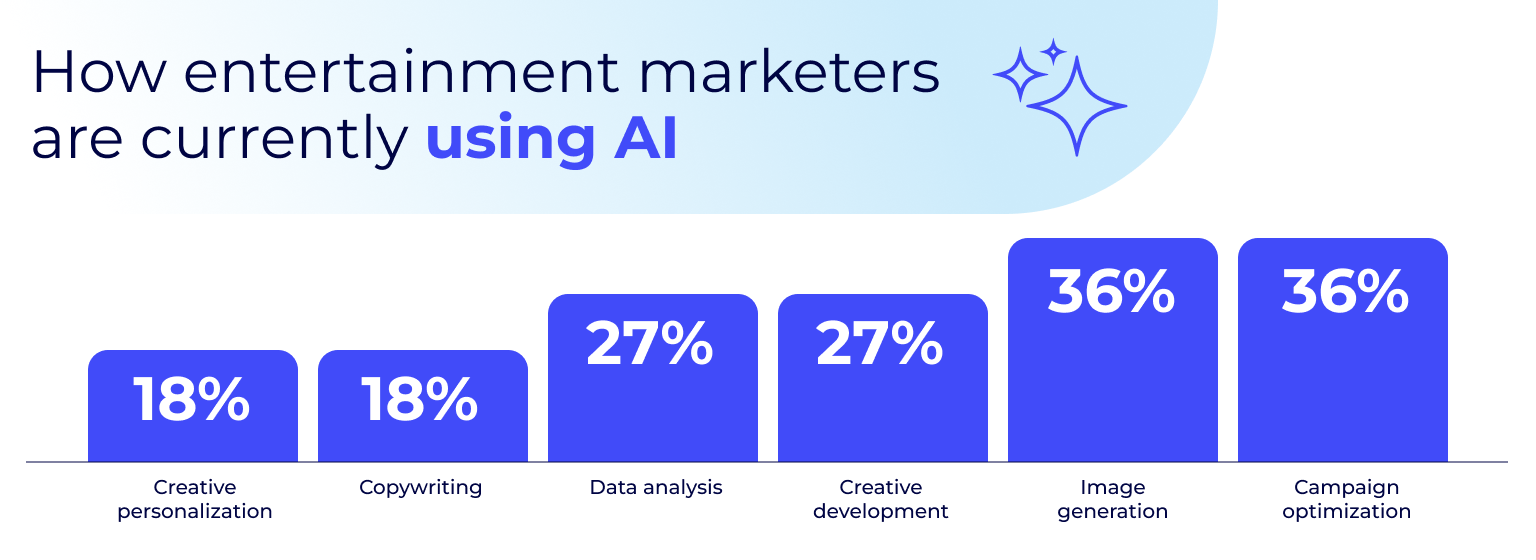
Entertainment marketers are applying AI where it accelerates production and improves performance. Campaign optimization and image generation (36% each) lead current adoption, followed by creative development and data analysis (27% each). AI is increasingly helping teams move faster while supporting growing content and campaign demands across platforms.
SYSTEM & DATA CHALLENGES LIMIT AI SCALING
Integration and data challenges slow broader adoption
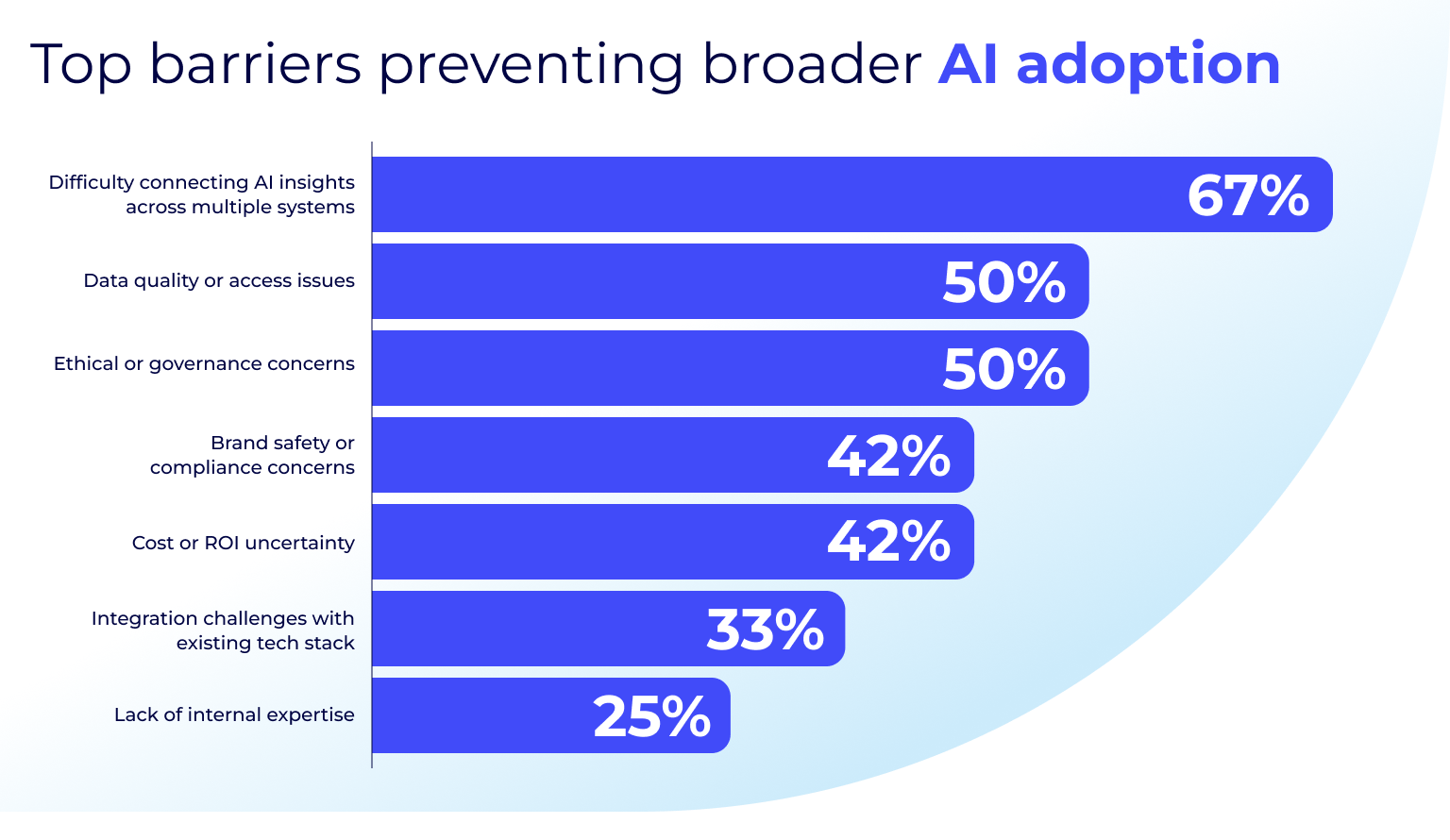
Despite strong interest in AI, entertainment marketers struggle to scale adoption due to difficulty connecting AI insights across systems (67%) as well as data quality challenges (50%). Governance, compliance, and ROI concerns further complicate deployment, underscoring the need for stronger interoperability across the tech stack.
FRAGMENTATION REMAINS THE INDUSTRY’S BIGGEST HURDLE
Managing audiences and performance across platforms grows harder
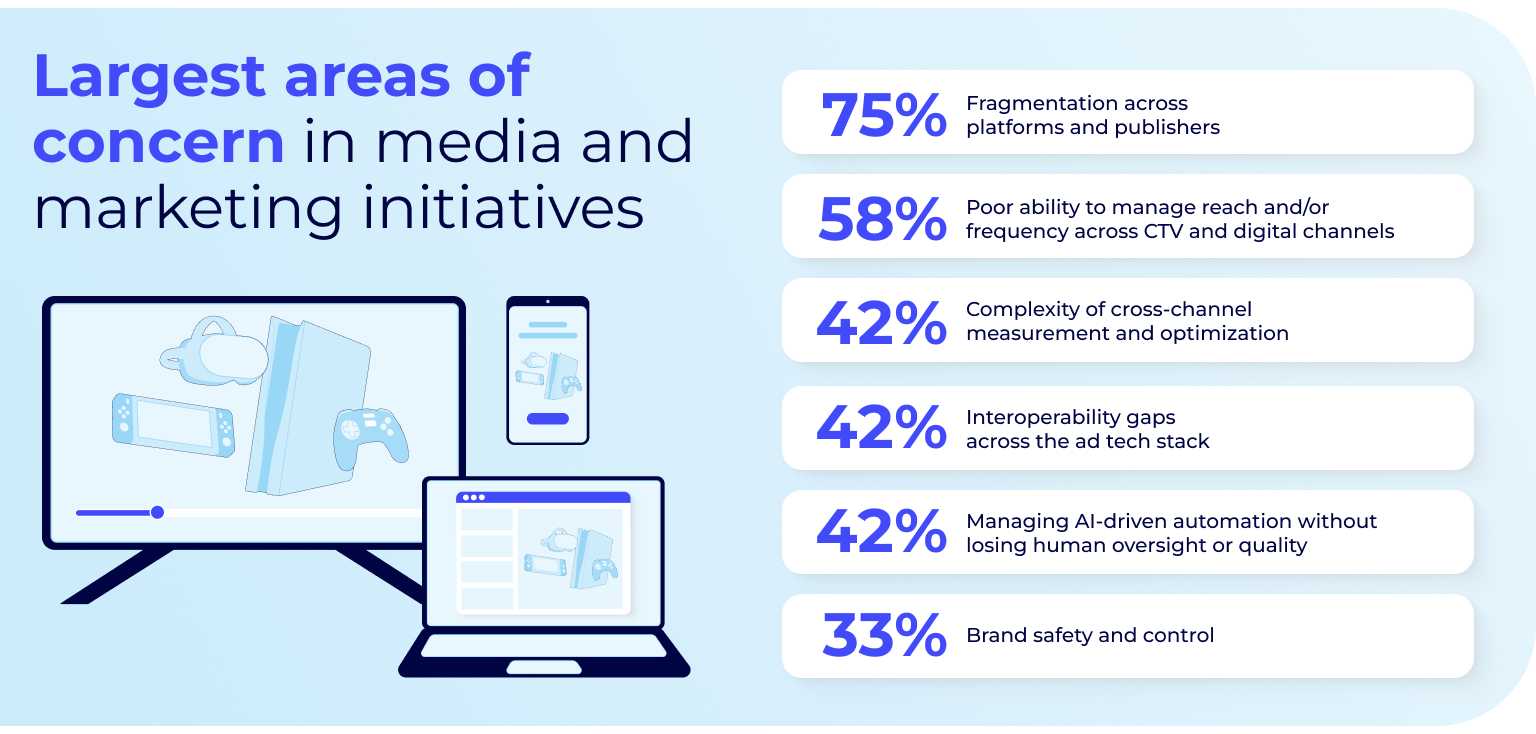
Entertainment marketers cite platform fragmentation (75%) as their top challenge, alongside difficulty managing reach and frequency across CTV and digital channels (58%). Measurement complexity, tech stack gaps, and balancing AI automation with human oversight (42% each) continue to pressure teams trying to deliver consistent audience experiences.
ORCHESTRATION IS CRITICAL—BUT CONFIDENCE IS LOW
Unified execution across systems is critical for entertainment marketers
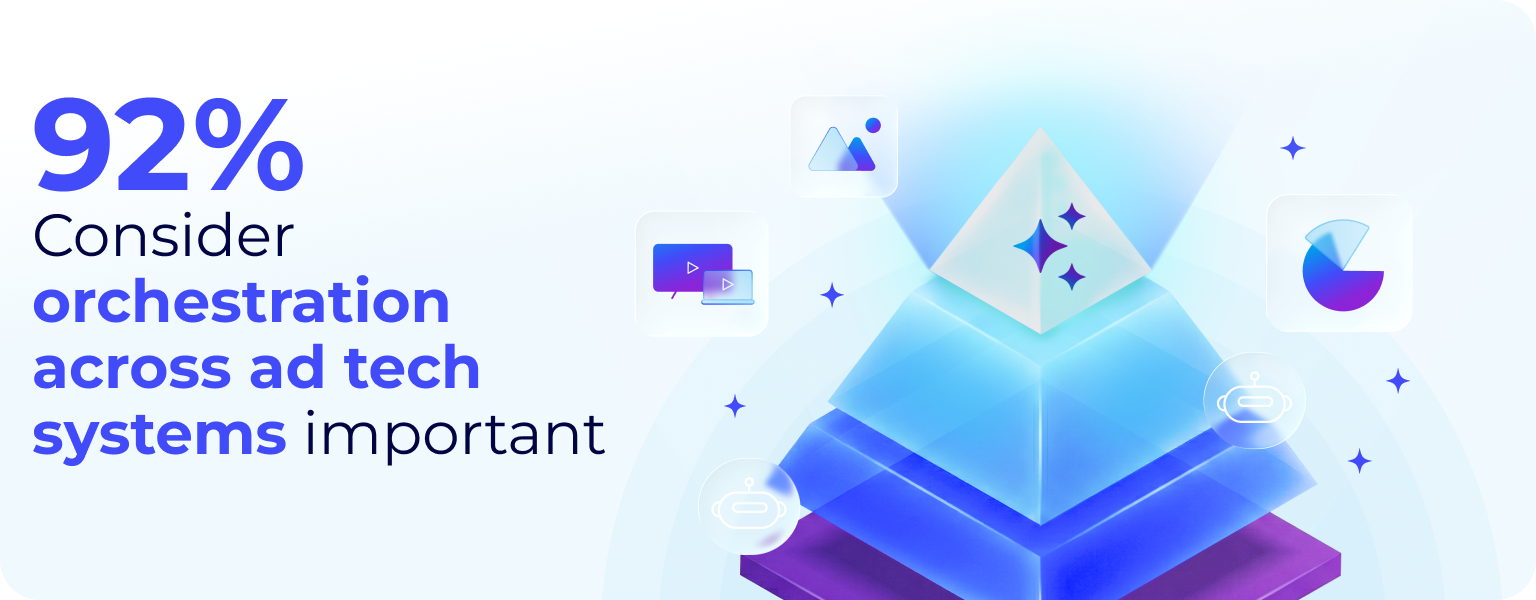
While 92% say orchestration is important, most entertainment marketers lack the systems to share data, coordinate decisions, and unify workflows. Closing this orchestration gap will be essential to improving efficiency, measurement, and consumer experience in 2026.
The Entertainment Takeaway
Entertainment marketing in 2026 is defined by streaming growth, creator ecosystems, and rising measurement demand. Success will depend not just on adopting new channels or tools, but on orchestrating them into connected systems that can manage scale, performance, and trust across the media ecosystem and consumer journey.
For more insights across all verticals, download Mediaocean’s 2026 Advertising Outlook Report.