Creative x Tech Featuring Raj Muhar
Listen now
Click to listen on:



Read the transcript
Dan Mouradian: Welcome, Raj. It's been a long time since we've seen each other. Thank you so much for joining me. When I started researching this podcast and thinking about the conversations we wanted to have, I immediately thought of you.
We worked together at Innovid, where you led our measurement product for a time. After leaving Innovid, you went on to lead creative AI at Amazon. That progression struck me as fascinating: moving from measurement and analytics, including reach, frequency, attribution, and creative performance, into generative AI.
Tell me about that experience and the perspective you brought from a product background to a company as large as Amazon, particularly in a space as exciting as creative AI.
Raj Muhar: First of all, thank you so much for having me. It's great to see you again. It feels like a blast from the past.
I've always been interested in the intersection of creativity and technology. When I was a student at UC Berkeley, the big thing was big data, which involved a lot of the machine learning and AI techniques we talk about today. Part of me wanted to do something technical in a creative field so I could use both sides of my brain.
Nielsen, a research and data company, had a leadership program that brought me to New York. I was born and raised in California and went to Cal, so moving to New York was completely new to me. A lot of my friends were working in tech in the Bay Area and asked, "Why are you doing this? What is big data? Why New York?" It was a leap of faith, but following that interest ultimately led me down the path toward AI. In hindsight, it all makes sense.
At Nielsen, I learned how to source raw data, build data pipelines, and apply machine learning techniques and attribution algorithms, whether deterministic or probabilistic. More importantly, I learned how to turn those techniques into products that helped advertisers, agencies, and publishers make major investment decisions about reaching the right audiences.
We worked with traditional publishers, including major television networks, as well as newer digital platforms like YouTube, Snapchat, and Meta. The question was how to quantify audience behavior in a changing world of mobile and digital media, rather than relying on subjective assumptions. I even spent a year working on-site at Facebook, co-developing a data product, before returning to New York.
Over time, it became clear that streaming was the future. I wanted to work somewhere fast-moving that had a real data advantage, and Innovid came calling. As a CTV ad server, Innovid had a treasure trove of data and served as a source of truth. I joined as the first measurement and data product person, working with a small, scrappy engineering team. I remember someone, possibly Guy, calling us a startup within a startup.
We worked closely with customers to co-create products. Some of our earliest prototypes were Excel spreadsheets. From there, we built our first measurement product and eventually a broader portfolio. Innovid went public and acquired TVSquared, expanding that investment in measurement. Being part of the team defining the strategy from the beginning was incredibly exciting.
One thing that doesn't get talked about enough is how much machine learning and AI work we were already doing behind the scenes. Household graph modeling, optimization, recommendations, and reach curves all relied on those techniques. We weren't necessarily telling customers, or even leadership, "This is AI." We focused on what we were building for customers and how to help them use streaming data and new metrics to make better decisions.
Dan Mouradian: That's interesting because we were using AI early on, but it wasn't part of the narrative. We were solving customer problems, and AI was a means to an end. The market's understanding of AI has changed dramatically since then.
After Innovid, you moved into creative technology. Tell me about that transition from measurement, insights, and analytics into creative.
Raj Muhar: Creative measurement was becoming an increasingly important part of our work before I left Innovid. When Amazon recruited me, I was excited by the opportunity to operate at a much larger scale. I was hired to develop a platform that brought together first-party and third-party measurement, including work supporting Thursday Night Football on Prime Video.
Dan Mouradian: Just a small, billion-dollar-a-year investment. Casual.
Raj Muhar: Exactly. One thing led to another. Because I had a machine learning and AI background, I was approached when generative AI was just starting to emerge internally. Someone asked, "Don't you have AI experience? Why don't you help build for this next wave?"
I became the first product person on the generative AI team. We had a small team of scientists and didn't even have engineers at the beginning. You can probably see a pattern in my career. This was around 2022 and 2023, so it was very early.
Initially, our scientists were building creative models that appeared at the end of an existing campaign creation workflow. I felt that approach undersold what the technology could do, so I advocated for a separate, complete experience. That became AI Creative Studio: a dedicated product that brought our models together and helped advertisers and agencies create content.
We started with smaller advertisers, expanded into the mid-market, and eventually worked with enterprise customers. The goal was to democratize content creation by giving advertisers access to Amazon's category and audience insights through an AI creative partner.
Instead of requiring someone to understand Amazon's internal workflows, they could use natural language to explain their product, audience, and objectives. They could ask for ideas, brainstorm directions, and iterate with the system. That's how it started.
Dan Mouradian: You covered about two years of progress in one sentence when you went from generative creative to agentic creative.
Raj Muhar: I did!
Dan Mouradian: When I think about the early days of AI in creative, I feel like I'm aging myself, even though we're only talking about 2023. It feels like 30 years ago.
We've gone from describing something to a language model and getting text back, to text-to-image, text-to-video, and image-to-video. Now the possibilities seem almost limitless. And the models are only going to improve.
I often use an art-history metaphor to describe generative and agentic AI. I grew up in South Florida and moved to New York to study at Parsons. One of my professors gave us a weekly assignment to buy a book about an artist. She'd give us prompts like, "Find an artist you've never heard of," or "Find an artist you think you'll hate."
By the end of the year, we had libraries of references. Our professor told us to look at the photographs of artists' studios in the back of the books. Picasso's work seemed to appear in studio after studio. The point was that artists absorb influences from the world around them and create something new from those inputs.
That's how I think about language models and their source data. Creativity doesn't happen in a vacuum. Whether you're talking about Picasso, Miles Davis, or someone working today, collaboration and exposure to different perspectives help generate new ideas.
As someone who's built generative and agentic creative products, how do you think about collaboration? How have the products you've built incorporated it?
Raj Muhar: That's a great question. The first generation of agentic products focused on collaboration between one person and an AI agent. You gave it your data, your brand information, and your inputs, then iterated with it. Now we've expanded to multiple agents, different systems, and different providers.
What's still missing, though, is the back-and-forth collaboration between actual people. The best ideas often emerge when people from different disciplines, backgrounds, and experiences work together.
Someone might create something amazing with AI, but then they still need to bring it to the marketing team, operations team, legal team, or compliance team. That collaboration often happens somewhere else, outside the AI experience. Yet it's essential for developing ideas that resonate with different audiences and stand out from the growing amount of generic AI-generated content.
I think human collaboration will only become more important.
Dan Mouradian: So, if I can paraphrase, an artist may create something because they're personally driven to create. They can draw inspiration from anywhere and ultimately answer to themselves.
A creative professional has a different responsibility. There's art involved, but there are also lawyers, account teams, strategists, media planners, and other stakeholders contributing to the final work. The creative professional has to take those inputs and produce something that meets the brief while making an impact on consumers.
We often hear that data quality is critical to AI: bad inputs lead to bad outputs. You mentioned the flood of AI-generated content that all starts to look the same. How can those workflows actually hinder creativity? And what might better collaboration between AI systems and humans look like?
Raj Muhar: Especially early on, people expected AI to do everything for them. They would try ChatGPT, fail to get the answer they wanted, and conclude that the technology didn't work.
Dan Mouradian: Or it would give them a recipe or something completely random.
Raj Muhar: Exactly. There were a lot of hallucinations in those early days. Prompting was also incredibly important. People felt they needed the perfect prompt to get a useful answer, and at Amazon we spent a lot of time thinking about how to lower that barrier.
Dan Mouradian: That brings me back to creative effectiveness and measurement. You worked with big data at Nielsen and Innovid, and creative measurement was becoming a major focus.
When we evaluate an ad, we might be able to say that it performed well. The next question is always, "Why did it perform well?" Creative metadata can tell us certain things, but the creative itself is what drives the response.
I've said many times that media targeting puts an empty box in front of the right pair of eyes, hopefully at the right moment. If the creative is wrong, great targeting won't save it. If the creative is powerful enough, it may even overcome imperfect targeting.
Why is evaluating creative such a difficult bottleneck? How do we set standards for good creative when the underlying judgments can be so subjective, even as data becomes increasingly important to AI development?
Raj Muhar: I love this conversation. Evaluation is underrated across AI, and it's particularly difficult in creative because so much of it is subjective. You can measure individual attributes, such as visual characteristics, but that's not the whole picture.
When we were building AI Creative Studio, our team got into philosophical debates about what creativity actually is and how to measure it. How do you quantify novelty or emotional resonance?
We tried evaluating qualities like visual appeal and novelty, but something can be visually striking and completely irrelevant to the brand, product, or audience. Emotional resonance is even harder to measure because it depends on culture, timing, context, and the individual.
Here's a personal example: I recently went to a Hilary Duff concert. I've bought practically everything she's ever released. I have the CDs, the merchandise, and even a Lizzie McGuire board game.
Dan Mouradian: You own that?
Raj Muhar: I do! As a kid, I made my entire family play it. Imagine my grandfather sitting there while I insisted that he play this Lizzie McGuire game with me.
Hilary Duff has tapped into a sense of nostalgia for a lot of millennials. If she's associated with a new product or experience, I'm immediately interested. That's an emotional connection that's incredibly hard to measure.
Before we launched the creative product, we also faced the challenge of evaluating models without much real-world performance data. Once a product is in market, you can run A/B tests and online experiments, measure results, and use those learnings to improve the models.
The technology has also improved at understanding intent, including the advertiser's objectives, product category, and brand. That helps narrow the problem, but it doesn't eliminate the need for evaluation.
I personally created some of our first "golden datasets," examples of what I believed good creative looked like. Then I worked with creative experts and designers to refine those examples. We developed benchmarks specific to our models, customers, and creative use cases, rather than relying only on broad model-provider benchmarks.
Those datasets supported faster, more automated evaluation cycles. We also explored techniques such as using language models as judges and running automated validation checks. But creative is different from something like coding, where the output may be easier to classify as correct or incorrect. You still need humans in the loop.
Ultimately, brands and their teams must decide what works for their audiences. Data can inform that judgment, but the brand is accountable for what it puts into the world. AI can't take that accountability away.
Dan Mouradian: That makes me think about the Mona Lisa. If you're fortunate enough to visit the Louvre, the room is packed with people who have seen reproductions of that painting countless times. They gravitate toward it, and then they often say, "It's smaller than I expected." Meanwhile, they've walked past other extraordinary works without stopping.
I'm intrigued by what you said about golden datasets. Before a human makes the final decision about whether a creative asset should run, what are some of the qualities you look for? What makes creative good in a way that you can begin to evaluate?
Raj Muhar: There's a difference between what resonates with someone personally, what's culturally significant, and what works for a specific brand's audience and objectives.
Think about the Budweiser Super Bowl commercials with puppies and horses. They tap into recognizable human themes: love, friendship, family, loss, and nostalgia. Those emotional qualities were among the things we tried to represent in our golden datasets. We looked at the emotions brands wanted to evoke and the creative elements associated with them.
It's still an art, and there was a lot of debate and iteration. Agents have become much better at helping people explore these questions, but brands still have to make the decisions. You also need people who understand current culture and trends. AI alone can't determine whether a particular reference will resonate with an audience.
Dan Mouradian: You recently spoke at Cornell about how society has placed so much emphasis on STEM and whether we need to shift some attention back toward the humanities. I've written about something similar: why creative professionals remain important in an AI-driven world, particularly because of the judgment they bring to evaluating whether work resonates.
I'd love to hear more about your perspective on that and its relationship to creativity.
Raj Muhar: Critical thinking is one of the most important skills we need, not just in creative industries but as people more broadly. Empathy and exposure to different perspectives are part of that. They help us develop interesting creative ideas and new inventions.
People who think differently can challenge assumptions and push ideas in unexpected directions. We need more of that.
Not every leader in AI comes from a purely technical research background. Some have studied philosophy, English, and other humanities disciplines. Those backgrounds can develop different forms of critical thinking.
I think we should teach those skills early. How do you evaluate something you see online? How do you think critically about a piece of art or a claim? We talk a lot about AI literacy and media literacy, but these are fundamental life skills.
Even after spending years in an industry, you can get stuck in a particular way of thinking. Sometimes you need to return to first principles, reconsider the problem, and talk to people who approach it differently.
Dan Mouradian: Exactly. Exposure to other ideas matters in debate, philosophy, and disciplines that may have nothing directly to do with technology.
Raj Muhar: And as AI makes it easier to write code and build products, human skills become even more valuable. You still need the judgment to decide what to build, the vision to guide it, and the relationships to form a team, earn trust, and sell an idea. Those skills matter more than ever. I'm glad people are paying attention to them.
Dan Mouradian: I'm cautious about asking a prediction question because the pace of change makes it risky to look too far ahead. I won't even ask about next year. What do you think we'll see in the next three to six months?
Raj Muhar: I've started to dislike prediction questions for the same reason! But one thing I'm seeing is that people are using so many different AI tools and systems that managing them is becoming difficult. New models, agent frameworks, and ways of working appear constantly.
We need better ways to collaborate across them and integrate them into everyday workflows. In a professional setting, that means having a framework for evaluating models, understanding governance, and deciding when a new tool is actually worth adopting.
The coordination required across models, routers, and other systems is becoming more complex, so I expect a lot of innovation in that space. At the same time, open models are getting more capable and less expensive, which should make personal AI more accessible.
I think agents will become a normal part of how teams work much sooner than people expect.
Dan Mouradian: Almost like an operating system for your team. I think we can write that prediction down.
Raj Muhar: You might be surprised how many people still don't use agents.
Dan Mouradian: I'm not surprised. I see it with customers, too. There's interest because people recognize the potential for more efficient workflows, but connecting systems through agent-to-agent protocols or MCP servers introduces a knowledge gap.
We're still in the early-adopter stage of agentic AI, especially in advertising technology. My kids and my mom know what ChatGPT is. They have no idea what an agent is, let alone an agent framework.
Back in 2023, generative AI tools went from text-based exchanges to image, video, and audio generation remarkably quickly. I remember early text-to-image tools running through Discord. You'd enter a prompt and get something with four eyes and twelve fingers. The output wasn't always usable, but it was fascinating.
Then the models became multimodal. What's the next evolution of multimodal AI?
Raj Muhar: That's a great question. In 2023, we were focused on foundation models. But a creative partner obviously needs to work with images, video, audio, and text. At Amazon, we moved toward building a more complete system with the orchestration and tools needed to call different models at the right time for different tasks.
That was a difficult problem, and we've made a lot of progress on it. I think the next frontier is richer real-world context. People are talking about physical AI and robotics, but ambient, contextual intelligence matters for software agents, too.
If you want to interact with an agent naturally through voice or in a visual workspace, it needs a deeper understanding of its environment and the context of what you're doing. We're moving toward more sophisticated multimodal reasoning and spatial awareness.
The other major opportunity is collaborative infrastructure: not just you working with your AI agent, but multiple people and their agents working together in a shared environment. For AI to function as a true teammate, you need governance, provenance, identity, trust, and permissions built into that interaction.
We also need to rethink how organizations are structured so humans and agents can work together. Humans bring judgment, creativity, accountability, and relationships. Agents bring the ability to execute complex tasks. Combining those strengths could fundamentally change how we work.
Dan Mouradian: Is art imitating life, or is life imitating art? We see movies like Her, where someone has a natural conversation with technology while moving through their day. They're not issuing rigid commands to a device. Is that the future we're moving toward?
Raj Muhar: I think people building these tools absolutely draw inspiration from fiction. But we should also be intentional about the future we're creating.
The collaboration tools we built in the 2010s were useful for the technology available at the time. Now we have an opportunity to solve some of those problems in fundamentally better ways instead of continually adding tools and workarounds.
Work could become much more seamless. You might start your day with a conversation, quickly develop a campaign brief, conduct research, apply your own judgment, and collaborate with your team without moving through so many disconnected systems.
Personally, I'd love to spend less time writing documents and emails and more time having conversations like this one about creativity and AI.
Dan Mouradian: I think that's a future we can all get behind. Less work!
Raj Muhar: Less documentation!
Dan Mouradian: Less notifications and fewer documents. Raj, thank you again for joining us. I really appreciate your time. It was great seeing you again, and good luck with everything you're working on.
Raj Muhar: It was great to see you, too. Thanks for having me.
Related resources
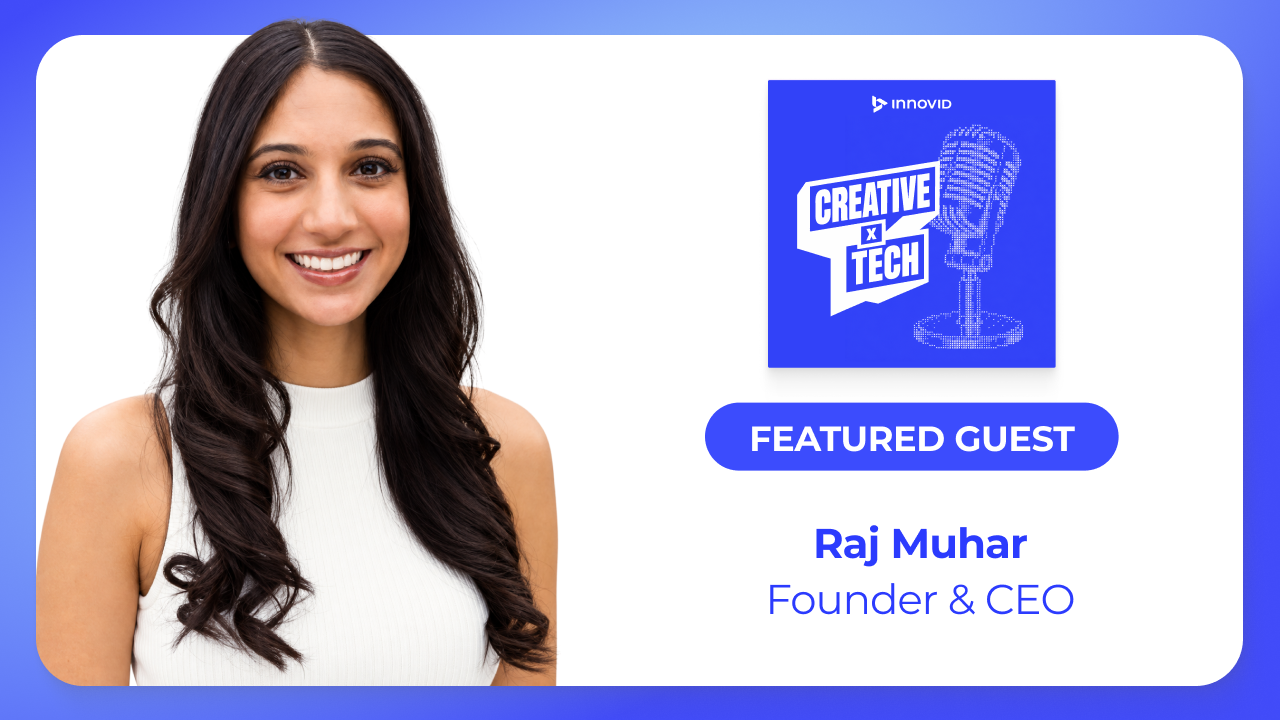
Raj Muhar, startup founder & CEO, joins host Dan Mouradian to discuss AI's role in creative.

C16 Biosciences' Shara Ticku dives into having confidence, intuition, and navigating male-dominated spaces.
Host Dan Mouradian and Chief Creative Officer Walt Geer discuss taking career risks, emotional storytelling, and more.
In the latest episode of Creative x Tech, host Innovid's Dan Mouradian sits down with Klick Health's Devon Taylor.

Host Amanda Glen Smith sits down with Zeta Global's Nicole Muscatello.

Xumo's Eli Zang joins host Ziggy Zografakis on the debut episode of The Other Side of the Screen.

Amanda sits down with Lynn Utter to discuss executive presence, career growth, and the double bind.
Amanda sits down with The Defined Dish's Alex Snodgrass to discuss her career and what she's learned along the way.

Amanda sits down with Miracle Mama founder Whitney Rowell to talk about building a business from the kitchen table.

In this episode, Amanda Glen Smith sits down with Lori Goode, CMO of Index Exchange.

In this episode, Amanda Glen Smith sits down with Jen Dass, Chief Operations Officer of WPP.
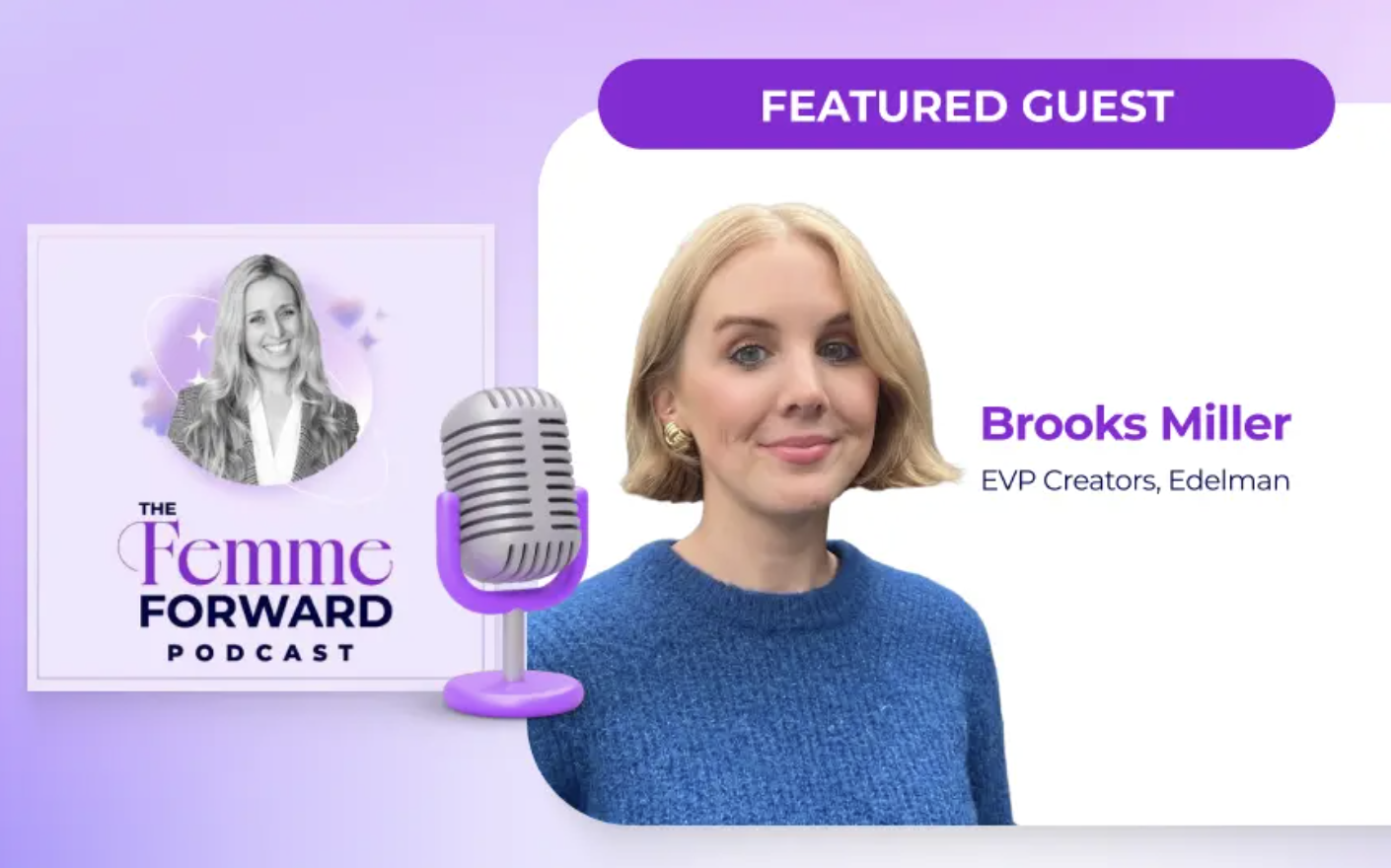
In this episode, Amanda Glen Smith sits down with Brooks Miller, Global Head of Creator Strategy at Edelman.

Listen to Gay Gaddis on confidence, risk & reinventing success.

Deborah Wahl shares her leadership lessons, career-defining risks, and personal philosophy.

Tune in to this episode breaking down perfectionism, empathy and confidence.

Amanda and Khara talk juggling work with motherhood, managing delegation, and being your most authentic self.

From the evolution of AI to how it can lessen the mental load, Sarah & Amanda dive into the future of an AI-assisted life.

Amanda sits down with Publicis' Sara Newton to dive into what it really takes to lead, grow, and thrive.
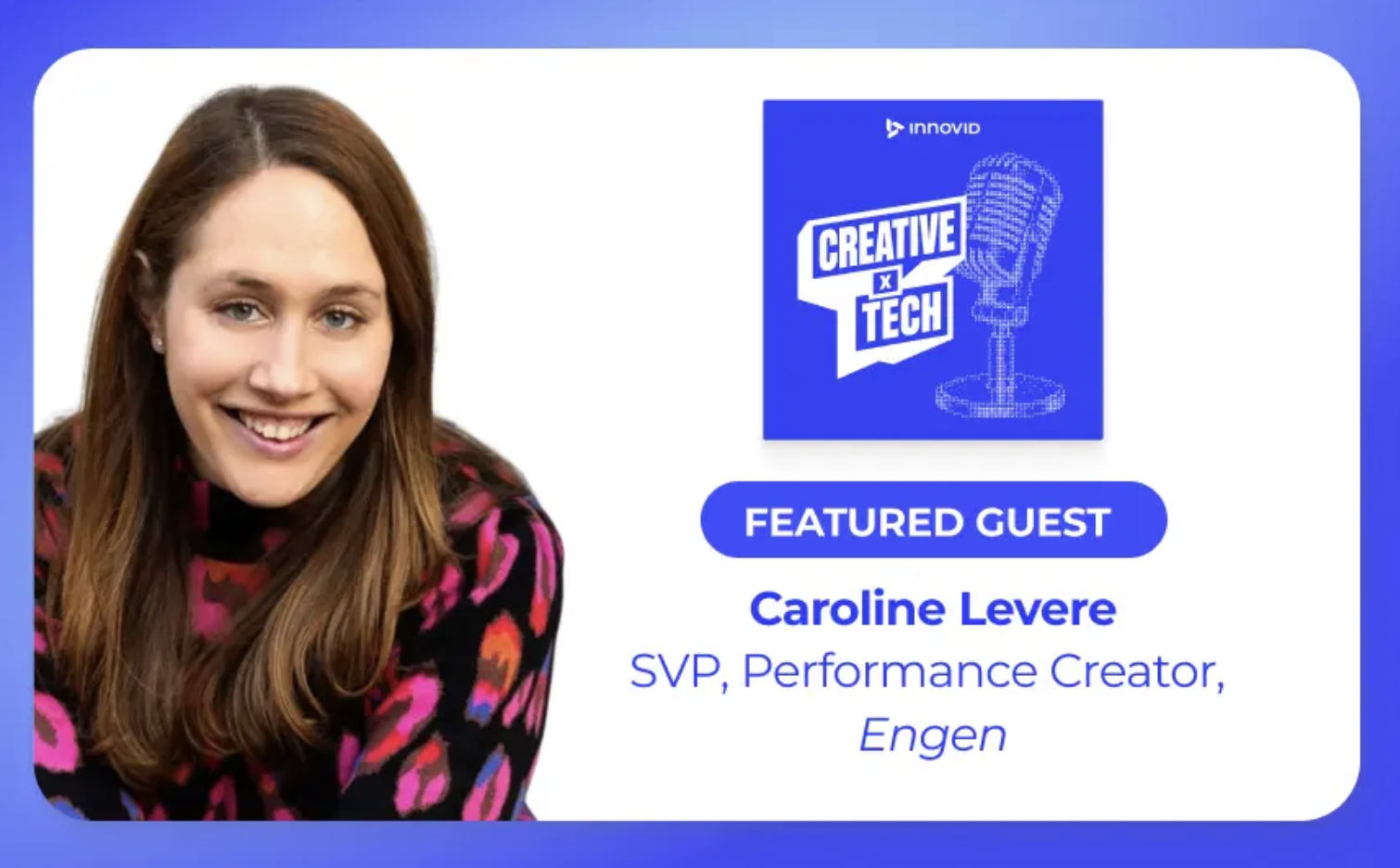
In the first episode, Dan Mouradian sits down with Caroline Levere, SVP, Performance Creator of New Engen.
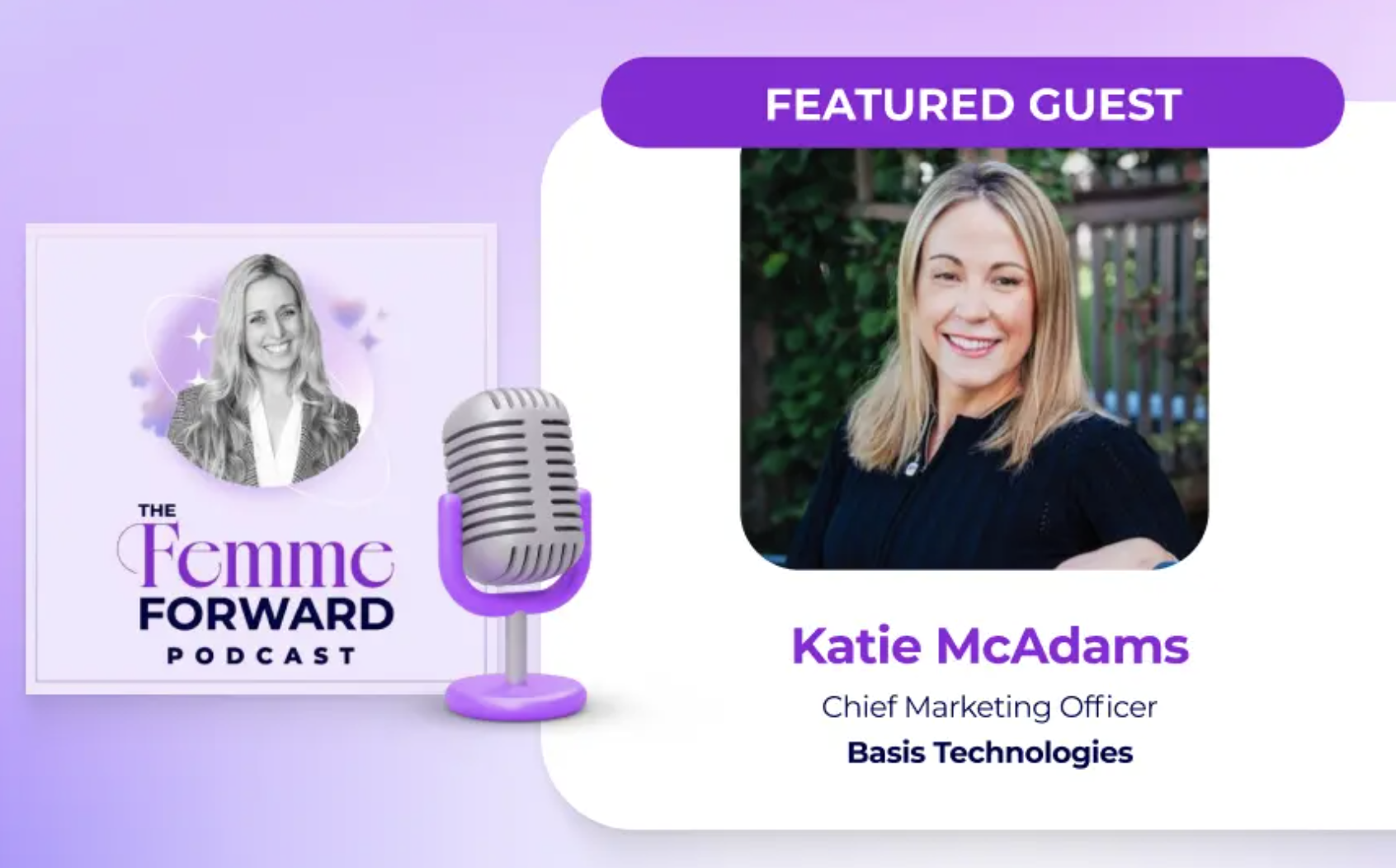
Listen to host Amanda Glen Smith and Basis CMO Katie McAdams discuss the power of intuition in leadership.
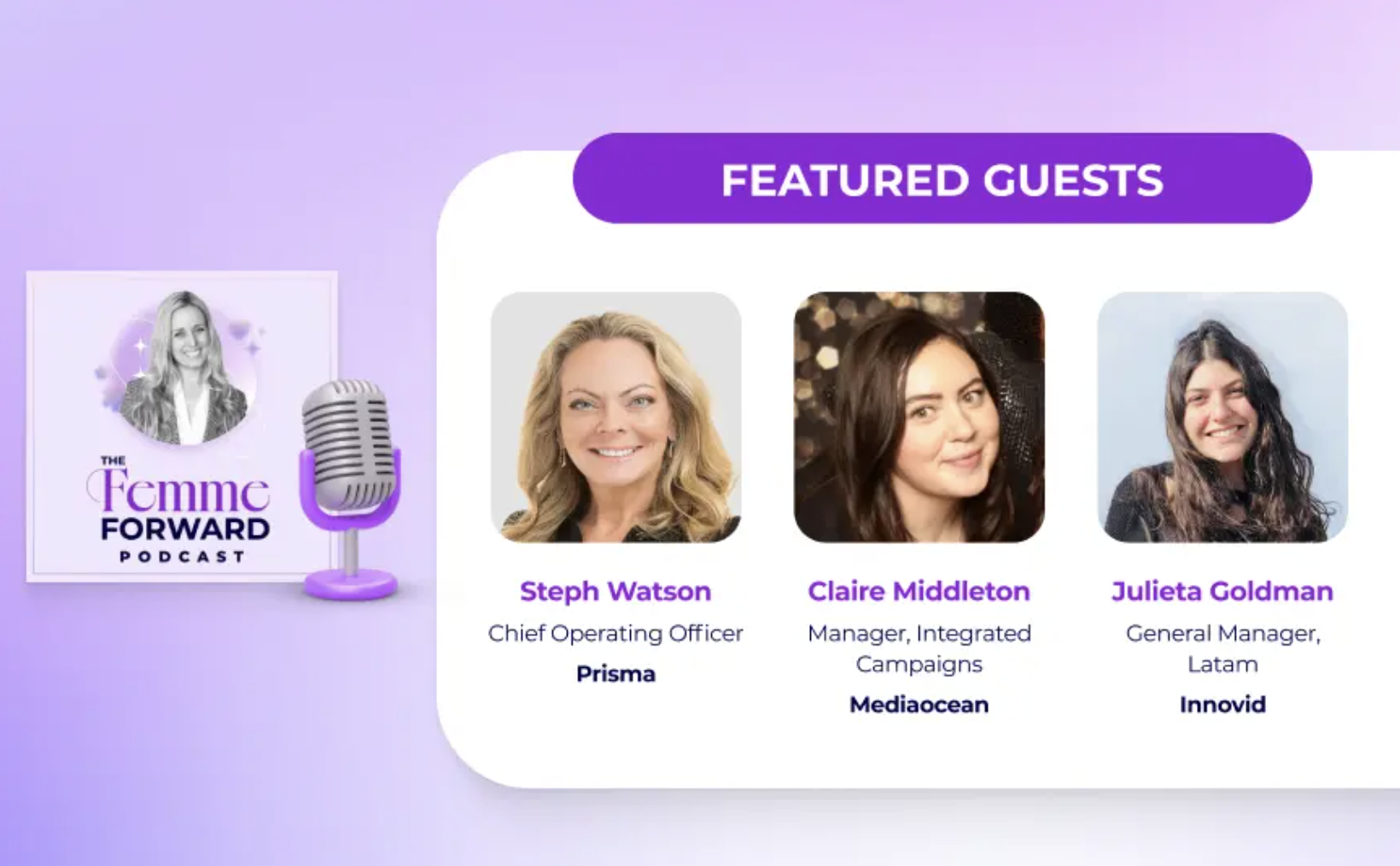
Innovid's Claire Middleton, Juli Goldman & Prisma's Steph Watson dive into the current "eras" of their career trajectories.

Listen to Amanda Glen Smitha and Unilever's Rachelle Schuimer discuss their careers.