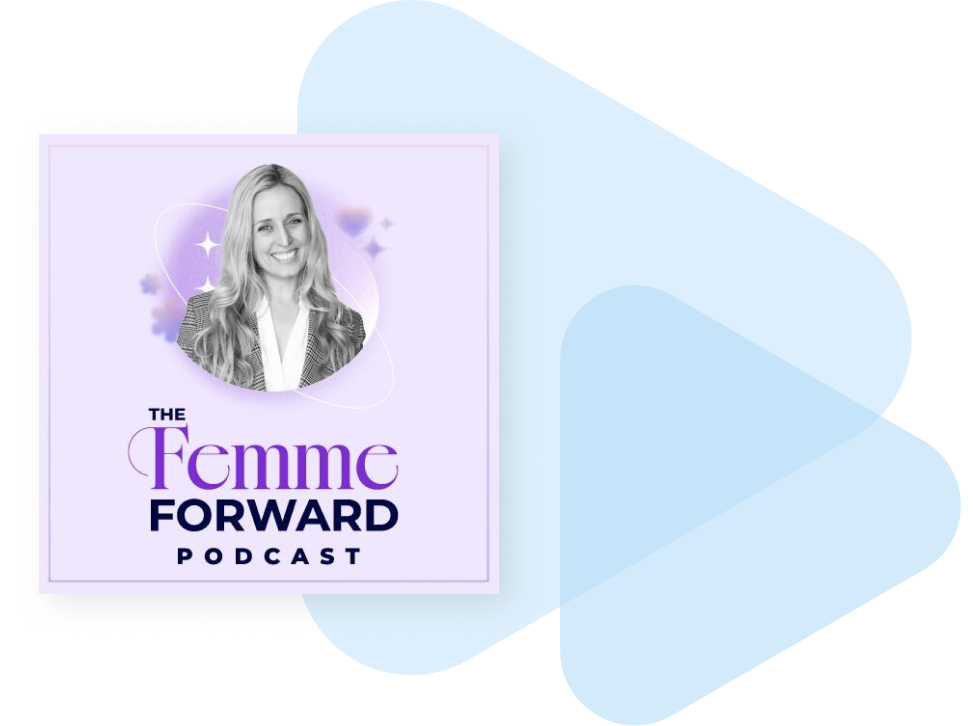
The Femme Forward Featuring Innovid's Georgia Brammer & iion's Yun Yip
Listen now
Click to listen on:


Read the transcript
Amanda Glen Smith: Welcome to the Femme Forward podcast, the series where we sit down with women redefining what it means to lead, create, and disrupt. Amplifying women's voices, whether industry icons or self-starters, from all sectors, creative, media, tech, to share their stories, the aha moments, as well as the hard-earned lessons through raw, unfiltered conversations. We aren't just talking about success here.
We're exploring the stories that shape us and the momentum of what happens when women support women. I'm your host, Amanda Glen Smith. Let's dive in.
Amanda Glen Smith: Hello ladies, welcome to the next episode of Femme Forward. Today we have two amazing special guests with us. I'm going to have them introduce themselves, but I'll do a quick round robin. We have Yun Yip, who is the Chief Commercial Officer at iion, and we have our very own Georgia Brammer, General Manager of APAC for Innovid. Do you ladies want to tell us a little bit about your role, your journey, and then we can tell everybody how we all met and form this little union? Yun, do you want to go first? You're our special guest.
Yun Yip: Thank you. First of all, pleasure to be here. Thanks for having me. I met Amanda at Cannes not too long ago. Georgia is our mutual connection. I met Georgia seven or eight years ago when I was at Mediaocean, and you took me to a chicken schnitzel.
Georgia Brammer: Yeah, I knew I liked you because I took you out for fried chicken, and that's my favorite food.
Yun Yip: So yes, I've been following Flash Talking, Mediaocean, and Innovid over the last seven to eight years. We do work together in some capacity. My role as Chief Commercial Officer at iion started 23 years ago in agency land at Dentsu, and I have just fallen in love with advertising. It was a surprise, because I have a Bachelor of Arts, which generally means I don't know what I want to do when I grow up, from Australia. I feel lucky every day to do what I love now. I went into ad tech about seven or eight years ago, and I've gone a little more niche into game tech. I love it.
Amanda Glen Smith: For our audience, when you say Chief Commercial Officer, will you tell everyone a little bit about existing revenue, new revenue, and how you think about it in the ad tech world?
Yun Yip: Ooh, that's a good question. In game tech, existing revenue, when I first started about three years ago, was zero, which is interesting. My very first week, I made $700. That was April 2023. Fast forward to now, we're getting into the last quarter of the year, and we're going to be at $750,000, which is pretty good for a team of three salespeople. We also have a really strong advertising success team. New revenue is really about anything that is video. People think about game advertising as just advertising to men 16 to 24 playing Minecraft in the basement, but the largest growing group of gamers are women 50 plus.
Amanda Glen Smith: Really?
Yun Yip: Yes. My mom probably plays Candy Crush a lot better than me.
Amanda Glen Smith: I would love to see the Candy Crush world tournament have the grandmother take home the main prize. How good would that be?
Yun Yip: There's a lot of new revenue there, because people are still thinking about what a traditional gamer is. But for everyday gamers, there's a lot of new revenue to be chased. If anyone wants to know more about game advertising, you know where to find me.
Amanda Glen Smith: That's amazing. It's a booming vertical, and we've seen a lot of hyper growth, so it's interesting to hear your take. And the grey-haired Candy Crush players are a new audience for me. Georgia, tell everybody the full extent and scope of your role, which might be new to some.
Georgia Brammer: Sure. I joined the London office as a campaign manager back in 2013, so it's been quite a journey, coming from the agency side across to heading up the Asia Pacific region. My day to day is quite varied. From the commercial side, I work with our sales team, similar to what you do, taking our product to market, pitching, et cetera, and I work closely with the solutions team to think about how we address things like live sports at the scale of India, where billions of people are watching a single game at any point in time. We cover everywhere from India to Japan to New Zealand, and we have a wonderful team out here of around 35 people. It's been a great journey. I've met some wonderful people throughout, such as yourself and many others.
Yun Yip: Right back at you. I feel like your role has evolved, along with the region and the folks. How many folks do you all have?
Georgia Brammer: 35. When I moved back from London, Simon was heading up the Australia market. Everywhere he moves, I seem to follow, and then he seems to run away. He quickly went back to London to head up EMEA. But back then, there were around four or five of us, purely in Australia for that region. Now we have a wonderful team in Singapore, and we're even getting a bigger office, which is exciting. We have folks in India, New Zealand, Japan, the Philippines, and Hong Kong. It's been really exciting to see that coverage and expertise grow, putting Innovid on the map globally.
Amanda Glen Smith: Okay, ladies, thank you both for joining. We start Femme Forward with the same question for our guests: as a woman, what do you view as your biggest differentiator? Yun, do you want to go first?
Yun Yip: I think more women than men tend to think they are not good enough, or not enough in general, and that has pushed us to work a little harder, to be a little more observant, and to push ourselves in ways people don't always see. But as women get older and start to believe that they are enough, and truly believe it, it grounds you. It helps you lead with more self-awareness, more conviction, and more empathy. So I think our differentiator isn't necessarily about insecurity. Over time, it becomes about strength.
Amanda Glen Smith: I love that. What about you, Georgia?
Georgia Brammer: I would say one of my differentiators is willpower. There have been many hurdles in the scaling of APAC and in us as a company. Every year we say next year is going to be smoother and calmer, and then, let's acquire a bit more. So you need the willpower and tenacity to continually adjust yourself, see the long vision, and have the enthusiasm and energy to tackle each challenge. I was listening to a podcast yesterday, and there was this concept of 12 things that can go wrong, but you can only yell or get upset about the twelfth. The first time a pitch fails, the second time you hire someone who isn't right for the business, the third, today I'm late for the podcast I'm on, but you can't get upset. The idea is you give yourself this endpoint. You keep getting through the challenges, and by the twelfth, you're so used to adjusting and absorbing them that you don't need to yell. It's more a case of, what do I need to do to address this challenge and move forward? I resonate with that in all of our positions and the variety of challenges we tackle each day.
Amanda Glen Smith: I love that. You say willpower, I'm going to say grit, same thing. The grit you need. And I like the idea of the twelve steps. You're going to learn a lot, and you're going to evolve. And on the twelfth one, you're allowed to yell, apparently, or throw your toys out of the pram. But by that stage, you've developed coping mechanisms, so you don't really need to lose your you-know-what. You could still have a couple of rosés to get on with that. Where are you on the list? I reckon I might be at about 26.
Yun Yip: More than double.
Amanda Glen Smith: More than double. Okay, I love that. You've each achieved an incredible level of success in your fields. What's something our audience might not expect about you or your journey?
Yun Yip: I was on a podcast recently in Australia where the topic was your limitless power, and mine was transparency. I was chatting about mental health. I can put on a big pretense of being really put together, with everything easy-breezy and laughing my way through a lot of things. But we have to acknowledge that many of us in this organization have day-to-day mental health challenges, with anxiety, depression, and what have you. We should appreciate that and be empathetic toward each other. It's not always power suits and perfect hair, makeup, and nails. There's stuff you don't necessarily see. I'm quite proud of overcoming anxiety from my early twenties to where I am now, and of being able to speak about it and share with the team that it's okay to have moments where you question yourself, you're nervous, or you're just having an all-around... bad day. It's important to be honest about that. That's something people might not expect of me, but I'm very open and proud to talk about it.
Amanda Glen Smith: Thank you for sharing. I think Zoom is kind of our new Instagram, right? You show up with your hair done, putting on whatever you need for a client or internal call, depending on your level, and it's going to look very different from what's happening in the next room or behind your background. That's a key lesson for us all, because it's part of the job to show up as the brand you want to embody for clients or your team. But there's always stuff behind all of that, in every Zoom background that's blurred.
Yun Yip: Yes.
Amanda Glen Smith: My phone is sitting on a box of slow-cooked lamb ragu for Adrian at the moment. So Adrian, I remembered it for you. You can't say that, because it all looks beautiful and shiny. Yun, how about you?
Yun Yip: It's an extension of what you said. Especially now, a lot of my meetings with my team and with clients are over video, and people don't necessarily know or see that I probably had a little cry half an hour before. Yesterday I thought I had a stress fracture in my foot, which means I can't compete in two weeks, and all of the hard work has gone down the toilet. Then I had to jump on a call with the leadership team, and people don't see that. If there's one word I'd use, it's relentless. It's made me a lot stronger, but there are a lot of tears people don't see. This is a professional Instagram account. People don't see the tears or the breakdowns, when I have to go to my husband and say, I need a hug. That's what people won't be surprised about once we start talking about it, but it's not necessarily what people would expect of a leader.
Amanda Glen Smith: Someone the other day was saying she's really going to try to answer honestly when you ask her how she is, because that's the first thing you hear in every one-on-one: "How are you?" And everyone says, "I'm good, I'm fine. Can we just get to business?" She said she's going to try to tell you honestly how she is.
Yun Yip: I would love that. I thought we were being honest, you know? It's not that people aren't. It's just strained enough to get to the next thing and leave the personal parts of us outside those conversations, when sometimes it's more than fine. There's a time and a place, obviously, but in a one-on-one, it's more than fine to bring whatever you're struggling with, personal or professional, to the forefront before you dive into everything else. It's also a good guide to your reactions and how you're thinking, and it gives everyone context for why you might be in a certain mood.
Amanda Glen Smith: How have you each learned to define what you call enough, whether that's success, recognition, or balance? What does that mean to you when you think about your career and where you stand today?
Yun Yip: I'm going to be really honest. I don't think I've actually succeeded in balance yet. It's a constant struggle to know what is enough. Even Georgia often speaks to me about being young for my role and feeling like I always need to overcompensate or overdeliver to prove myself. My mentor has been really good at checking me when I go overboard, in many ways more than at work. This year I've tried to make more conscious decisions. Do I need to go to Singapore every second month, or every quarter? Can I be just as effective from here, supporting the team and clients, so I can have some personal and work balance? Travel looks like fun and games, but it's taxing, and we have to have meetings and all that kind of jazz. The other challenge with balance is comparing myself to the likes of Seyeon. She might have a different answer. I look at Seyeon and think, she's got it all sorted. She's balanced, she's posting, she went for a run at 5 a.m. and has already done weights. And I'm just getting my act together to get to the office. So I would be honest in saying that balance is something I'm still working on.
Georgia Brammer: I'm very humbled by what you just said, because when I look at you, I always think, how do you accomplish so much, and how do you make so much? It's not just the commercial side. You're very brave in how you talk about your own challenges. I have the ultimate respect for what you've done and achieved. But in terms of enough, I think that's changed a lot for me over time. When I first started my career as a media assistant at Carat, all I cared about was how not to be called a media assistant, how to get promoted to exec. Now that I sit on the exec leadership team, it's very different. What is enough now is looking back and thinking, would the fifteen-year-old Yun look at the Yun now and say, "Hell yeah, she's badass"? That's enough for me.
Amanda Glen Smith: I love that, Yun. What at one point feels like enough changes over time, and what that means can be, as you said, Georgia, being able to say, I'm not going to take that trip, because what's enough is sitting right here and choosing. I love that a lot. It's a similar vein, but for each of you, how has your relationship with ambition evolved as you've advanced in your career?
Yun Yip: When I first started in the industry, it was all about me. What am I going to be, what am I going to get called, how much money am I going to make? As I got older, it became about how much impact I can have on a business or a team. If I sum it all up, it comes down to purpose over ego. That guides my ambition now. Am I actually fulfilling my purpose, or is it really just about me? Of course I'll do things that fulfill me and fill my cup, but over time it's about having something to look back on in ten or fifteen years and know: this is the business I helped build, these are the people I helped develop, and these are the people who have a better day because of me. That's how it's changed.
Georgia Brammer: I think it's similar. I was always looking for the next role, but now it's much more macro. I'm inspired by the growth of our APAC region, the growth and success of our team, and thinking of it as a collective rather than my individual piece. One of our good mates, Yazat over at Samba TV, said people are motivated by two out of three things: stability, salary, and status. Earlier in my career, it was very much status and salary, because I wanted to keep getting to the next step. Now it's much more about stability and salary, because I have a mortgage. I'm obviously very practical. Motivations change through the stages of life. When I think about work ambition now, it's about how we're going to be successful as innovators in the region. My personal ambition is more about giving myself adequate time to spend with my family, and potentially finding a person, that kind of thing. The last thing you want is to chat small talk on Bumble at the end of the day. I prioritize a lot on work, and I'm probably not allocating enough time to the dating side, but everything happens for a reason. The only woo-woo thing I believe in is fate. I'll find him at some point, or he might find me.
Yun Yip: Yes, I like that. I think you can expand it to five, because flexibility is a big one. The opposite side of that is being able to have flexibility, and that motivates a lot of people to have the personal side. And the fifth one I heard you all say is impact: what kind of impact have you been able to have? So I like those as the new five.
Amanda Glen Smith: What about for you, Amanda? Can you ask the moderator? No, you can ask me: how has your ambition changed significantly over time?
Amanda Glen Smith: Yes, but maybe not enough. It has made me realize that time is finite. There's only so many minutes in a day. My ambition has not gone down. It's just gone in a million directions, of what really fuels me. It's changed from thinking I have to be the best at whatever role I'm doing, and that it has to be delivered perfectly, to realizing that if I can pick and choose what really fuels me, like Femme Forward, which was an idea born at Cannes with you two and other ladies, then I can measure it against impact. That feels like a good place to spend energy and time. So over time, the question has shifted to where I can have the biggest impact, in what amount of time, over what span, because time is our problem. I also realized I have to sleep. I used to not sleep at all, and I would hold myself to unreasonable standards, being disappointed if I didn't get up at four or five to get cracking on the day's work. I'm trying to tell myself that's not necessary to achieve everything, and to acknowledge what I did get done, so I don't feel like I haven't done everything I needed to in a day. You got a lot done. You might not have finished the whole month's work today, but that's okay. You still have 29 days left.
Yun Yip: Isn't it funny? Ambition also comes with kindness to yourself.
Amanda Glen Smith: Oh yeah, and grace. I had John Roos, who George Doe used to work with, an incredible human, and he always told me, progress is not perfection. Why are you trying to make it perfect? Put it out there, get feedback, and it's done enough. With ambition, you're at 80% and somebody else is at 110%, so hold yourself to those standards and bring them down slightly, so you can accomplish more. It's not lowering your standards. It's giving yourself a bit of grace, asking for feedback, and getting it out into the world, versus waiting two more weeks until it's 110% how you want it. Mm-hmm, I agree.
Amanda Glen Smith: This is a great segue into something I want to talk about. I hate the word balance, because I feel like it's so hard. How do you protect your creative energy or your strategic space amid all the constant grind and ambition? What do each of you do to protect that space?
Georgia Brammer: I do a lot of strategy work. In the Sydney team, we have a great, bubbly vibe, but sometimes I get too involved and excited, and I need quiet time to think about broader regional things. So I'm transparent with the team that sometimes I just need work-from-home days to put my headphones in with some decent music and get through it. That hopefully encourages them to feel free to have those conversations too. If somebody has a huge campaign launch, and it's distracting to do that successfully in the chaos and energy of the office, it's okay to have that conversation and make everyone aware that that's why you're working from home. I try not to put pressure on myself to do that work in the office all the time, and just create that space to achieve the more creative piece. I do need to ask for help more. With the puppy yoga initiative, I thought, on the beach in Seville, I'd set it all up within two weeks, with branded yoga mats coming. I could have shared that load. That's a lesson: I should lean more on team members who are excited to participate. They'd be very good at it too.
Amanda Glen Smith: Mm-hmm. Yun, what about you?
Yun Yip: I'm very protective of it. In a global role, there's always an excuse to put a meeting at the end of the day or the start of the day. But when I work out, when I run, or generally move, that's when I come up with ideas, and it's also when I get to calm down. That's really important, so I'm not just operational but strategic too. There's also the magical healing power of a filthy martini in a dimly lit cocktail bar. It depends, but mostly it's the movement piece. Once in a while, it's the dirty martini. Maybe more often than not.
Georgia Brammer: I hate to say it, but mine is planes. Dedicated time on a plane is when I get my best strategic thinking done, because I'm like, okay, we're off, we're going to focus. Even when we don't have internet, that's actually my biggest gift, because then I go into these totally different things we want to think about.
Amanda Glen Smith: It's kind of sad, but I feel like it's the best answer, because you get food and drinks when you need them. How do you each think about and handle burnout? How do you spot it early for yourselves, and what do you do to combat it?
Yun Yip: Do I spot it early? Not always. Sometimes it takes a full breakdown before I realize I'm a little burnt out, but you do get better as you get older. This is when me-time is really important, because you get really aware. For me, I do quite a bit of yoga and breathwork, which helps me stay a little more aware. My inner circle also matters: speaking to my girlfriends or my husband, and the rituals and little things that bring you together. It helps you have a little more self-awareness. If you don't take time out for that, and you don't find rituals in your daily life to help, it's very hard to self-regulate. And when it's hard to self-regulate, it's hard to be in your A game, let alone lead a team.
Amanda Glen Smith: I totally agree. What about you, Georgia?
Georgia Brammer: I could still improve on that. I've definitely gone through multiple burnouts, not in the car sense, but internally wearing myself down. Where it's lasted longer is that I haven't communicated enough with my friends, team members, and peers that I'm burnt out, because you bury it and then get onto the next thing. I'm trying to do better. I told Mikey I had Monday off, because I felt rundown. It's Q4, and it's been a big year, so I needed a safe space before it snowballs further ahead of Christmas. Christmas is a wipeout, because I'm not helping Mom in the kitchen. I'm just asleep on the couch the entire time. I'm getting better at mentioning it to people. And Yun has always been a great friend. She'll celebrate my wins and get angry with me when I'm angry, but she's also very good at reading the vibe. On a Monday she noticed I hadn't really been contributing in the group chats with my industry girlfriends, and that was a flag that I might be overwhelmed. Having people in your life who can call you out, and even flag it to you if you're not acknowledging it, is important.
Amanda Glen Smith: I love that. I had a friend who tends to burn out. He goes really, really hard and then burns out, so he strategically sets up a break for himself every six weeks, because he says he doesn't know any other speed. People tell you to balance, or to have daily rituals, but he says, that's not my speed. What I realized is that if you can proactively set up breaks, even a Monday or Friday off, you can go really hard and then reset. I thought that was really self-aware.
Yun Yip: My problem, as Ben always says, is that I go too hard on both ends. I'll get up at four and work, but I'm quite happy to stay up until four. So I need to balance. Balance is key. But I really like having something forward. I always have to have an end date on my calendar. It's not a real end date, but something like, by this date, this big rush will be done and I'll feel better, or by this date I'm going to plan a dinner with girlfriends. I always need some carrots, like my toddlers. I just need a prize at the end. It's not that different, sadly.
Amanda Glen Smith: This is a good one, and I want to hear from both of you. Have you ever felt pressure, subtle or overt, around expectations of how women should build their lives, and how have you navigated it?
Georgia Brammer: I definitely feel like you and I are similar in age, Amanda, and have friends who have children, are married, and have amazing careers. As I get closer and closer to 40, I do tend to compare myself to the societal image of what we're meant to move toward, like building a family and whatnot. That plays on my mind, given that I'm single and don't have children, but I'm still successful in many other ways. I get asked about it a lot, strangely. The other thing that was always a fun one is that I don't conventionally look like an operations or technical person. I'd walk into a boardroom in Singapore, with all these mature men, in a pretty little summer dress, giggly and happy. They really try to quiz and test me to see if I actually know what I'm talking about. I enjoy going up against that misrepresentation of what a technical, successful person looks like and proving it wrong. So there are two angles I'm up against in terms of what people expect. But I haven't changed myself for that, which I think is the point of your question.
Amanda Glen Smith: Yes, you stay true to yourself and your identity, and maybe you just wear the whole pink suit next time. You've doubled down.
Georgia Brammer: Someone last week gave me unrequested advice and said maybe I'm single because I dress too intimidatingly. I was like, get out of here. I've been mulling it over for a few days, and I just think, I wouldn't want to meet anyone who's okay with that. I'd only want to meet someone who chooses to be intimidated.
Amanda Glen Smith: Exactly the point. It's an interesting take. Yun, what about you?
Yun Yip: I'll carry on from that point. The stereotypes are really interesting. Growing up in a traditional Chinese family in Singapore, there were a lot of choices you could make. What instrument do you want to play? I wanted to play drums, but the choices were piano, violin, or all of the above. Then it was, what do you want to be when you grow up? Doctor, lawyer, or failure? All of these stereotypes and conventions. I knew I was a bit different growing up, so when I got into advertising, it was really strange for the extended family. I'm very blessed to have a loving, nurturing immediate family, but some of the extended family hold on to the stereotypes and conventions. I think it was always a bit of an "I'll show you" attitude growing up, and wanting to prove something. But that's counterbalanced by the fact that I grew up thinking maybe I'm not good enough, because I'm in advertising and not a doctor or lawyer. It really is about growing into yourself and becoming what you believe your purpose is. Over time, the I'm-not-a-doctor, I'm-not-a-lawyer thing falls away. I'm fulfilled, and I feel very blessed. So who cares? I've also often been told I'm intimidating, because I'm relatively tall, especially when I go back to Asia. I was told I was too tall to get married. I didn't get married to prove people wrong. One by one, these stereotypes do fall away over time, but it was interesting getting here.
Amanda Glen Smith: We have a question from the audience, which is who is taller between the two of you?
Yun Yip: Me.
Georgia Brammer: Me.
Yun Yip: Only slightly. A smidge.
Georgia Brammer: A smidge. Until she gets her heels on.
Yun Yip: I've got my big intimidating heels on. This is not intimidating. It's the power suit you're wearing, and what shoes are paired with it. I've got patent burgundy stilettos on today. I'll be staying single today, obviously. People should look out for you.
Amanda Glen Smith: That's reframing, I think, until it's good. Thank you for looking up to me for my attire. I love it. Okay, we talked a little about this, but how do you each design a life that feels full, not just busy? There are so many things that happen on your calendar, and work can bleed into every aspect of our lives. When you have that moment of feeling full or content, because I don't think we have it all the time, how do you handle it and design it?
Yun Yip: I think you just keep what tends to feel good over time, not just one time. Having a martini here and there might be nice, but what is sustainable? There's never really a right or wrong. Building something that is right all the time is unrealistic. It really is trial and error. What brings you joy? Not just happiness in the moment, but what actually brings you joy. For me now, it's balancing work with quality time with my inner circle and movement by myself, but that took a lot of trial and error. It took building habits, like saying no, I'm not going to take that call at 8 p.m., because I need time with my inner circle, or no, I'm not going to take that call at 6 a.m., because I need time for my movement. It takes time to build that up, and it takes the power of no. We like to please. It's also about realizing when you feel good. Work-wise, if I got a lot done and felt good about the day, I'll look at my calendar and ask, what did I do? Oftentimes it's because I had a block of time where I was productive and could get things out, or think, or strategize, versus back-to-back, eighteen meetings in one sitting. So it's recognizing how you leave one day versus how you leave other days, when you're depleted. Trying to show up for my family while I'm in the negative or the deficit is really about balance.
Amanda Glen Smith: Awareness. I like that one. Georgia, what about you?
Georgia Brammer: I resonate with what you just said about always having a hundred percent vibe and energy during work. When I go home to my parents, I'm so exhausted from the week that all I want to do is lie on the floor with the puppies. And Mom just wants to sit and gossip and have a wine and have the full energy. I need to be more conscious of prioritizing and reserving some of that energy for my inner circle, as Yun said, because at the end of the day, they're my loved ones. I actually got that feedback from my husband, a year ago, when we, we won't blame it on integrations. It was a crazy time. He said, "I hear you, I can see what you're doing all day. You fly to every client, you do all these things, but when you and I have a date, you're exhausted." I was like, gosh, that's so true. I'm really sorry. I was showing up in the deficit. So I think it's about protecting what really matters across all those different circles. One is not more important than the other, and everyone has different circles. Some are movement, some are family, some are work, and they all mean different things to different people.
Amanda Glen Smith: Agreed. Let's move into the advice section. If you could leave everyone with one challenge or piece of advice to carry forward, what would it be?
Yun Yip: For me, it would be purpose over ego. I was tossing between the mindset of abundance or scarcity, but I'll go with purpose over ego. I said it earlier, and it resonated, so I loved it.
Georgia Brammer: I'm torn between being kind and communication. I guess all communication is intertwined with being kind. Being kind to yourself, allowing room for yourself, acknowledging what you need to present your best self at work and in your personal life. And having empathy for others around you, which comes with communication. Like you said, Amanda, at the beginning of the call, it seems silly to say, I'll be honest with you, but it's having different dialogues and open conversations. The responsibility isn't just on us to put forward our thoughts, feelings, and challenges. It's also about being kind, putting yourself in someone else's shoes, having empathy, and observing their energy and behavior, because we don't know what else is going on behind the Zoom screen, as you said, Amanda. Being kind to one another and listening and communicating is critical for everyone's success personally, and for us as a business.
Yun Yip: I don't think it's particular to women, but it is a feminine trait to have the empathy and understanding to use those feelings. I think it's leaning into that power, not just in your life or your circle. We are so time-poor that we're often too focused on output to be kind. I know I myself can be so focused on getting something done that I don't take time to consider the person. Making time to be conscious of that is something I need to work on, and I think others do too.
Amanda Glen Smith: To carry on from that, it's being curious. We're all guilty of seeing something not going right and asking, what's the problem? Rather than asking, is that a symptom of something else? What's going on in someone's personal life? Being curious, communicating, and asking the question is important.
Amanda Glen Smith: I love that. What is a belief you feel you've had to unlearn to get where you are today?
Yun Yip: Perfection. I don't need to be perfect to succeed or to make people happy, and I've had to work hard on that. It's been annoying me this entire call that my bow has come undone, but you have the permission to retie it. People aren't going to be looking at your bow, and this podcast won't be a failure because the bow wasn't done up. That's a lighthearted version of it. Perfection is definitely one I've had to unlearn. For me, it's also that I'm not good enough. I had to learn that I am actually good enough, and that I'm more than enough. We spoke about that a bit earlier too.
Amanda Glen Smith: One for you, which is that not everybody's going to like you. You can't be everything to everyone, especially as you progress and move into different roles. It's just not going to be the cup of tea for everybody.
Yun Yip: Definitely, no. Okay, what's one way you've learned to celebrate your wins, big or small? Besides martinis.
Georgia Brammer: I was going to say that too. I'd say say some of it out loud, to your loved ones and your peers. Sometimes people think you're up yourself, or arrogant, or self-indulgent if you say, look what we've done at APAC this year, close to 50% year-on-year revenue growth. Being okay with being proud, and not worrying that people will think you're on your own side. Externalizing that is a nice way to share success, rather than keeping it to yourself.
Yun Yip: I'd probably say the same, because we've always wanted to prove ourselves, or that we're good enough. Externalizing it is so important. Mine is simple: a great meal and a bottle of wine. It's really simple, but for me, that's a celebration.
Amanda Glen Smith: It is a celebration. We have a question from the audience, and then we'll go into our lightning round to round us out. The audience wants to hear the biggest risk you've taken in your career, and whether it paid off. Yun, go ahead.
Yun Yip: Mine was moving home. I was an account director in London, doing really well with the London and European team, and I had the opportunity to come home to Sydney to eventually take over from Simon. It was a very small team. I had to weigh up a promotion to another role in London, where it was safe and I had a life, against leaving all that behind for a market where there wasn't real-time support. I wouldn't have Dee or Wayne at the desk next to me. I'd be out on an island, on the other side of the world, growing something that was still very green. It was quite a risky move, but it's paid off in what I wanted from it. I was going to be challenged, and I had more opportunity to chase the ambition we talked about, getting up the ladder and becoming more of a leader. Staying in a more mature market would have meant a different style of growth. So that was probably one of the biggest risks I've taken, and I think it's paid off.
Georgia Brammer: For me, I quit my job after about seven or eight years in agency land and took off, bought a one-way ticket. I thought I just didn't have the love for advertising anymore. Halfway through my trip, I was dancing through South America, and I said to my ex, look at that billboard. How terrible is the creative, and why would you have placement over there? That was the moment I realized, no, you actually love what you do. All you're thinking about is placement and creative. So it paid off tremendously. When I came back after six months, I knew what I didn't want. I didn't want to go back to not having a life, but I also wanted to go into digital, where placement isn't finite and you can get very creative. So I went into digital sales, and I've been in some form of digital sales ever since. It drove what I love about advertising even more.
Amanda Glen Smith: It sounds like you got a sign from the universe, literally. I love it. Okay, next is our lightning round. Just say the first thing that comes to mind. I'm going to ask you all a few questions, we'll go round-robin, and then we'll let you both go on your lovely day, because you're just starting. Vice: coffee, cocktail, or mocktail?
Yun Yip: Coffee.
Georgia Brammer: Cocktail. It's too early for...
Amanda Glen Smith: It's too early! Okay, if you weren't doing this job, what would your dream alternate career be?
Yun Yip: Yoga teacher.
Georgia Brammer: I'd be a travel show TV host.
Amanda Glen Smith: You'd be great at that. You'd be so good at that. I love it. Okay, most-used emoji?
Georgia Brammer: I wouldn't say it's an eggplant. I'd say the eye roll.
Amanda Glen Smith: Eye roll. What's yours, Yun?
Yun Yip: I think it's the little party popper. Mine is unfortunately this one. I do it all the time.
Amanda Glen Smith: Oh yes, you've already done that today. Okay, there you go. Personal hype song?
Yun Yip: Bad Bunny, "Nueva Yol." I love Bad Bunny. It's embarrassing.
Georgia Brammer: I walked into my first interview at Flash Talking listening to Beyoncé, the diva, the female version of a hustler.
Amanda Glen Smith: I was going to ask you to sing it, but I'm glad you went ahead and did that for us. Perfect. Workout type? Shopping?
Yun Yip: Wait, what did you say? Dance?
Amanda Glen Smith: Dance. Okay, you have a lot of options: dance, weights, running. Who is a woman you look up to or who inspires you?
Yun Yip: Jacinda Ardern, the former Prime Minister of New Zealand. She encapsulates strength and empathy in one person.
Georgia Brammer: I'd say my grandma, Shirley. I think she had the most wicked sense of humor. She grew up during World War II, and after the war she worked at the Japanese embassy, which was very controversial, but she took it in her stride. Having a career when you're born in 1922 is a little unusual. She took a lot in her stride with a good sense of humor, and she didn't mind a sherry or two.
Yun Yip: What a legend.
Amanda Glen Smith: I love that. I'll do one too to round us out.
Georgia Brammer: Wow, she was the first female concert promoter in the United States.
Amanda Glen Smith: As a mom now, I just have so much respect for her, more than I ever did before. So that's a good way for us to think about it: mom's rule, grandma's rule, women's rule. You all are the best. Thank you for joining Femme Forward. We loved having you and appreciate your time.
Yun Yip: Thank you so much. Thanks for having me.
Georgia Brammer: Thank you.
Related resources

IAB's Chris Bruderle sits down with Dan Mouradian to discuss the changing live TV landscape.
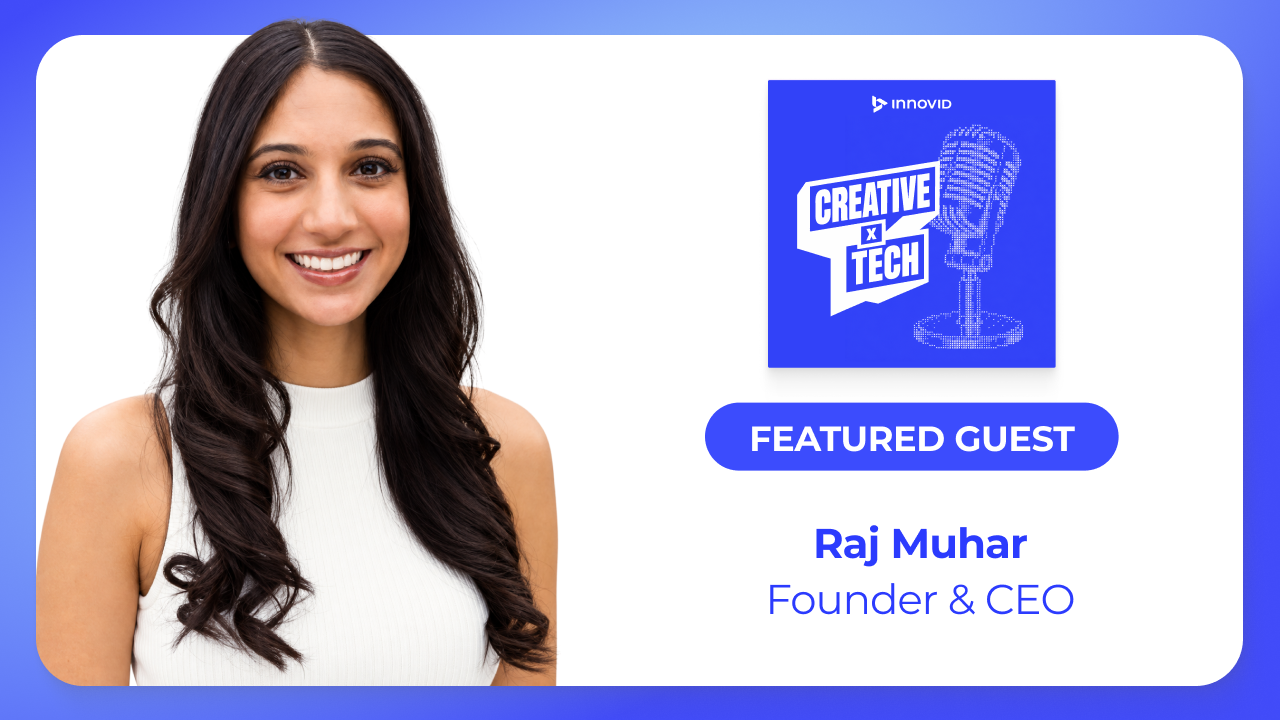
Raj Muhar, startup founder & CEO, joins host Dan Mouradian to discuss AI's role in creative.
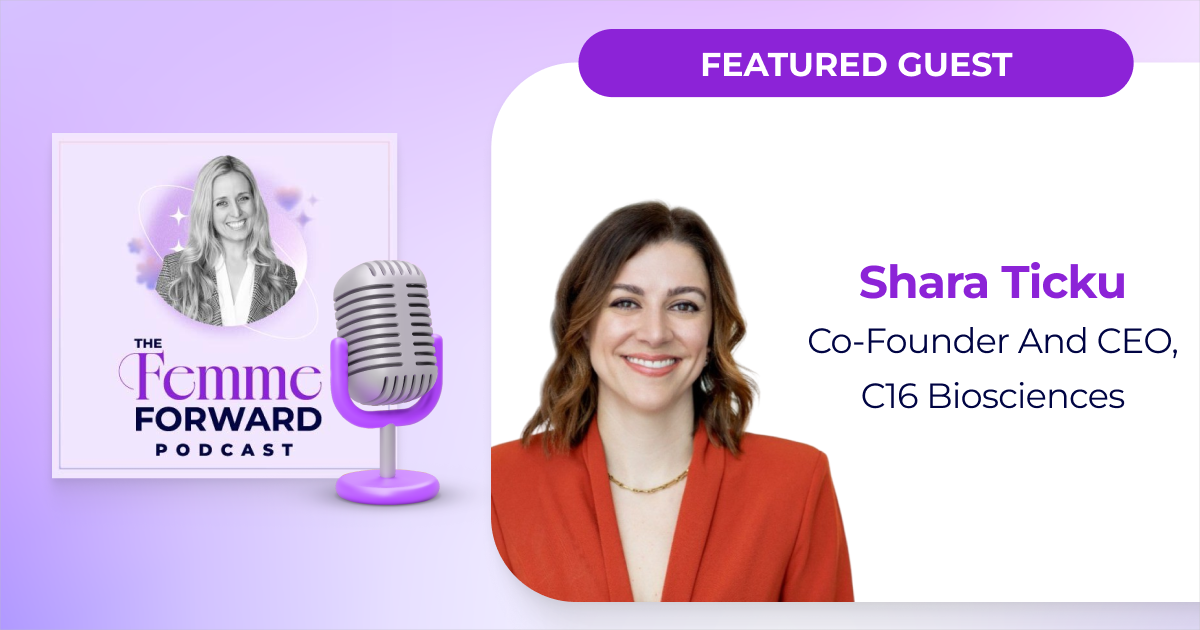
C16 Biosciences' Shara Ticku dives into having confidence, intuition, and navigating male-dominated spaces.
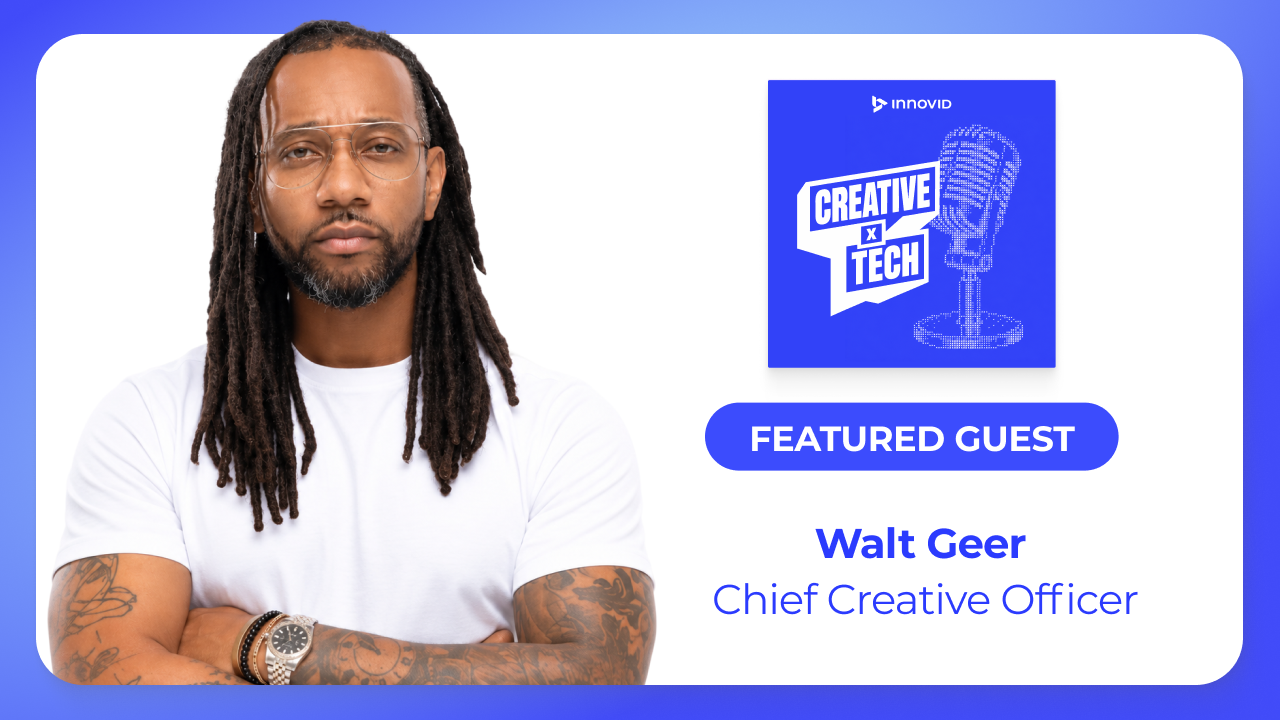
Host Dan Mouradian and Chief Creative Officer Walt Geer discuss taking career risks, emotional storytelling, and more.
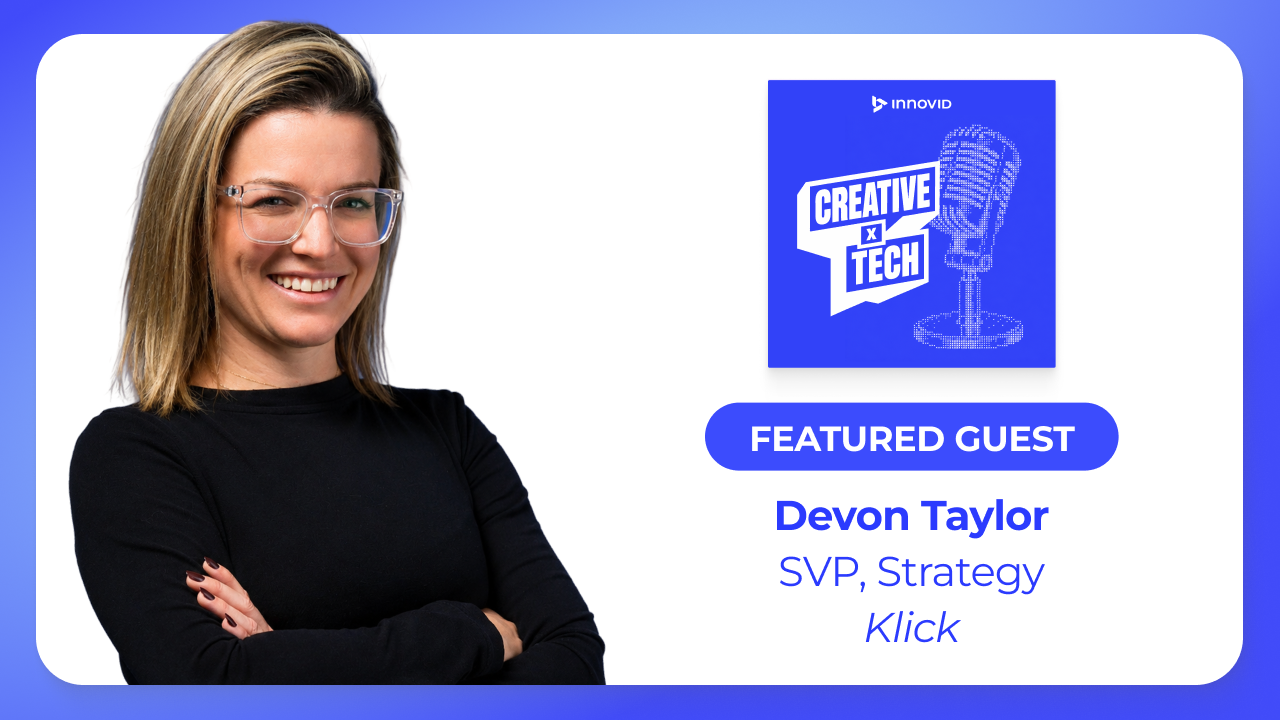
In the latest episode of Creative x Tech, host Innovid's Dan Mouradian sits down with Klick Health's Devon Taylor.
Host Amanda Glen Smith sits down with Zeta Global's Nicole Muscatello.
Xumo's Eli Zang joins host Ziggy Zografakis on the debut episode of The Other Side of the Screen.
Amanda sits down with Lynn Utter to discuss executive presence, career growth, and the double bind.
Amanda sits down with The Defined Dish's Alex Snodgrass to discuss her career and what she's learned along the way.
Amanda sits down with Miracle Mama founder Whitney Rowell to talk about building a business from the kitchen table.
In this episode, Amanda Glen Smith sits down with Lori Goode, CMO of Index Exchange.
In this episode, Amanda Glen Smith sits down with Jen Dass, Chief Operations Officer of WPP.
In this episode, Amanda Glen Smith sits down with Brooks Miller, Global Head of Creator Strategy at Edelman.
Listen to Gay Gaddis on confidence, risk & reinventing success.
Deborah Wahl shares her leadership lessons, career-defining risks, and personal philosophy.
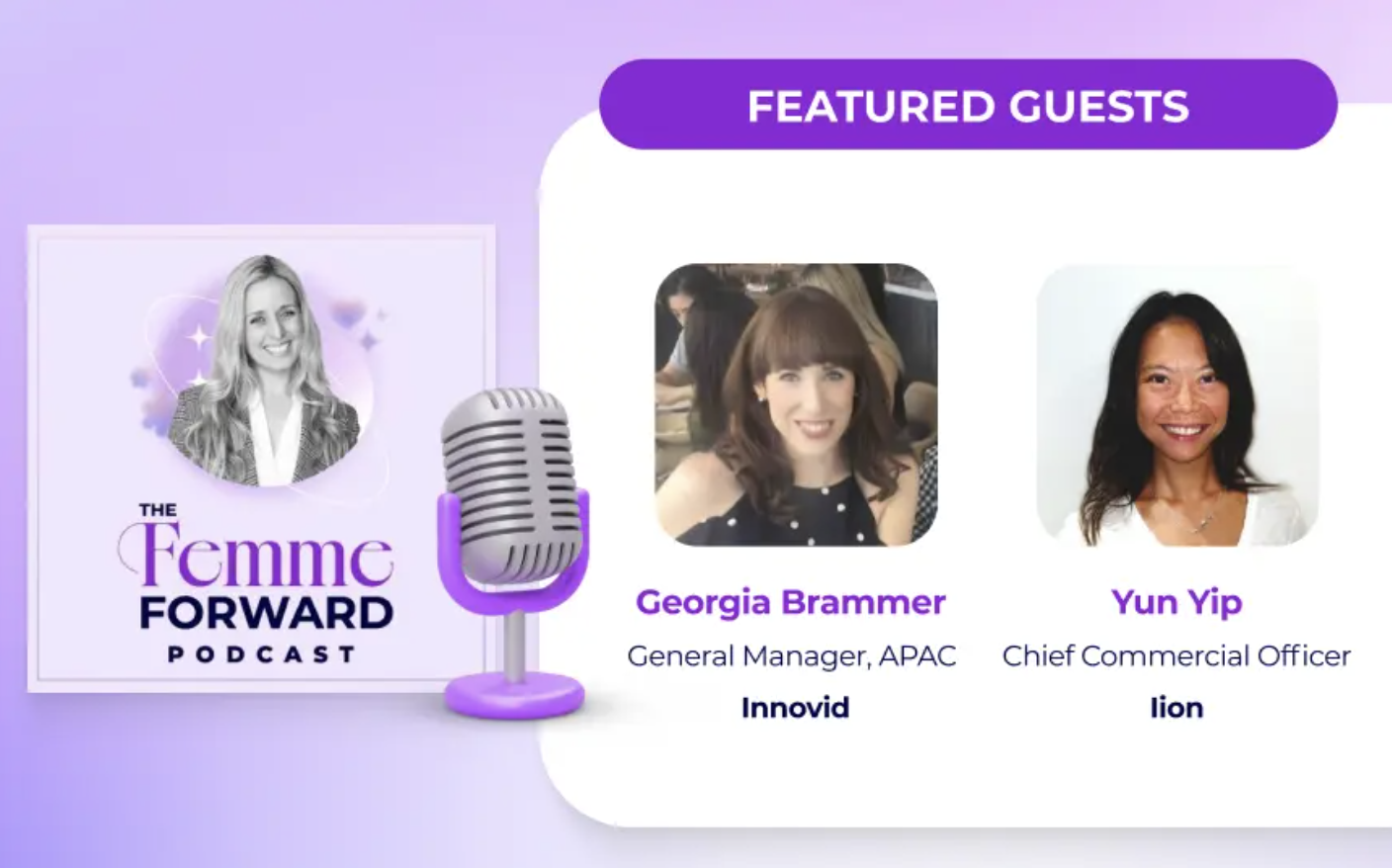
Tune in to this episode breaking down perfectionism, empathy and confidence.
Amanda and Khara talk juggling work with motherhood, managing delegation, and being your most authentic self.
From the evolution of AI to how it can lessen the mental load, Sarah & Amanda dive into the future of an AI-assisted life.
Amanda sits down with Publicis' Sara Newton to dive into what it really takes to lead, grow, and thrive.
In the first episode, Dan Mouradian sits down with Caroline Levere, SVP, Performance Creator of New Engen.
Listen to host Amanda Glen Smith and Basis CMO Katie McAdams discuss the power of intuition in leadership.
Innovid's Claire Middleton, Juli Goldman & Prisma's Steph Watson dive into the current "eras" of their career trajectories.
Listen to Amanda Glen Smitha and Unilever's Rachelle Schuimer discuss their careers.