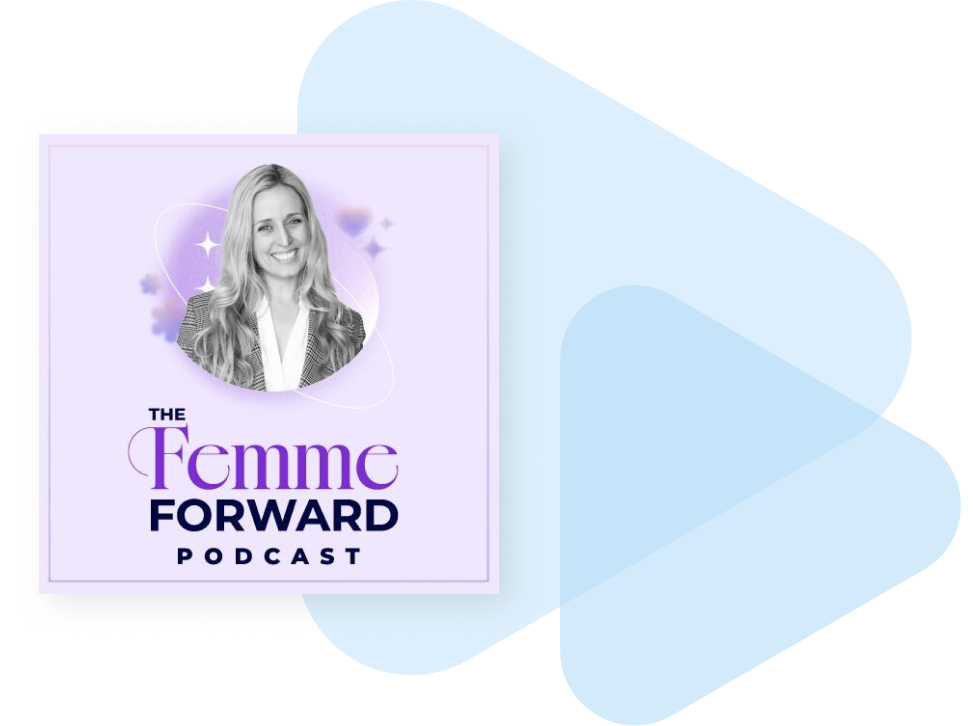
The Femme Forward Featuring Lori Goode
Listen now
Click to listen on:


Read the transcript
Amanda Glen Smith: Today's guest is a powerhouse architect of the digital advertising world. She's navigated the halls of the big three, holding senior leadership roles at Amazon, Meta, and Microsoft, before stepping into a trailblazing new chapter as the first-ever chief marketing officer at Index Exchange. Lori Goode is an executive leader who is currently helping define the future of the open web. Beyond the C-suite, she's a fierce advocate for DEI and belonging initiatives and organizations, and was recently honored as Working Mother of the Year.
She's here to talk about scaling across tech giants, building a CMO role, and how she stays unapologetically ambitious while raising the next generation. Lori, thank you so much for joining The Femme Forward. We're so glad you're here.
Lori Goode: Thank you so much for having me.
Amanda Glen Smith: Okay, let's start from the beginning, I think, for our listeners. What is Index Exchange? What is an SSP, for those who aren't as fluent in ad tech?
Lori Goode: Yeah, so the acronym SSP is a supply-side platform. What that actually means is that we are a global platform that helps media owners monetize their content. Media owners could be streaming TV providers, traditional web publishers, or mobile apps. We are what helps make that content free.
Amanda Glen Smith: Okay, I love it. Easy enough, right? Let's talk about easy
Lori Goode: Easy enough.
Amanda Glen Smith: enough. At The Femme Forward, we ask the same question of every guest at some point during our conversation, so I want to start with: as a woman, what do you view as your biggest differentiator?
Lori Goode: I think as a woman, maybe that is the biggest differentiator. At some point, I've come to leverage and understand that, at times, that is what makes me different and unique, and that's what adds value to different types of conversations. I have learned that code-switching, trying to pretend you're something you're not in these environments, is actually a disadvantage. It doesn't allow you to push forward what makes you unique. So when I see, for example, that I'm the only woman on a panel, I think, A, that's a shame, because the industry has a lot of work to do to make visibility and thought leadership more equitable. But B, I don't view that as an intimidation factor. I view it as a unique advantage, because I know my perspective is different from the rest of the panelists.
Amanda Glen Smith: I love that answer. Tell me a little more about this concept of code-switching from your perspective.
Lori Goode: Code-switching is when you have an identity that you have to turn off and turn a different one on when you're in the presence of others. It's really the practice of not being your authentic self. A basic example many of us have gone through is being a parent and showing up at work pretending you don't have children, in some form. I don't think that's as prevalent as it used to be, but if I revert back to 20 years ago, a lot of women chose not to talk about their family life or their children at work. If they had to leave early to pick up a sick child from school, they might have avoided saying why, because they didn't want to be associated with the "mom who can't maintain her full-time at-work status." I think you see that across all kinds of identities, whether gender-related, race-related, sexual-identity-related, all of it. It plays a part in how you think you have to show up in front of others and who you truly are.
Amanda Glen Smith: I don't think that was as long as 20 years ago, right? I do think COVID helped shift a lot, because people
Lori Goode: No, you're right. I think it still happens. Yes.
Amanda Glen Smith: didn't know how to manage their different backgrounds at the time, and you had a lot of things entering the picture. But what are some of the ways you feel you've left that behind, maybe bringing your authentic self and letting your team know it's okay to do the same?
Lori Goode: It's not that I code-switched earlier. I had a pretty strong delineation between my personal life and work life. If you've ever seen Ghostbusters, you know the rule, "don't cross the streams." I was a no-stream-crosser. My husband could not come to my work events. I didn't have a bunch of pictures of my kids on my desk. I kept those lives pretty separate, because I was, and still am, good at compartmentalizing personal from work. Over time, though, I've found that compartmentalization can be exhausting. I also think other people weren't compartmentalizing to the degree that I was, and I enjoy knowing things about my team, my peers, and my colleagues.
It was a real awakening when I worked at Facebook, which is now Meta. All of the workplace tools were Facebook. I joined in 2013, and I remember the first time we got a friend request on Facebook from higher-ups and coworkers. We would ask each other, did you get a friend request from so-and-so? We were so used to having work life on LinkedIn, and then suddenly those streams crossed. Conversations for work happened on Facebook Messenger, and to talk to somebody at work, you had to be friends with them on Facebook. That line started to blur. Maybe that was the start of my shift. I now knew everything about everyone they chose to post before I even had a meeting. But I also started to realize the value of that. I could have a meeting with you, Amanda, someone I'd never met before, and we'd already be friends on Facebook because we knew we were meeting and had to message each other. I'd walk in knowing something about you, like what you'd do this weekend or what your kids were up to. That may be part of how I shifted my thinking. The more I share with my team, my peers, or my colleagues, the more human I become to them, and they understand a little bit about the challenges I also have balancing personal and work life.
Amanda Glen Smith: Totally, and it gives them permission to share with you, too, right? Okay, you
Lori Goode: Indeed. Yes.
Amanda Glen Smith: talked about Meta, so let's go back there. I want to talk about your journey for our audience, because you've been a significant part of three large tech giants: Amazon, Meta, and Microsoft. If I remember correctly, you had different roles at each of those places. Is that right?
Lori Goode: Yeah, yeah. I didn't come from a marketing world, I guess. My path to CMO is a little back and forth. It's like a spaghetti noodle.
Amanda Glen Smith: A web.
Lori Goode: Yes, a web. It's a little complicated. I started at the bigger companies, at Microsoft, as a technical account manager in ad tech and ad serving. I moved pretty quickly. I think I was only a TAM for five months, and then they said, actually, you should be in sales. So I moved into an account director role and managed business development for some of our technology. Then I was recruited into product marketing. Product marketing was in some ways like account management, but at scale, because it was about understanding customer need and translating that to the product team. When something got launched or we went to market with something, it was about translating that value back to customers. Product marketing to me was being a really good account relationship salesperson, but delivering that for the entire company's value proposition, which was really exciting. In product marketing, there wasn't a real marketer, or any marketing support for our business at Microsoft, so I took on writing the website copy, managing our social campaigns, and building out all the collateral. It was a one-woman show for a long time.
Then our technology was acquired by Facebook, and I joined Meta and did the same thing there. I led product marketing, marketing, and our brand refresh. Then I moved to Amazon, back into product marketing to start. But within maybe a month, I took on the training function for Amazon Ads specifically, and within a year, I kept growing. I worked on different sides of the marketing organization, leading events, the website, content, and brand. It's very easy to do at Amazon: you just grow your remit. By the end of the fifth year, or before that, really, I was leading all the marketing efforts for Amazon Ads and all of the global training, both client training and internal sales and ads onboarding.
Amanda Glen Smith: Okay, so you were honing all these different skills at the journey of these different tech companies. What specific moment prompted you to leave that world and become the first-ever CMO of Index Exchange?
Lori Goode: Part of it was personal. We chose as a family to move. We were in Seattle at the time, and we chose to move to New York. I thought I could move with Amazon and continue as head of ads and training, based out of New York, but I took it as a different moment and opportunity. Five years at Amazon has that dog-year feeling, where the work and the growth move so fast. When I joined, Amazon Ads was a much smaller organization. Over the five years I was there, we grew exponentially year over year, so it was hot and heavy for a long time. I thought I could move with Amazon and continue on, but I realized I was ready for a different challenge, so I left without a job. My grand plan was to leave without a job, move to New York, and then figure out what I wanted to do. But the pandemic hit, I think about a week after I left Amazon. Eventually, when companies called to recruit, I would take the call if it was worth it, but I wasn't in a hurry, and Index called.
I didn't have it in my mind that I would work for a smaller ad tech company again, as I had years before. But it was very hard to refute how lovely and open the leadership at Index was in our conversations. They seemed like really great people to work with, aligned to my values. It was one of those interview processes where you want to start on the work right away, because you're already in problem-solving mode. Culturally, it felt like an amazing fit. It was also the ability to return to a smaller place, about 500 global employees, where everything you do can have impact. Little changes you make can impact other people or the business, and I knew I could add value, which was really exciting. And part of the job description was to build a product marketing team from scratch, which is one of my sweet spots. I was excited by the idea of joining a smaller company that was all aligned in the same direction. I had a chance to make an impact, I knew I could add value, and I was building again. All of those things combined to lead me to Index.
Amanda Glen Smith: I love it, exciting and new. Okay, you mentioned the pedal-to-the-metal culture at Amazon, which I feel is often very true. We have these high-intensity tech companies.
Lori Goode: Mm-hmm.
Amanda Glen Smith: Is there a survival skill you honed in that environment that has allowed you to be successful in your role today?
Lori Goode: The survival skill is probably the same thing I think is most important in any role, which is a learning mindset. In high-gear environments, you have to stay open to learning and take learning from everything that happens. I can see very quickly where people get disappointed in how something goes, or react negatively to feedback. That can happen. But the flip side is, what can I learn from this experience that I can apply moving forward? As long as you're learning every single day and taking your cues from your peers, your team, your manager, and others you look up to, things will keep moving forward. If you can incorporate everything you learn and apply it, that's really helpful. It's an iteration of how you approach your work and your role, and it sticks with you long-term. Stay open to that, and try to flip what might feel like hardship in the moment, or a challenge you're trying to overcome, into opportunity. Ask yourself, what can I apply? Maybe I didn't perform my best here, but what can I do differently next time? That iterative learning process is invaluable.
Amanda Glen Smith: I would agree. And it sounds like you took that philosophy into your interviewing, looking for your next step, and asking what they were building and how you could be a part of it. For Index Exchange, did the CMO role exist as it is, or did you get to co-create it during your job search?
Lori Goode: I was fortunate enough to create it, or co-create it. Originally, the role was billed as an EVP role in marketing. I interviewed for that role, and when I left Amazon, the Amazon leader said, "I thought you liked being the CMO of Amazon Ads." I said, I do like being the CMO of Amazon Ads, but I don't have that title. It's not actually what it's called. When I interviewed with Index, Andrew Casale, our CEO, called with the offer, and I asked him, out of curiosity, why this wasn't a CMO role. He said, well, we've never done that before. We've never hired a C-suite position from outside the company. We've always hired from within, so I imagine that, given nine months in the role or so, we could look at a promotion. I said, what's the criteria for promotion? What's the difference? Is there somebody reporting to me who leads marketing? He said no. I asked, what would it look like? What would I have to do to be a CMO? He said, well, you would have to stand up product marketing as an organization. I said, isn't that the job I'm being hired to do? So I think that's already embedded in what I'm doing. He said, look, I've never done that before. I've never hired into the C-suite, but that's good feedback. I really believed that if I had to do the job I was being asked to do, it was a CMO role, and I couldn't see the difference between coming in at a lower level and working my way up to the C-suite or not. I also thought bringing in someone at the C-suite level for marketing has the ability to drive impact faster from the ground up, if they're building out the function. Andrew said, let me think about it, I've not done this before, and I'll let you know tomorrow. About 30 minutes later, I got an email: you're right, this is a C-level role, and that's what we're going to offer you as.
Amanda Glen Smith: I love that. I mean.
Lori Goode: It's very telling. That, to me, was the nail in the coffin. Is that the wrong word? The
Amanda Glen Smith: It's all a deal. It's all a deal.
Lori Goode: The straw, yeah, whatever. That was the final thing that made me think, you know what, I will have a seat at the table of this company. The CEO who'll be my boss is someone who listens, is willing to accept feedback, and critically thinks about it. I knew that was going to be the right place for me. It wasn't really about the title. It was about not accepting that the job I was going to do should have a different title, but it was uncomfortable initially for somebody to think about it that way. I was tired of doing the job without the recognition that it was the job I was doing. Andrew is brilliant at that, and he continues to be an advocate. If I have a perspective that's different from his, he listens. He won't always agree with me, but a lot of the time, if I push on it, he will agree, because I'm right in those instances. It was really telling to me that this was the right company to work for.
Amanda Glen Smith: I love that. Okay, let's go back to that moment before you gave him a call or sent that email. Did you have a moment of, do I just take this job, or do I really advocate for myself right now? I think that little nuance is really important for people to hear, because people have always had those moments, especially women: do I actually send this email, and what's the risk versus
Lori Goode: Yeah.
Amanda Glen Smith: reward?
Lori Goode: I don't know if I saw it at the time as advocacy for myself. What I viewed it as was, I don't understand the difference. Articulate to me your strategy for constructing a team and a C-suite, because I would have been on the executive leadership team, but I wouldn't have had the C-suite title. Index is a smaller company than Amazon, of course, and the scale is quite different, but my team size is probably five or six times as large at Amazon. Thinking about the revenue and volume we were intended to drive, I thought the leveling was similar and the job scope was similar. I was more just curious about the rationale. I think it's telling about what the expectations were for my role, and what they would have been at a different level. I don't think I saw it as I'm going to push for myself as much as I wanted to understand: help me understand how you're thinking about the team and the role, and do you have a plan for recognizing when I've crossed this mysterious threshold from EVP to CMO? I also thought about what my day one would look like, and what I would do to "prove myself" as deserving of the role. Is there a KPI, is there a measurement against it? I was curious about the answer, because part of it is understanding who you're going to work for and how the company views teams and values employees. That's part of why it was so meaningful to me, because I was shown very quickly that Andrew values people, and that he would value me as a contributor to his team.
Amanda Glen Smith: It's pretty remarkable what you got out of just trying to seek clarity on a job description, because it sounds like you just needed some answers. You wanted to clarify and make sure you had the right expectations. What you got in return was not only what you felt was right, but a much better gut feeling and understanding of the culture, the organization, the people, the role, and the trust and credibility you could have on day one, being in the right position.
Lori Goode: Yes.
Amanda Glen Smith: I love that story. Okay. You've mentioned that your background before tech is also in hospitality, and that has shaped your marketing philosophy. Tell us a little more. What did you do in hospitality? Were you a bartender? A waitress?
Lori Goode: Yes, yes, yes, all of those things. In college, I was a host first in hospitality. I'd always worked retail before that, but I was a host. Then I moved to a restaurant where I was a server, and then became a bartender, and then I did a lot of different things. At some point, I became an associate manager of the restaurant, and I was responsible for scheduling for the house staff. That sounds small, except we had a hundred front-of-house staffers in a college town. Every week was managing college schedules and trying to get people the shifts and time off they wanted. It was a little bit of a Tetris game.
Amanda Glen Smith: A lot of logistics.
Lori Goode: Yeah, it was a lot of things. I also managed our marketing relationships with an agency, and I built all of our training programs for front-of-house staff, which was a five-day training program for bartenders, servers, and hosts. I also launched a secret shopper program at the restaurant. I would pull together criteria and surveys for a program where people could come in and evaluate the restaurant and give us a very detailed round of feedback. We'd use that to improve our customer experience.
Amanda Glen Smith: What did they get?
Lori Goode: Free food. Yeah, yeah. They'd come in, we'd comp their meal, and then they would provide this pretty lengthy feedback. It started when they got to the parking lot. Are the lights out in the parking lot? Is there trash on the ground? We had a very ownership-focused philosophy at the restaurant: if you see something, pretend you're an owner. If you're walking through a parking lot and see trash, pick it up. Pretend you own the restaurant, and we tried to make sure every employee had that mentality. From the bathrooms to the bar, they had to go to the bar first, then get a drink, then be seated, and go to the bathroom. They had to evaluate the bathrooms. It was kind of intense, probably of me.
Amanda Glen Smith: I love this so much. This is like the secret Michelin star.
Lori Goode: Yes.
Amanda Glen Smith: What are they called? I guess they vote on Michelin stars. It's like you had your own CIA operation to determine.
Lori Goode: Yes! I totally did. I totally did. I think that's going to be my next career at some point. I'd like to do this for hotels, bars, or restaurants, because
Amanda Glen Smith: I love it.
Lori Goode: I have an eye for these things, which probably drives my team a little crazy, because I still carry the eye mentality. I think I've built a reputation on my team for events. When we set up seating areas and meeting rooms, let's say we're at CES, Possible, or Cannes, I do the seat test. I think they all do the seat test first now: I sit in every single chair in the entire space. All the meeting spaces, I sit in. If it's a couch, I sit on every one, because what you want to understand is what it's going to be like when a customer sits down in those chairs. Is a plant in your ear? If you've ever sat down and a plant is tickling your hair, we move the plant. Is the cushion not right? If you don't sit in all of those seats, you don't understand what the customer experiences in those meetings, and whether it will be a good experience. Those are some of the things I carry with me, but it's a high bar.
Amanda Glen Smith: I love it. You have a high bar. You have a high bar. I'll do you one. My team is always very annoyed, especially my marketing team, because I have place cards. I'm like, these people are going to sit by each other. We're going to curate this conversation at dinner. I'm very Southern. My mother always did this for every Thanksgiving or Dungeon. It's the same thing. I'm
Lori Goode: I am Southern.
Amanda Glen Smith: like, you have to do it. You have to curate the right experience for every client you have.
Lori Goode: Amanda, the place card is a game-changer. If anyone listening is in an industry that does events, if you don't do seating at dinners, it leaves people, especially, not to go off on too far of a tangent, as an introvert, nervous about where they sit. Do I know anyone sitting next to me? Am I going to get stuck on the end, with other people facing away from me? It's a whole thing. But with place cards, you can be really intentional about setting up the right people to have conversations. People feel included. They're not feeling as awkward at a table, because everyone's in the same boat, whether or not they know each other, and it opens up that conversation. I think that's really important.
Amanda Glen Smith: Yes. I couldn't agree more. Also, not everybody's strength is being a middler, you know. That's a big strength, because you have to talk to
Lori Goode: Yes.
Amanda Glen Smith: people across from you, to the right of you, to the left of you. You don't want to be a brick wall, and not everybody wants to be a middler, so you've got to make sure you know
Lori Goode: I have no skills. I have no skills. No.
Amanda Glen Smith: who you're seating where. Okay, but I love this. Service is obviously a big component of who you are. It's part of your DNA, and it makes a lot of sense, because in marketing you're looking at the end consumer and their journey, right? With every experience.
Lori Goode: Hmm?
Amanda Glen Smith: Let's talk a little about how marketing is sometimes seen as a data game. Everything we're doing, especially in ad tech, is data-driven. We get all these insights, we're trying to generate them and make great decisions. But hospitality is more of an emotional game. How do you experience the restaurant or the place you're in? How have you combined those two, in your current role or in your career overall?
Lori Goode: If I go back to what you take from different companies: Amazon taught me metrics and KPIs. The amount of business reviews and metrics reviews we did there was pretty intensive, and I've been able to carry that with me. I learned a ton about how to evaluate business. When you're on a team or at a company that has to make very specific decisions, it's critical to have data to back up the decision-making and guide you forward. Even in the restaurant business, where I didn't know how to do that then, but if I had, it would have been incredible. We would have made different decisions about menu, staffing, placement, and where people sit. I think data does drive a better experience in the end, if you pair it the right way. At Index, we evaluate everything, and we combine qualitative and quantitative data to make decisions about what we do moving forward. A lot of it is still advertising reaction, isn't it? It's still about favorability and engagement, which is often emotional, but it drives behaviors you can track: clicks, purchases, and so on. People speak with their wallets and with their engagement. In a lot of ways, the data is the validation that you need to confirm there is emotion.
Amanda Glen Smith: Right. Honestly, it sounds like your survey results from the restaurant gig gave you those results. You just didn't have a way to use them yet. This is your next chapter.
Lori Goode: 100%. Yes. It was, yeah, you're right. You're right, though. It also helped me with coaching at the time, because I was responsible for a lot of the front-of-house staff. It helped me coach them: where did the training go wrong? Where might you have missed a step that would have made the customer experience even better? I think I always innately had that instinct.
Amanda Glen Smith: You heard it here first, when Lori starts her next chapter later on and has
Lori Goode: Yes, exactly.
Amanda Glen Smith: the restaurant spy app. You know it was a success right from the start.
Lori Goode: Yeah. It's so true.
Amanda Glen Smith: All right, let's pivot a little, Lori. We talk about this a lot on The Femme Forward, the sponsorship versus mentorship debate. Ultimately I think everybody needs both, but you and I have talked about how sponsorship is significantly different, right? For the women listening, how do you think we go beyond just getting advice to actually seeking a sponsor?
Lori Goode: I agree with you. It's both. It's definitely not either/or. At times, mentorship is the one that's easiest to come by, because mentorship doesn't have to imply a long-term engagement. It can be in a specific moment, or with a person on a one-time basis. I view sponsorship in two ways. One is that, as a leader, or someone in a position to advocate for others, I actively seek out people. You don't name it. I don't say, I'm your sponsor, I will now sponsor you. I don't name it that way, but I do have people in mind, people I think about on an ongoing basis, and I make sure I'm representing them in rooms they're not in, and identifying areas where I think they could add value, where they have strength, and where maybe they don't see it for themselves, but I can provide that. That's related to how I got where I am. Most of the roles I've taken in my circuitous path to CMO were identified by somebody else. I think I've applied for only two or three jobs in that time where I said, okay, I'll apply because I had the idea to. Most of my other roles came from somebody coming to me and saying, hey, I see this in you, I think you'd be good at X, do you want to try for it? Or, I've put your name in the hat for X, Y, or Z. That's what opened my doors, I think. I wouldn't be where I am without somebody at Amazon really saying, can you also take this? Can you also take this? The thing in your head is, well, I've never done that before, I've never run an org like that, and they say, you can do it. Yes, you can. Those people in your life are critically important. So as a leader, I'm always widening my sponsorship bench of people I really feel are capable of so much more, and I can see opportunities before they can, where I have visibility into those opportunities and can make it easier for them.
If you're someone who doesn't know if you have a sponsor, or you want to understand how that works, think about where you potentially want to go. If you don't know where you want to go, find someone, and maybe a mentor turns into a sponsor. Figure out where you need people to advocate for you on your behalf. What rooms should your name be in, and under what context? Figure out who those people are, and how you can leverage those relationships. Make sure you're very clear on your objectives, what value you add to the organization, what strengths you bring to the table, and what you're open to, and pair that with people who can help get you there. Then actively seek feedback on whether they're able to do that, and whether they see you as someone who can take the next step.
Amanda Glen Smith: In your running list of people you sponsor, what are the skills they consistently demonstrate that got them into that position in your mind?
Lori Goode: In my mind, usually there's a sense of ownership. Maybe that goes back to the restaurant days again. I like people who can identify potential gaps and issues, who will seek to resolve them or raise them, and who have some kind of resolution or solution in mind. People who are proactive about what they see, and aren't afraid to call it out and figure out how to close the gap or identify the right person. Proactivity and ownership are very important skills, and demonstrating that you have them is good. Diligence in showing up in a role matters too. Ambition is something you can sometimes see externally, but sometimes there's a subtle ambition that exists because people put their best foot forward, their work is consistently good, and you can see potential. The potential is what I get so excited about. When people are open to potential or opportunity, and they're open to realizing that potential, that really excites me. You can look across the board and see people who are really engaged. As someone in my role at Index, it's cool when people talk to me and engage and want to have conversations, in ways where I can tell they're hungry for more and excited about learning. I want to help connect the dots for them, get them to a place where they feel their value is being realized and they're having full impact, and marry that consistently across the organization. When I spot it, and when I see needs in other places, I ask, how do I make sure that happens for them?
Amanda Glen Smith: I think going back to your ambition, or drive, is a really big one for me, and seeing that most people you start to sponsor, depending on what role you're in, go above and beyond. As you mentioned, they're proactive, they're thorough, they own things, but they're also trying to fill gaps you didn't even ask them to fill. Like, okay, I did this, but I also thought about this, and I put this deck together, and you're like, wait, what? Okay, amazing. So I think it's
Lori Goode: Yes. Yes. Yeah.
Amanda Glen Smith: those core tenets all in one. But I love what you said earlier about how you actually sponsor a lot of people, but you would never say it, or maybe even
Lori Goode: No.
Amanda Glen Smith: tell them. That resonated with me. That is so true. I should make a list of the people I sponsor, and they know that, but you're definitely saying their names in rooms they're not in, and their reputation carries a lot of weight with
Lori Goode: Yes. Yeah.
Amanda Glen Smith: you.
Lori Goode: You're like the invisible. In some ways, it's like an invisible thing. I'd rather people not even know what's happening, even the people you're saying they're named to. You can identify something, but this back-end whisper campaign, if you will, is actually helpful. And I think the really interesting thing about a lot of people is that I said the word ambition, and I said it a bit tentatively, because not everyone demonstrates outward ambition all the time. There are a lot of people who are innately quiet, but that doesn't mean you can't see the talent in them or the skill, even in the really quiet people. In some ways, the people who aren't the loudest are sometimes the ones who might need the most support, and they're these hidden gems that are really fun to put in the right positions, so they can flex the potential they have. The last thing I'd say about sponsorship is that we've been living in a really unpredictable corporate world for the past five years, with a high number of layoffs. I came from companies that consistently had record-breaking layoffs. A lot of what I do is behind-the-scenes work, helping connect people who are looking for work and who are brilliant. Maybe they're not even people I'd have thought about sponsoring before, but how do I help? It's nerve-wracking to say this on a podcast, but it's hard for me to say no to people. If they say, hey, I'd love to touch base, I'm looking for my next position, would you mind if we set up time, it could be people I haven't spoken to in fifteen years. I'm not kidding. I've been taking quite a few of those calls, and I think that's important too. It's the thing you hope people would do for you. I think it's really important to maintain these relationships and help people as much as you possibly can.
Amanda Glen Smith: Well, you sound like one of those human connectors we all need, the person who puts people together. I also think you have a great network, and using it effectively is a skill that not everybody really does or hones.
Lori Goode: Mm.
Lori Goode: Yes, yes. I might as well. I have that, and that's what a network is for. It's to advance something you care about. If that's people, then the network is a power for good.
Amanda Glen Smith: All right, Lori, we're going to go into a personal passion of yours, which I think is a personal passion of a lot of female leaders: DEI and better inclusivity and representation, not only in ad tech, but in the market. I know you're a member of a lot of great organizations, like She Runs It and CHIEF. What does being one of these ambassadors mean to you?
Lori Goode: It's really meaningful. There are so many reasons to participate in these organizations. It's about networking, expanding your network, learning, and meeting others. It also provides a really lovely, safe space of people and connectors, individuals with sometimes common challenges, to help advance each other and work through what it takes to combine all the different versions of yourself into the human who moves forward and advances her career. Beyond CHIEF and She Runs It, I'm a board member of an organization called Bridge, which seeks to systematically embed inclusion into organizations for growth, from a marketplace perspective, but also in the workplace. While gender and women's organizations are really important to me, what's ultimately most important to me is inclusion, diversity, belonging, and equity across all people and all identities. I also lead the DEI function within Index, and we help support our ERGs: Index Black, Index Pride, Index Women, and Index Diverse Ability. So I feel like I'm more of an advocate across the board for humans in general. These organizations are about sharing best practices, and learning how to apply what you've learned to make the workplace, and the market, a place that allows for inclusion. That makes for a much better workforce and much better results for a company. There are a lot of studies that show that's the case.
Amanda Glen Smith: That's incredible. I think it's incredible that you also get to be in that position at Index. Were you doing any
Lori Goode: Yes.
Amanda Glen Smith: of that in prior roles?
Lori Goode: I wasn't. It goes back to the conversation we were having earlier. When you assume a role of importance and have a seat at the table with the decision-makers in a company, the perspective and filter you have on these issues changes. That changed for me at Amazon and at Meta. I was at Meta when Sheryl Sandberg released Lean In, and there were Lean In circles, and we had our Facebook women's t-shirts, and all of that. At Amazon, I didn't really participate in a lot of these organizations. Part of the reason, I think, is that I thought I was too busy. Another part is that there are a lot of other people doing it, so I didn't need to. When I came to Index, the nature of my role had changed, and so had my responsibility. I don't think you can be a leader today and not participate in, advocate for, or sponsor issues like this, and really involve yourself in everything related to how we progress as a company, an industry, a workforce, and as humans in general. You have to take that responsibility. There isn't anyone else who's going to do it. There are a lot of advocates within Index, and at senior leadership levels, but you can't pass the buck forever. It became very important to me, because I knew I had a seat that could help drive positive change. The more embedded I got in this work, the more I saw it as critical, and I won't ever assume it's somebody else's role again. It's critical work, and the more you get into it, the more you see how much it's needed.
Amanda Glen Smith: And what an honor, right? I feel like, back to our
Lori Goode: My gosh.
Amanda Glen Smith: original point, you get to do it. Okay, Lori. A few years ago, you were named Working Mother of the Year, while you were
Lori Goode: Yes.
Amanda Glen Smith: in the global brand, as an ad tech leader. I think you have twin daughters, is that right? You're the second guest on the podcast who has twin daughters. What does winning that award mean to you?
Lori Goode: I think it's important, because the award itself demonstrates how many women are in our industry. They're crushing it, but they're also managing a whole other career. It's hard to even describe how much work is outside of work.
Amanda Glen Smith: Totally.
Lori Goode: Right. And you, as a mother, know this very well, but sometimes don't you feel like you live a million lives before you even get to work? Then you live another million lives after work, and your mind is running through lists of everything you need to get done at home. I think care responsibilities, or at least a lot of the organizational work, still falls to women. Managing a full-time career that's demanding, with travel and everything else, while also managing everything at home and finding time for enjoyment, is a pretty big accomplishment. I think it's a lovely recognition. Going back to the earlier comment about compartmentalizing our lives, it was a weird moment for me. Index was really nice, and Andrew insisted on buying a table, and then my family was at the table with the Indexers, and I was like, gosh, I don't know about this. But it was really remarkable that Index celebrated me that way, and that the team nominated me. What I thought was most meaningful is that the girls got to see me in a work environment, on a panel, answering questions, and they got to meet some of my coworkers and people on my team. They don't get to see that side of me all the time, or actually most of the time. It was a little eye-opening for them to see what I do when I leave home for the day.
Amanda Glen Smith: And I bet they were so proud. I feel like even when our children do get to see that side, sometimes it's resentful. They don't get to see the output, or you in your element, if you will. So it's so cool that they got to see that. How old were the girls when you won that award?
Lori Goode: I think they were 14, and they're 16 now. One of the things I struggled with, when I first had them, is that I never wanted them to see me working. When they were babies, I was in a sales role, and we'd bring them home and have dinner and bath time and everything else, and then I'd get back online after all of that was done. I was very careful not to be working, so they wouldn't think, mommy's working, mommy's on her computer, mommy's on her phone. I didn't want that to be their impression of me. I worked hard to be present with them, which I think is the right thing to do. But at some point, they probably saw me as this mysterious other side when I left for the day, and they had no visibility into what that was. Around when they were seven or eight, I realized they should also see that I work really hard, so I started talking about that more. Now they've admitted they kind of online-stalk me a little, because I still don't talk about it a ton at home. They know almost all of my team members' names and coworkers' names. We have dinner conversations, and I tell them what's going on. They're involved anecdotally. But they told me they sometimes LinkedIn-search me, or follow Index on Instagram. My mom does too. She takes screenshots and prints them out, which is really funny.
Amanda Glen Smith: I love that. Mom, you're the celebrity. My husband got a book for, I guess, Mother's Day a couple of years ago. It's like, what does Mommy do all day? And it's curated. So it's like, is she at the zoo?
Lori Goode: Huh. That's good.
Amanda Glen Smith: Is she, you know? It's turned into this massive joke in our household, where my kids just take
Lori Goode: What a moment?
Amanda Glen Smith: old keyboards, and they're like, no, we're working moms. We don't work on the keyboard. That's all we do. I don't know. It's a little more than that, but thank you so much, I love it.
Lori Goode: I wouldn't say I go to the zoo every day. It could be, you know? You could spin it that way.
Amanda Glen Smith: If you had to give your twin daughters, or any young women entering the workforce, one piece of advice on how to remain unapologetically ambitious without losing their sense of self, their authenticity, as we talked about today, what would it be?
Lori Goode: I would just say you have to be true to yourself. If you are unapologetically ambitious, that's just who you are. You have to find a place or a space where you can be the most authentic version of yourself. If you're not in that space, you need to make a change. The people around you need to value what makes you different and what you bring to the table. Maybe it's luxurious, or privileged, to say this, but I feel like you almost need to demand, as priority number one, that you're in a place where you can be yourself and lean into that, because that's when you have the opportunity to do your best work. If you're stifling all those parts of you, and you have to be something you're not, I don't understand how you'd perform at the level you have the potential for. So that's maybe a non-starter: find the place where you can be yourself, and then unleash all of the potential you have. Because I think that's unapologetically ambitious. If that's who you are, it will come through. And if you're in a place where you can make a change, I would.
Amanda Glen Smith: I love that. It goes back to the very beginning of our conversation, too, about code-switching. Just be your true, authentic self, and the rest will flow. Well, Lori, thank you so much for being on The Femme Forward today. It was such an honor to have you. We're going to finish up with a quick lightning round. It's fast, it's honest, it's fun. Don't think too much. I'm going to ask you a couple of questions. Okay.
Lori Goode: Okay.
Amanda Glen Smith: Would you prefer a voice note or a two-sentence email?
Lori Goode: Email.
Amanda Glen Smith: Product or brand? What's a harder problem to solve?
Lori Goode: Brand.
Amanda Glen Smith: Information intake. Do you prefer podcast or book?
Lori Goode: Book.
Amanda Glen Smith: What's your favorite book you've read recently?
Lori Goode: Ooh, recently. Okay, I'm going to pick a six-book series. In the US it's called My Struggle, by Karl Ove Knausgård. Yes.
Amanda Glen Smith: Okay, so six books, not one, six.
Lori Goode: Yes, but I've only read book one. It's a beast, about 450 pages or so. I just bought book two. That's going to stick with me for a minute. I also read The Glass Castle, because my girls read it in school, and they said, you need to read our book. I did last week, and that's going to stick with me for a long time. It's a hardcore story.
Amanda Glen Smith: I love it.
Amanda Glen Smith: Okay, best city with the best tech energy: Seattle, San Francisco, or New York?
Lori Goode: I really miss Seattle, so I'm going to say Seattle.
Amanda Glen Smith: Okay.
Lori Goode: I believe that too. I've lived in all three places, but I'm going to say Seattle. So I feel like I'm informed here.
Amanda Glen Smith: Yeah, you are. Exactly. One word that would describe your leadership style.
Lori Goode: At the risk of repeating this too many times, I would say authentic.
Amanda Glen Smith: Yeah, it's a great one. No, it's a great one. There's no risk. Lori, I really can't thank you enough.
Amanda Glen Smith: Thank you for listening to The Femme Forward. Be sure to like and subscribe wherever you get your podcasts, and I would love it if you left a review with your thoughts. This show is brought to you by yours truly, as well as our executive producer, Kristin Sanford, and producer, Claire Middleton, with music provided by Tyler Markham. Have questions for me, want to be a guest, or just want to learn more? You can find me at Amanda at Innovid.com, or via our page, www.thefemmeforward.splashthat.com.
Thanks for tuning in, truly, and see you next time.
Related resources

IAB's Chris Bruderle sits down with Dan Mouradian to discuss the changing live TV landscape.
Raj Muhar, startup founder & CEO, joins host Dan Mouradian to discuss AI's role in creative.
C16 Biosciences' Shara Ticku dives into having confidence, intuition, and navigating male-dominated spaces.
Host Dan Mouradian and Chief Creative Officer Walt Geer discuss taking career risks, emotional storytelling, and more.
In the latest episode of Creative x Tech, host Innovid's Dan Mouradian sits down with Klick Health's Devon Taylor.
Host Amanda Glen Smith sits down with Zeta Global's Nicole Muscatello.
Xumo's Eli Zang joins host Ziggy Zografakis on the debut episode of The Other Side of the Screen.
Amanda sits down with Lynn Utter to discuss executive presence, career growth, and the double bind.
Amanda sits down with The Defined Dish's Alex Snodgrass to discuss her career and what she's learned along the way.
Amanda sits down with Miracle Mama founder Whitney Rowell to talk about building a business from the kitchen table.
In this episode, Amanda Glen Smith sits down with Lori Goode, CMO of Index Exchange.
In this episode, Amanda Glen Smith sits down with Jen Dass, Chief Operations Officer of WPP.
In this episode, Amanda Glen Smith sits down with Brooks Miller, Global Head of Creator Strategy at Edelman.
Listen to Gay Gaddis on confidence, risk & reinventing success.
Deborah Wahl shares her leadership lessons, career-defining risks, and personal philosophy.
Tune in to this episode breaking down perfectionism, empathy and confidence.
Amanda and Khara talk juggling work with motherhood, managing delegation, and being your most authentic self.
From the evolution of AI to how it can lessen the mental load, Sarah & Amanda dive into the future of an AI-assisted life.
Amanda sits down with Publicis' Sara Newton to dive into what it really takes to lead, grow, and thrive.
In the first episode, Dan Mouradian sits down with Caroline Levere, SVP, Performance Creator of New Engen.
Listen to host Amanda Glen Smith and Basis CMO Katie McAdams discuss the power of intuition in leadership.
Innovid's Claire Middleton, Juli Goldman & Prisma's Steph Watson dive into the current "eras" of their career trajectories.
Listen to Amanda Glen Smitha and Unilever's Rachelle Schuimer discuss their careers.