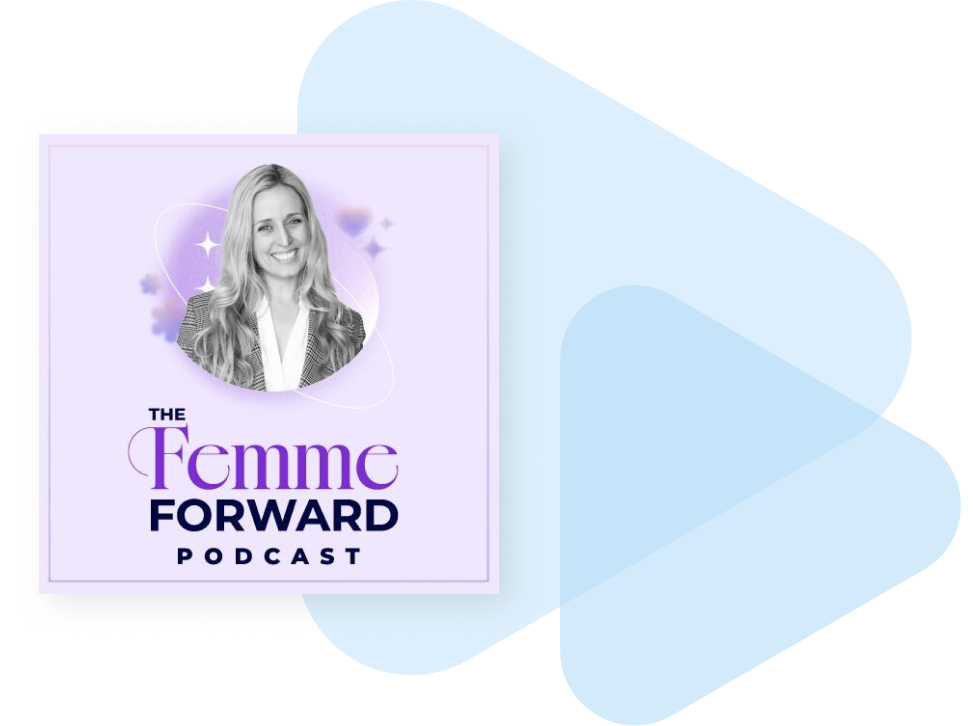
The Femme Forward Featuring Shara Ticku
Listen now
Click to listen on:


Read the transcript
Amanda Glen Smith: Shara Ticku is a visionary biotech entrepreneur whose career is defined by a refusal to accept impossible as an answer. As a CEO and co-founder of C16 Biosciences, she is the driving force behind the Palmless Movement, a radical lab-grown alternative to palm oil that tackles one of the world's most complex environmental challenges.
Shara stands out in the deep tech ecosystem because she has successfully bridged the infamous valley of death in biotech, taking a complex lab discovery and turning it into a commercially viable, trendy consumer product. Fueled by the deep global perspective gained from working across diverse markets like Singapore and India, Shara possesses the unique flair of a brand builder. While many climate tech founders focus solely on the industrial B2B side, she understands that to save the rainforest, you have to make the alternative sexy.
Furthermore, her background isn't a PhD in biology. It's in finance and public policy, allowing her to lead with a commercial-first mindset that many scientific startups lack. Shara's ultimate superpower is her ability to translate high-level synthetic biology into a relatable consumer brand, proving that sustainability doesn't have to be a sacrifice. It can be a luxury.
Amanda Glen Smith: Please welcome my longtime friend since kindergarten, Shara Ticku.
Amanda Glen Smith: Shara, welcome to The Femme Forward. I'm so glad you're here.
Shara Ticku: I'm so glad to be here.
Amanda Glen Smith: Okay, for everyone in the audience, I need you all to know that Shara is my longest and oldest friend, I think that I still have, right? Kindergarten.
Shara Ticku: Since we were five years old. Yeah. You're—
Amanda Glen Smith: Am I the same for you, or does someone trump me?
Shara Ticku: My oldest, longest friend.
Amanda Glen Smith: Look at us. Look at where we are now. We're on a podcast together. I love it.
Shara Ticku: It's great. Our five-year-old selves could have never imagined.
Amanda Glen Smith: Never, never. Okay, let's talk a little bit about your journey before we dive right into all the fun stuff. I know it wasn't linear and you did a lot, and you have done a lot in your short thirty-eight years here on the planet. So once you graduated college, which we also went to college together, where'd you go? What did you start with?
Shara Ticku: Right, so when I graduated college, I landed in New York, on the trading floor at Goldman Sachs. It was really fun. Goldman was a great place. It was a great first job, and it really taught me how to work. I worked with great people, I had a lot of fun, I was in the middle of markets, and I got to travel. But really, a couple of years in, I had what I call my quarter-life crisis, where I was essentially asking what work means to me and what I want from work. I feel lucky that I was able to ask myself that question, and I spent about a year reflecting on what I wanted out of a job. Where I landed was that I spend the bulk of my waking hours at work, so I want that job to be important, intellectually stimulating, and interesting. Then I had to define what that meant. What did important mean to me?
I eventually landed on biology and life sciences. I'd always loved science. My dad was a scientist, and I'd always loved biology. When we met, when we were five years old, I thought I would be a doctor. And when I really thought about it, this was what I loved.
Amanda Glen Smith: I know, I know. Just so you all know.
Shara Ticku: This is what I loved. So when I was about twenty-four, I realized this is what I want out of work, and that has really been my guiding star since then. I've done a few different things. I left Goldman. I took a 60% pay cut to work for a nonprofit, the Clinton Health Access Initiative, and I spent my time working mostly in sub-Saharan Africa, increasing access to reproductive health medicine. Really rewarding. Loved it. Checked all my boxes.
But I was on a flight to Africa every two to three weeks, which was really hard. So I enrolled to get my MBA at Harvard Business School, loving healthcare but wanting to transition to the U.S. applications of that. Little did I know I would end up starting a company commercializing life sciences, not in healthcare, but in the planetary health applications of biology. That company is C16 Biosciences, which I founded, and I've been running it since business school, for the last eight years.
Amanda Glen Smith: Okay, let's talk about the spark that made you found that company, because if I remember correctly, it was one defining moment for you when you were traveling in Singapore. Is that right?
Shara Ticku: It was something that happened years before. When I was at Goldman, I covered Asia markets, and I was in Singapore for work. When I landed, my company said you have to wear an N95 mask because the air is toxic in Singapore. This was years before COVID. I didn't know what an N95 mask was, but when I landed there was a thick black haze covering the sky. Schools were canceled, and they told pregnant women not to leave the house. The air quality index was well over 400, and an air quality index over 150 is considered toxic, so it was extremely, extremely dangerous. All of this was because farmers in Sumatra and Indonesia were slashing and burning rainforest, converting tropical rainforest to industrial palm oil plantations. I was shocked, but I kind of went back to my life.
And then a few years later, I'm at business school, in a class at the MIT Media Lab, and my now co-founder, Harry, had just taken a trip to Costa Rica with some of his friends, and the same thing had happened to him. He said, we went to visit the rainforest, and it's gone. It's just been cleared and converted to this industrial palm oil plantation. That's what got us thinking. We very quickly realized palm oil is an ingredient, a vegetable oil.
It's found in 50% of products on supermarket shelves, so it's in everything from potato chips to chocolate candy to lipstick and laundry detergent. Every single person probably uses it every day in some capacity. It's a really great, ubiquitous, useful ingredient, but the way we make it is horrible, because we burn rainforest to make vegetable oil. My co-founders, Harry and David, and I looked at this and said, this is absurd. Why do we need to clear rainforest to make a vegetable oil? There has to be a better way. What would it look like to use not plants and not animals, but the fungal kingdom, microorganisms, to make something that looks and functions just like palm oil? Is that possible? That's how we got started.
Amanda Glen Smith: I love that. Okay, so just to make sure everyone fully understands, there are no negative health impacts from palm oil. It's more the way in which we create and make palm oil. Is that right?
Shara Ticku: Palm oil is a fat, and from a dietary standpoint, fats are controversial. So I would say palm oil is found in a lot of packaged foods, and that's real. But I think there are no explicit health issues. It's not causing cancer or anything like that. You don't want to overconsume it, but that's true of everything. So the—
Amanda Glen Smith: Right.
Shara Ticku: Real issue with palm oil, yes, is just in how it's made. We thought if we could make something just like this but make it a different way, in a way that is scalable, that doesn't use land, and that doesn't have to burn down rainforest, that would be a game changer.
Amanda Glen Smith: Okay, so you have the idea, and you have co-founders with you who are on board. What's next? How does it actually become a reality when you're in Harvard Business School?
Shara Ticku: We started playing around in the lab. We really started from first principles and said: if we're going to make something that looks and functions like palm oil, what has to be true? You have to make the right profile, so the science has to work. It has to be able to scale to huge volumes. This is a $70 billion-a-year industry. It's in 50% of products on supermarket shelves. If we're going to have impact, we have to be at scale. And we're scaling biology. It's not just computer chips. Things change with scale, so we have to build that in. It has to be cheap, so there has to be an economic model that makes sense. We really started with the science. For us, it's been about de-risking, figuring out what's the most important thing to de-risk now, and it started with the science. We started playing around in the lab, and pretty quickly we made something that looked and functioned like palm oil. We could only make a few milliliters of it, but it was good.
We started entering business plan competitions, and we won some money from Harvard and MIT. Our first check was a massive $25,000 check from Harvard, and that bought us more time to keep building. We started getting feedback like, this is really interesting. The science seems to work. If you can scale it, this would be interesting. What really gave us the conviction to start was getting into Y Combinator, a California-based, Silicon Valley-based accelerator typically known for software, but they believed enough in what we were doing, scaling biology for an important problem, that they invested in us. We were all finishing grad school and had other plans. Grad school, PhD, postdoc. My co-founder David was going to go to med school. I had a job at a fertility company, and we all canceled our plans and decided to start building C16.
For us, this came down to: what does work mean? This feels important. Once you've seen a problem clearly enough, choosing not to work on it becomes its own decision. So we left behind these prestigious institutions and other paths we were planning, because it felt almost like we had to try, at least, to bring this thing to life.
Amanda Glen Smith: I love that. Okay. How do you feel like your financial background at Goldman, and working at the Clinton Health Access Initiative, really helped build this company and translate those skills into what it is now? Because I love you and you look great in a lab coat, but I feel as though being a scientist was not your core competency at the time when you all were innovating, right?
Shara Ticku: Yeah, and that's what made our founding team so compelling. Harry was the expert. He had a PhD in synthetic biology. David was a biological engineer, and I was the one thinking about how we translate this into an actual business. Science isn't a business. What's the business case? Goldman in particular rooted me in economics. C16 started with the ambition of more sustainable products, but a real sustainable business is a profitable business. That's been rooted in me from day one, and in our company from day one. How are we going to make money? Funnily enough, many biotech companies, and many startups in general, don't think about profitability and being a sustainable business until it's way too late. So the complement of those skill sets has been a unique advantage for our team.
Amanda Glen Smith: Totally, and having experts in every part of it. But as CEO at C16, you're now managing an entire team of scientists and innovators, rewriting the future of oils. How is that for you? I imagine having experts in every field to partner with is incredible, but there are also gaps that we all have in terms of expertise. What has that been like for you?
Shara Ticku: First, it's fun. This has been the steepest growth curve of my life, and I never have all the answers. There's always a new paper, and one of the brilliant scientists on my team can teach me something. So it's just fun. But second, I think it's an unfair advantage. I am not the expert in the room. I've hired a lot of people who are much smarter than me, and they're deep in their science. Sometimes experts in any field make assumptions about what's true. They know things so cold they just make assumptions. Being an outsider, or not being an expert, is an unfair advantage because you get to ask the stupid questions. It gives me permission to take a step back and say, well, what is this assumption based on? Why are we assuming this is true? When you're really deep in your field, you skip ahead, and that can lead to really bad decision-making. So not being the scientist actually helps me ask the simple questions, the axioms, and always ground us in checking our assumptions.
Amanda Glen Smith: So it's kind of your advantage, because you're able to ask all the questions, as you mentioned. You can be vulnerable. You don't know what you don't know, and there's no shame in it.
Shara Ticku: 100%. And look, I have to spend a lot of time reading scientific papers and asking my teams questions. So it's not an excuse to not know anything. I also have to do the work, but it also provides a good check on unbridled assumption-making.
Amanda Glen Smith: Right, that makes a lot of sense. Okay, so you have PhD scientists on one side, you have consumers that you're trying to manage, which we'll get into, and talk about some of the ways in which this oil has been used, and then you also have investors. Do you view your role as almost a translator of sorts between those three audiences?
Shara Ticku: Yeah. My superpower is not being the best scientist in the room, and it's not being the expert or even the smartest person in the room. My superpower is being able to connect that science with capital, customers, consumers, and policy, to make the science real, to make the innovation implemented, and to build the team and resources to do it. My dad was a research scientist, and I've loved science from an early age. I've spent most of my career working to translate cool science into the real world, whether that's female and reproductive health or planetary health. And if there's one thing I've learned, it's that great science usually isn't the bottleneck. Breakthroughs in scientific innovation don't fail because the science doesn't work. They fail because nobody translates them into something the world wants—
Amanda Glen Smith: Or understands.
Shara Ticku: Or understands or can adopt. That's my job.
Amanda Glen Smith: Yeah, I love that. That's your mission statement. Okay, let's talk a little about the applications you all are creating, because it's one thing to have C16, but you also have these offshoot brands, if you will, in the beauty and personal care industry, one of the largest consumers of palm oil. Tell our audience a little about how it's morphed and evolved over the years.
Shara Ticku: So I mentioned before, palm oil is found in 50% of products on supermarket shelves, which is great because it gives us so many applications and so many markets for change, but it's also a problem, because where do you start? When we got started, we mapped this out. We had a lot of people pushing us to say your ambition is big, go for the industries where you'll have the most change. Go for food or fuels, where you'll have the biggest scale and the biggest impact. We really resisted that. We focused back on how you build a sustainable business, and how we make this real as fast as possible. We very quickly saw beauty and personal care as a really compelling market, and as a lily-pad strategy onto bigger markets. This is an old analogy at this point, but think of Tesla. Launching the Roadster is not solving electric cars. It's an expensive, fancy car. It's not solving the problem at large scale. But what it allowed Tesla to do is make it real, prove the case with a proof of concept, and then come up the scale curve and down the cost curve. That's what we did with beauty and personal care. It's a $500 million market with 60-plus percent gross margins, constant innovation, and higher willingness to pay. It's a great market for us, so we decided to launch in beauty and personal care.
There's now a Harvard Business School case study on this question, because I had an investor who hated this idea. They were like, absolutely not, you need to be more ambitious, you need to go for food. We had a lot of conviction that this was the right path because of all the reasons I laid out, and ultimately we convinced that investor, and they later led our Series A round.
Amanda Glen Smith: Wow.
Shara Ticku: You can't wait for people to give you confidence in what you're building. Confidence doesn't come until you build the thing. Confidence in what you're doing comes from surviving the process of building. So really having conviction in your own beliefs, instead of what investors say is right or what trends say is right. If you're really trying to do something disruptive, I think you have to follow your gut. That's what we did, which is why we landed in beauty and personal care.
Amanda Glen Smith: Totally. It's almost like, as you said, it's an entry point, a lily pad. It doesn't mean you won't necessarily get to some of these other verticals or markets, but you had conviction in your gut that this was the right one. Now, can I ask? Because obviously you were the only female founder in your group, and obviously use a lot of skincare, as we all do. Did you have the same conviction, all three of you, or were you also convincing your co-founders that this was an instinct?
Shara Ticku: My team was bought in. My team has always been bought in, and it's been really fun. My co-founder David, who is a man, now leads our skincare sales. When I was about to have my baby, I thought, this young dude is not the right person to sell to skincare companies. And you know what? He's been fantastic. He's great at it. I think sometimes as a woman, I feel like I am receiving unfair bias by being a woman, and sometimes it goes both ways, right? My male co-founder leads skincare sales, and he is awesome at it, and he loves selling it.
Amanda Glen Smith: Yes. Right. And you're like, this is great. This is a win-win. You don't have to do it all, also, you know? Okay.
Shara Ticku: That's right.
Amanda Glen Smith: Let's talk about some of the brands you've partnered with or launched, because I think our audience will know some of them, and I think they're exciting.
Shara Ticku: Yeah. We make ingredients, everything from precision lipids like palm oil alternatives or cocoa butters to totally novel bioactive ingredients, which are really exciting for skincare brands trying to make claims about making your skin look better. We've sold to more than a dozen brands, mostly in skincare and sun care. We just had our first color cosmetics company launch, which was Tower 28, a really exciting makeup brand. They launched the product exclusively in Sephora, the Tower 28 Lip Plumping Jelly, so that's our first color cosmetics company customer. We also sell to Deciem, which owns The Ordinary, a super popular skincare brand, and their brand Niod launched an ingredient with us. They're owned by Estee Lauder now. That was our first landing into a major multinational in the skincare business.
A couple of others we saw with some of the coolest, most innovative brands in skincare. Just one to pitch is a company called Crave Beauty. They're based in New York. It's inspired by Korean beauty and the slow beauty movement. They're so intentional about their products, and they launched a product called 24 Carat Retinol. It uses retinaldehyde. Our oil helps encapsulate and deliver the retinol to make the retinaldehyde more effective. It has upcycled carrots and our biotech ingredient. It's a really thoughtful, really sustainable, really good product. I have loved working in this space, because I get to work with beauty brand founders who are really pushing the envelope in making great products that also happen to be sustainable. It's honestly really inspiring, and it's really fun.
Amanda Glen Smith: Love that product. I'll try it post-baby. I can't use retinol quite yet, but I'm already bought in. But it's an ingredient, so there's no competitive advantage, right? You can basically work with any of these companies, or does it ever come down to making sure you're with the right fit? Because there are so many out there.
Shara Ticku: In beauty and skincare, we've not done exclusives with anyone, because the industry is really innovative, and people are able to do new formulations and new claims in so many different ways. In some of our other markets, for example food, we're not launched yet, but the food customer we're planning to launch with might have a period where we couldn't launch with any of their competitors. But in beauty and skincare, there's enough innovation that we don't have to give anybody access. Sorry, that was a really—
Amanda Glen Smith: Well, and I hope that doesn't exist, because that kind of defeats the entire point of disrupting the industry, for the better good. Okay.
Shara Ticku: I think in general, we've seen our customer base not be greedy about innovation. They want other customers to adopt it too, because they want to see all the boats rising. We thought we would have to give exclusivity to some of our customers as an enticement to work with us, and in fact, they want more people at the party. They want more of the change driven. Which I think is a really good thing.
Amanda Glen Smith: Okay, so speaking of change driving, let's talk about the campaign you launched, Save the Effing Rainforest. Because, A, I loved it, but, B, I know it's not live at the current moment. I want to go into how bold it was and the exposure it gave your brand.
Shara Ticku: Yeah. We're a biotech company, and we're trying to sell ingredients to large multinational consumer brands. Those brands are slow to make change and make decisions. We thought about how we could make this go faster. As a founder, your job is often to believe something years before everyone else does, and then you have to make it real. We could shuffle our feet and wait for our first customer to come online, or we could take action and launch something ourselves. So we launched a direct-to-consumer product under the brand name Palmless. We named it Save the Effing Rainforest, and we put little butterflies and trees in the curse word. It's a product that uses our ingredient in a finished oil formulation you can use on your skin, your hair, wherever. It's multi-purpose. We launched it on our website only, and the product sold out in two hours.
We got a billion earned media impressions with zero dollars spent on marketing, and we had 147 inbounds from the world's largest consumer goods companies, every major skincare and food company. I think this was the best thing we've ever done as a company, because we had great science, but everyone thought, you're taking on a behemoth industry, it's going to be so hard. Big legacy consumer brands didn't want to be the first one in the pool. Sometimes you have to be the first one in the pool. You have to jump in and say, hey, the water's nice, come on in. That's exactly what it did, and it worked really, really well. It has built our entire pipeline for sales.
Amanda Glen Smith: Okay, but it was bold. I feel like it was very unapologetic. Yeah.
Shara Ticku: Everything about it was bold. The name, the decision to launch a direct-to-consumer product, all of it was bold.
Amanda Glen Smith: Where did that spark? Where did that brand voice come from?
Shara Ticku: We were thinking about what drives change and what drives movements, and we're a science-based company, so our instinct is data and science. But people don't join movements because of data. They join because of stories and emotions. So we leaned into that. We wanted to build something that was scientifically revolutionary but also culturally sexy and irresistible, something people wanted to talk about—
Amanda Glen Smith: And disruptive.
Shara Ticku: About. Yes. We thought a lot about the names Palmless and Save the Effing Rainforest. Those are bold names, and at the end of the day, this came down to authenticity. As we were building the brand, I thought a lot about what the CEO of a biotech company looks like, what a biotech startup should sound like, and what we should call it. The things that work best are the things that are authentic. For us, authenticity was being smart, direct, and audacious. That's Palmless, and that's Save the Effing Rainforest. We leaned into that, and it's been really fun.
Amanda Glen Smith: Did you have any advisors tell you all, no, tone it down?
Shara Ticku: I think people loved it. It's funny, and she's not an advisor, but my mom used to wash my mouth out with soap if I talked back to her, and she doesn't like curse words. I was nervous when we were launching this. What's my mom going to think? My mom loved it. So I think people felt the authenticity. The other thing I would say is clarity. We're a biotech company, but what's really important is that translation of science to why do I care? People are so overwhelmed with information. One of my investors, who spent 25 years leading Procter & Gamble and L'Oréal, very steeped in consumer brands, loved the name, because he said Palmless tells me exactly who you are, what you do, and why I care. Consumers have so much information thrown at them. Should I buy this plastic or glass? Is this brand good, or is this brand better? It is overwhelming, and I feel that way too. Having a brand and product that are so clear about who you are and why I should care, I think, really resonated.
Amanda Glen Smith: Okay, so why not go all in, or heavily in, on Palmless? Is more being made? Are you going to do additional launches?
Shara Ticku: The product sold out. We occasionally will launch it just for fun. That was marketing in the beginning, awareness, top of the funnel—
Amanda Glen Smith: Awareness. Pure awareness. Yeah, I love it.
Shara Ticku: But now we're squarely focused on B2B ingredient sales. It comes back to focus, what our purpose is, why we exist, and our theory of change. We drive change by helping the biggest brands in the world shift their sourcing away from these extractive supply chains into the supply chains of the future, which are biomanufacturing. If we want change, we could go build a DTC brand or a consumer brand, but that's not why we started this company. That's not the promise we made to ourselves, our team, or our investors. It's about driving change within supply chains. So we're focused on B2B. We may do things like that in the future in service of that goal, but it's always about achieving the mission, and we get that through selling to customers.
Amanda Glen Smith: Okay, it is a really good product, though, I will tell you. I have it, I use it on my hair, my husband uses it on his beard, but I bet you can't guess the number one use for it in our household, Shara.
Shara Ticku: Your dog?
Amanda Glen Smith: No, no. It is to remove child face paint and tattoos. You can use it with a cotton ball, and it will take that right off. I'm telling you, that is a very hard thing to do.
Shara Ticku: You know what, Amanda? I actually use it as a makeup remover. I use it as an oil cleanser. Oil removes dirt, so it's really great as a makeup cleanser. It's funny that you say that. My head of marketing had two kids and started using it. He had this breakout, this wound, and it was like a magic healer. I think this is another lesson for us from this product. Again, I think back to being a company full of scientists. Never assume that you know everything, and especially never assume that you know everything about your product or how your customers are going to use it. The best learnings we've had have come from being open and getting our products into the hands of other people, whether those are expert cosmetic formulators, our customers, or consumers like you. People start to tell us how they're using it, why they're using it, and it opens opportunities we never thought about.
For example, one expert formulator said, I bet this would be really good for sunscreen. We took that, ran a clinical study, and sure enough, we can boost sun protection factor by 20%. Now we have a clinical study that's a direct path to claims in sun care, which has been one of our most interesting sales channels. You can sit in a room at a whiteboard and think you have all the answers, but by not always assuming you're the expert, and not always assuming you know everything, whether that's internal within your company or in how you interact with your customers, you learn a lot from other people if you're willing to listen.
Amanda Glen Smith: Okay, so speaking of assumptions, because I totally agree, I'm going to go out on a limb and assume you've had a lot of lessons as a founder, and not only a founder, but a female founder. So let's go back to the inception of this idea and you having to go pitch. Tell us a little more about that process and how it went for you.
Shara Ticku: Yes. So starting with fundraising: today we sell to beauty and personal care brands, which may seem like a female-dominated industry, but even beauty and personal care is not female-dominated. Fundamentally, my company is a deep tech company working on biotech and climate change and large industries, which are extremely male-dominated, both in terms of what founding teams look like and what investors look like. In the earliest days, it was really hard. I was a non-technical female founder of a biotech company, and investors could look at the company next to me, with a PhD celebrity scientist, all white men, and ask who they're going to fund. They're going to fund the celebrity scientist. So from day one it's been an uphill battle. The good news is you don't need everybody to believe in you, you just need a couple, and we were able to find a handful of investors who really did believe in our science and our team, because it's as much about the team as anything. But I spent years thinking, as a woman and a non-technical founder, that I needed to earn my seat at the table, or that I needed more gray hairs in the room, more experienced executive members in the room, to earn respect.
But building this company has taught me that sometimes it's not about earning a seat at the table. It's about building the table yourself. Time after time, when I look back over everything we've done, we have always done better as a company when I followed my gut, versus when I was focused on building credibility for someone else.
Amanda Glen Smith: You know, that's so funny you say that. I've been filming a lot of episodes for The Femme Forward, and almost every single guest has said gut, instinct, and intuition are what have driven them to be who they are and where they are. I do think that is almost a uniquely female characteristic. If you can tap into it and listen to it, it's more often than not right, and it's a guiding light.
Shara Ticku: It's very hard, though. In the early days, I spent so much time thinking about what people expect, what I should look like, what they will expect. This is embarrassing to say, but should I cut my hair? I had long hair. Should I cut my hair so I'm perceived as more serious? I did, when I was fundraising. Those are things that men don't have to deal with. We have to spend energy thinking about what clothes we wear to present, how short or how long our hair is, and what signal that sends about our credibility. Unfortunately, it's still just part of it. But through the years of doing that, I've learned to stop worrying so much about how other people will perceive me, and just trust myself and do it, and let the people who see it get on board.
Amanda Glen Smith: Yeah, I don't think it's embarrassing at all. I think it's so accurate, and I'm glad you said it. I was listening to a podcast, I think it was Michelle Obama's, and she was talking about when Barack was in the presidency, and they'd go on these trips, and it was such a different experience. He could wear the suit all day, and depending on whatever event they were going to, he could just take off the jacket, roll up the sleeves, call it a day, and maybe change his shirt if he got sweaty. Her outfit changes, and navigating an entire day was like, okay, are we going to be at a schoolyard? Are we going to need to bend down? How long could our skirt be? Do we need high heels? You can't wear those when you're going across this stage. It was an entire orchestrated event. And I loved this episode, because she was ultimately like, with all due respect, me packing for a trip is a nightmare compared to you going on a business trip. And I feel like that all the time. You do have an obligation of sorts, especially in your position as a founder, where you're like, listen, I am part of this company and this identity, so what do I want that to say? But at the same time, it's a totally different challenge than most men have to navigate with a very simplistic uniform. If you're my husband, who I love and adore, that's a really easy way to pack. This is not.
Shara Ticku: It's true. It's true, but it's just part of it. But with time, I've built more confidence in myself, and I think that makes me a better leader and focuses me on what I believe is right for the business. And it was there from the beginning, right? Having conviction to launch in beauty and personal care when every investor said, don't do that, go for food first. Then every one of my competitors that launched after me went for food first, and now every single one of them has pivoted and launched into beauty and personal care. So, back to my point: the moments where I've trusted my gut have been the best decisions, versus the moments where I'm worried about what this investor will think if we do this. That's a hard balance. I think women are naturally empathetic and spend more time thinking about what other people will think, whether it's people on your team, investors, or customers. But it's because—yeah, yeah.
Amanda Glen Smith: We care. Yeah. I get it, and I agree. I think I'm hearing you say two things. Not only trust your gut and your intuition, but also embrace it. Embrace what you believe in. Embrace the change. Embrace your authenticity. Because even if you go as far as your haircut, when you do that, you feel the most yourself, and then you show up in the best possible way in every single boardroom or wherever you're presenting. So it's a lesson to keep in mind, and it's a really hard one, because there's just so much that goes into it.
Amanda Glen Smith: Okay, so what else? Obviously you've been in a lot of spaces, whether it's investors or scientists, where, for lack of a better term, you're kind of the token female at times. As you look back and navigated some of these pivots, are there any other lessons you feel you've learned?
Shara Ticku: It's always an honor to be in a room. It would be better if I weren't the only one. I think people know this now, but women in leadership positions have to work twice as hard as their male counterparts to get there. I have an example: I was in a room with a very senior politician, and there were 14 companies in the room, clean tech and deep tech companies. I was the only female in the room, and as that politician went around the room, he grilled me harder than anyone else. That's a correlation, not causation, but it is true, and I feel it. We have to work twice as hard. We're held to a standard that's twice as high. Ultimately, that tells me I have mad respect for all the women building their careers, because I know how hard they've worked to get there.
I'm an entrepreneur in residence at Harvard Business School now, and I spend a lot of time talking to people who want to found companies, join companies in healthcare, sustainability, or biotech, or go through non-traditional funding routes. It's a really rewarding part of my life. I've been really lucky in this job to have a lot of women mentor me, and mentor is a weird word, but who want to help me, guide, connect, give resources, and role-model. It's rewarding to be able to do that back. I think we all need to see what it looks like, and we need to see models of it. There are more and more, and I have a lot of respect for every woman who's there, because I know they've had to work twice as hard as their male counterparts.
Amanda Glen Smith: Yeah, it's proven in the data. It's called a double bind, and it's working twice as hard. It's also one of the reasons why most female founders are risk-averse, because their margin for error is so much smaller when they fail. There's a huge study that's been done on this, and it makes perfect sense. It takes a lot to be a founder, Shara. There's a lot you have to, and I hate this term, but balance. So what does your current blend look like? What does your life-work integration look like as a founder, a friend, a wife, a mom?
Shara Ticku: Yes. As a founder before I had my baby, I worked seven days a week. I worked all the time. I worked on vacation, I worked on our honeymoon, and it was fine. I still had fun. I had plenty of time, so I could work seven days a week, exercise, and have fun. I didn't feel like I was giving anything up. Now that I'm a mom, I have way less time, so I've really had to figure out how to work smarter. I've learned about myself. I don't know how to work smart. I'm a hard worker. I've been a hard worker my whole life. Input, output: if I work harder, I'll get there. That just doesn't work anymore. I've had to figure out how to work smarter.
And we only talked about this a little bit, but team has been such an important thing. Hire people smarter than you, hire people you trust, and let them take responsibility off your plate. That's been very, very important. There's no work-life balance. I cannot have everything all at once. I really just have to think about my life in chapters, and when I need to lean into this part of work or this part of my life, and what's most important for me in this moment. Exercise is the last thing I'd give up. I try to exercise at least five days a week, sometimes more. Sometimes it's just 20 minutes, and that is for my mental health. I spend all day in my head, in my work, making decisions, and I need at least 20 minutes a day to get out of my head and into my body. I think it makes me a better decision-maker, a better friend, a better parent. So the only thing I really prioritize is some kind of movement, even 20 minutes.
Amanda Glen Smith: Is this your city bike, or is this on top of your city biking to your office? I think that counts. No, it's—
Shara Ticku: City bike does not count. The city bike is not movement—
Amanda Glen Smith: Movement. It's outside. It's vitamin D. And aren't you pedaling?
Shara Ticku: Honestly, commuting to work by city bike helps me a lot, because it gets me outside in fresh air and moves my legs first thing in the morning. During COVID I learned, and I'm a Texan, so I like hot weather, and I'm afraid of cold weather. But I'm comfortable city biking as low as 35 degrees. Just bundle up.
Amanda Glen Smith: Okay, for the record, I approve of your city biking journey. I just didn't approve when you were seven months pregnant. I was like, I feel like this is the time to maybe commute another way. We don't need to see your helmet. No, I'm dying. Okay.
Shara Ticku: I know. I know. I know. I wear a helmet too. I have my helmet.
Amanda Glen Smith: As a founder taking this journey you've been on and learned so much, what advice do you have? What do you wish you knew seven years ago when you started this journey?
Shara Ticku: I really do think it's just believe in yourself. It seems like to start a company you probably have to have a lot of confidence that you can go do this thing. That's not true. We started the company and said, this might not work. There's a chance it works, but it might not. But it's so important, and we have a chance. Climate change is the defining problem of our generation, and we have a chance to make a dent in it. We have a responsibility. We want to try. Some things have worked, some things have worked better than I expected, and some have been much harder than I expected. But a very hard lesson for me to learn has been to just believe in yourself. I have built confidence in myself by being in the trenches, by living to see another day, and by running through brick walls over and over again. I probably wish I could just tell myself, you can do it. Don't be afraid of that brick wall. You will figure a way over it. Go big and believe in yourself. I don't know if it would have been effective. I think sometimes you have to learn it the hard way.
Amanda Glen Smith: Yeah, I love that. I think it's also, to your point, you're out there pitching, you're trying to get funding, you're trying to change the world and consumer behavior. If you don't believe in your mission, nobody else is going to.
Shara Ticku: Somebody told me something like, there are a million people telling you no and telling you can't do it, and you can't be one of those people. If you're fighting yourself or your team, you'll never succeed. You have to be so internally coordinated, because the whole world is telling you no, that's too hard. So you really, really do have to believe in yourself.
Amanda Glen Smith: I love that. Okay, let's fast forward twenty years from now. You've changed the global standard, hopefully. What's one legacy you hope you've left for the next generation of female founders who want to use science to change the world?
Shara Ticku: I think women are great leaders. I grew up in a very male-dominated industry, Wall Street, the trading floor, and even now I'm still in a very male-dominated industry. But my leadership style has always leaned feminine. I learned a lot in that male-dominated industry, but my leadership style has always leaned feminine, and that's powerful. I think having more women leading companies, full stop, is good for the world and good for society, and more women leading biotech companies. I have a lot of friends who are women leading biotech companies. Some of them are scientists and some are not. I'm excited to see that grow. I think women can do anything, and women in science is a really exciting field. So yeah, just more.
Amanda Glen Smith: Here, here. I couldn't agree more.
Shara Ticku: More, more little girls who want to be doctors. Being a doctor is great, but driving industry change with science is also great.
Amanda Glen Smith: Okay, as a female driving industry change with science, your exact words, what do you view as your biggest differentiator? Is it that feminine leadership style?
Shara Ticku: I think it's that translation. This is going to sound really simple, but communication is everything. My whole job is basically sales. I have to sell employees to join the company, I have to sell investors to invest, and I have to sell customers to buy our products. Sales is communication. Being able to translate really technical science, why this science and why this problem, to people who are busy, is what I'm really good at. I think that's particularly strong in women. We're really good at understanding our audience, reading what's important to them, and communicating effectively. There's so much interesting stuff happening in science, but a breakthrough that never reaches people isn't a breakthrough. It's a science project. So you have to figure out how to make it reach people, and you can't do that without effective communication. I think that's so underrated, and it's something I'm good at, and something many women are uniquely good at.
Amanda Glen Smith: I couldn't agree more. It's underrated, and you would be shocked at how many people are not effective communicators. It's crazy.
Shara Ticku: And we've almost run a whole podcast without saying AI, but as more and more people lean on AI to help them write a speech, prepare for a podcast, or write my press release, being able to do that from a unique position, from an authentic voice that's effective, is so important and powerful.
Amanda Glen Smith: I love it. It's such a good lesson for us to close with. We're going to go to our lightning round, but before we do, I just want to say I'm so freaking proud of you. You were such a badass, and it's incredible to watch and be witness to. I can't thank you enough for supporting and joining The Femme Forward. I asked Shara, everyone, in one text off the cuff, and it was like, yes, absolutely, when are we recording? So I feel like—
Shara Ticku: You're a badass, and it's really rewarding to have lifelong friends doing cool things and getting to do cool things together. So thank you for having me.
Amanda Glen Smith: It really is. I love it. Okay, we'll end with our lightning round. Fast and fun. Don't think too hard. Just say the first thing that comes to you. Your workspace. I know the answer to this, but let's tell our audience: is it clean? Is it minimalist, or is your desk covered in consumer product samples?
Shara Ticku: It's so cluttered. I wish it was minimal, but honestly I'm an out-of-sight, out-of-mind kind of girl, and I need what's important right in front of me so I can think about it. So I'm cluttered.
Amanda Glen Smith: Makes sense. Okay, best beauty product you've purchased lately.
Shara Ticku: I'm lucky, because all of our brands, I get to use all of my customers' products. I just did a French pharmacy haul. I was just in Paris, and I bought a new sunscreen with an ingredient called melasil, from Elasma, actually. So that has been my most exciting purchase, but most of the skincare products I use are my customers'.
Amanda Glen Smith: Okay, write it down, ladies.
Shara Ticku: Yes.
Amanda Glen Smith: Okay, travel strategy. Long international flight. Are you relaxing, meditating, chilling, or are you building the pitch at the last second?
Shara Ticku: Building the pitch deck at the last second. But flights are uninterrupted time to get work done.
Amanda Glen Smith: Yeah, I wish that wasn't the case, but you know it always is. The best.
Shara Ticku: I'm also booking my hotel. I'm on a flight to Amsterdam, and I'm on the plane booking my hotel for the trip, because it's just priorities, you know?
Amanda Glen Smith: Hotel tonight. I'm telling you, that's the best. Okay, ultimate hype accessory, power handbag, or signature clean-beauty skincare staple you just used?
Shara Ticku: Power handbag and a red lip.
Amanda Glen Smith: Yeah, see, a combo of both. A combo of both. Okay, I truly don't know the answer to this, because I think you have multiple favorite sports teams, and you have to choose one. You can't name all the Texas sports teams.
Shara Ticku: I love the Texas Longhorns, I love Texas football, although all my teams are heartbreakers. We just haven't won.
Amanda Glen Smith: I really was like, is she going to choose the Horns or the Spurs? I don't know. Also, do you like how I called it a sports team? Yay, sports.
Shara Ticku: Yeah, it's sports.
Amanda Glen Smith: Okay, that is it for us today, Shara. You're the best. Thank you for joining.
Amanda Glen Smith: Thank you for listening to The Femme Forward. Be sure to like and subscribe wherever you get your podcasts, and I'd love it if you left a review with your thoughts. This show is brought to you by yours truly, as well as our executive producer, Kristin Sanford, and producer, Claire Middleton, with music provided by Tyler Marcum. Have questions for me, or want to be a guest, or just want to learn more? You can find me at Amanda@Innovid.com, or via our page at www.thefemmeforward.splashthat.com.
Amanda Glen Smith: Thanks for tuning in, truly, and see you next time.
Related resources

IAB's Chris Bruderle sits down with Dan Mouradian to discuss the changing live TV landscape.
Raj Muhar, startup founder & CEO, joins host Dan Mouradian to discuss AI's role in creative.
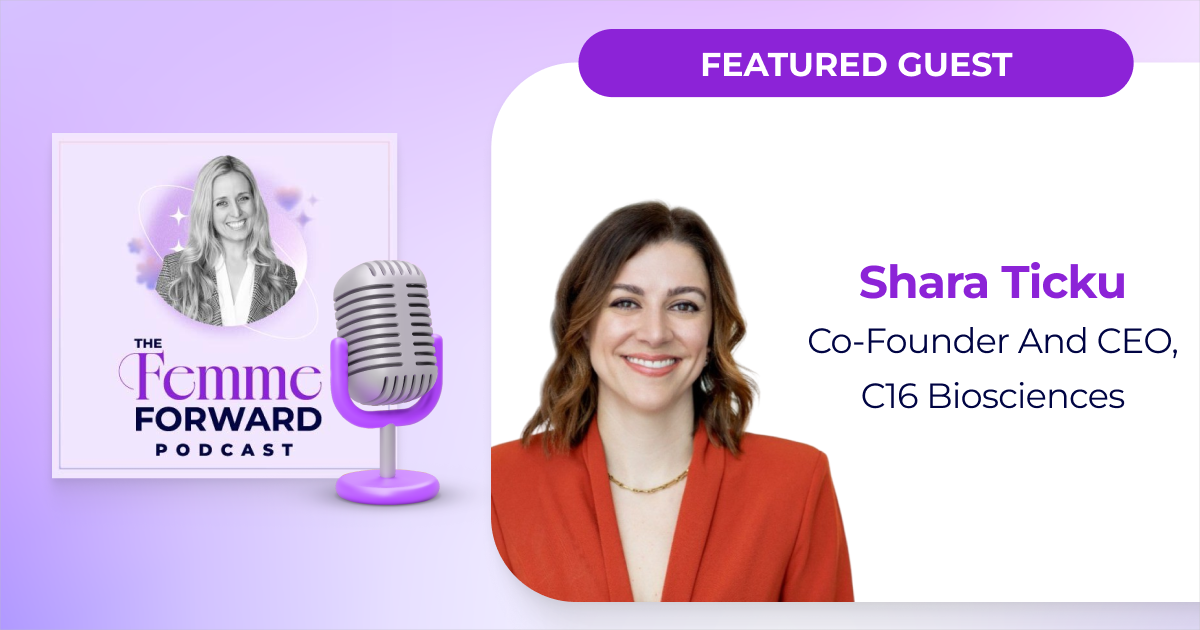
C16 Biosciences' Shara Ticku dives into having confidence, intuition, and navigating male-dominated spaces.
Host Dan Mouradian and Chief Creative Officer Walt Geer discuss taking career risks, emotional storytelling, and more.
In the latest episode of Creative x Tech, host Innovid's Dan Mouradian sits down with Klick Health's Devon Taylor.
Host Amanda Glen Smith sits down with Zeta Global's Nicole Muscatello.

Xumo's Eli Zang joins host Ziggy Zografakis on the debut episode of The Other Side of the Screen.
Amanda sits down with Lynn Utter to discuss executive presence, career growth, and the double bind.
Amanda sits down with The Defined Dish's Alex Snodgrass to discuss her career and what she's learned along the way.
Amanda sits down with Miracle Mama founder Whitney Rowell to talk about building a business from the kitchen table.
In this episode, Amanda Glen Smith sits down with Lori Goode, CMO of Index Exchange.
In this episode, Amanda Glen Smith sits down with Jen Dass, Chief Operations Officer of WPP.
In this episode, Amanda Glen Smith sits down with Brooks Miller, Global Head of Creator Strategy at Edelman.
Listen to Gay Gaddis on confidence, risk & reinventing success.
Deborah Wahl shares her leadership lessons, career-defining risks, and personal philosophy.
Tune in to this episode breaking down perfectionism, empathy and confidence.
Amanda and Khara talk juggling work with motherhood, managing delegation, and being your most authentic self.
From the evolution of AI to how it can lessen the mental load, Sarah & Amanda dive into the future of an AI-assisted life.
Amanda sits down with Publicis' Sara Newton to dive into what it really takes to lead, grow, and thrive.
In the first episode, Dan Mouradian sits down with Caroline Levere, SVP, Performance Creator of New Engen.
Listen to host Amanda Glen Smith and Basis CMO Katie McAdams discuss the power of intuition in leadership.
Innovid's Claire Middleton, Juli Goldman & Prisma's Steph Watson dive into the current "eras" of their career trajectories.

Listen to Amanda Glen Smitha and Unilever's Rachelle Schuimer discuss their careers.