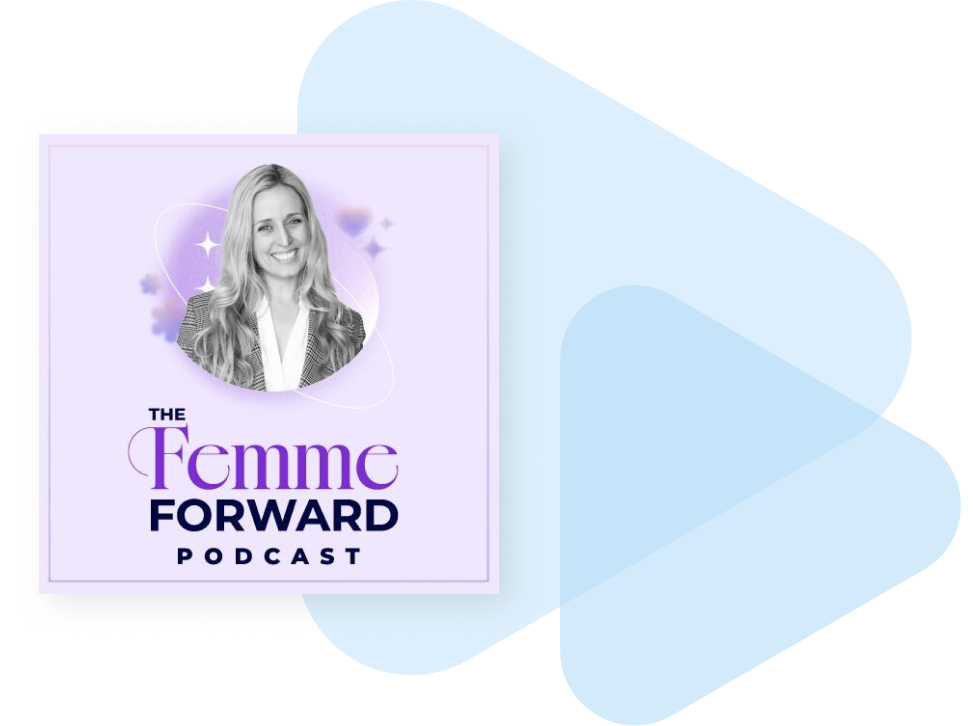
The Femme Forward Featuring Lynn Utter
Listen now
Click to listen on:


Read the transcript
Amanda Glen Smith: Lynn Utter is a leader of leaders whose career is defined by an extraordinary ability to navigate the complex machinery of global supply chains while maintaining a profound focus on human potential. Professionally, she is a rarity in the C-suite, a woman who has commanded heavy-hitting, male-dominated industries, from beer and industrial distribution to furniture manufacturing, with a reputation for operational excellence and strategic foresight. UT Austin and Stanford alumna, she has scaled the ranks of industrial giants like Pepsi, Frito-Lay, Coors Brewing, Knoll Office, and FirstSource LLC before transitioning to her current role as an operating partner at Atlas Holdings.
Beyond her P&L prowess, Lynn is a fierce advocate for gender equity, co-founding the Women Who Mean Business program at McCombs with another podcast guest you may remember, Gay Gaddis, to transform high-potential women into executive powerhouses. Whether she is governing Fortune 500 boards or chairing Adessia Nutrition to combat global malnutrition, Lynn proves that operational authority and humanitarian heart are not mutually exclusive. Welcome to The Femme Forward, Lynn. We're so glad you're here.
Lynn Utter: It is absolutely my pleasure, and it's great to see you, Amanda.
Amanda Glen Smith: So good to see you. Let's just dive right in. We have so much to talk about today. So I want to start with your career trajectory, if you will. I feel like you spent a decade at Coors, later led Knoll and FirstSource. And from what I can tell, you can correct me if I'm wrong, these industries seem to be historically male-dominated. So let's talk about that first. Am I right? Is that accurate?
Lynn Utter: You're right. You're very right. And beyond just the industry, I'm a supply chain gal, and in the supply chain manufacturing sector, there weren't a lot of women. But also, when I came out of undergrad, there weren't a lot of women in the engineering program at UT. I've done a lot of things, so it wasn't that different, but yes, it was very male-forward, all of them.
Amanda Glen Smith: Did you view being a woman as a differentiator in those situations?
Lynn Utter: I'm going to be honest, early on, I really didn't. I came out of college, and I was often the only woman in my physics and engineering classes and so on. It didn't really strike me as that weird or unusual. If anything, I was a little surprised when people started noting that I was the only woman, or the youngest woman, or the first woman, or whatever. And I was like, oh, okay, I guess that's a thing.
Amanda Glen Smith: Yeah, that makes sense. You didn't know any difference the entire way. You were just doing your thing.
Lynn Utter: Right. I was just doing my thing.
Amanda Glen Smith: Well, okay, when you got to the top and you were in these C-suite roles, how did you start to use being a female to your advantage, and cultivate that operational authority where you really didn't see a lot of women like you?
Lynn Utter: So I think it's really important. I didn't consciously think about being a woman as being different for many years. At some point I got there. But when I started, I was in consulting first, and then at Frito-Lay, I was running trucks, trains, and sales, and then at Coors, again, trucks, trains, warehouses, and eventually manufacturing. For me it was do good work, just do good work. Now, I will say I implicitly knew that I had to build trust. As I reflect back, I didn't consciously do it at the time, but building trust has always been part of my toolkit, because I look different. I was different, I was younger, I was female. I had an MBA. In a lot of my locations, I was just different. So I think building trust with people was about being credible, being able to do the work, do the job, and do it well. That's what I always started with. Be authentic. Be me. I never hid that I was a woman. Back in the day, I waited a long time to acknowledge I was pregnant. There's a great picture of my team at Frito-Lay from a photo shoot, and I literally remember wearing a jacket that could cover the fact that I was five months pregnant. No one knew at that point.
Amanda Glen Smith: You mean I can tell my team now that I'm eight months pregnant? Should I tell them?
Lynn Utter: Yes, you can tell your team now. But thirty years ago, you were careful about that kind of thing. Having said that, as I got more senior and more comfortable trying to be authentic, not hiding, yes, I'm a mom, and I've got other responsibilities, and building that into who I was. So building trust with authenticity, credibility, and over time, courage and vulnerability played into it. Building trust was implicitly what I was doing early on. Later, I did not want to be in the room only because I was a woman, so I was really conscious of that. At Coors, I was running this big manufacturing job, and there were about a dozen women out of 500, that's all there were, in the entire place. I invited them to lunch, and they said to me, please don't ever do this again. You're singling us out. You're making us different, and that's the last thing we want or need. That was a real lesson for me. How do I support them, trying to understand what their lives were like, but also not make it harder for them? It also made me reflect on myself: okay, wait a minute, Lynn, how do you make sure you're just doing great work rather than being the only woman? That's what shaped me the first few years.
Amanda Glen Smith: I think that makes sense. It is a concern, right? Everyone wants to be different and use their strengths nowadays, but you don't want those to be the reason that you're there. So it's a multifaceted, I don't know.
Lynn Utter: It's a Rubik's cube to solve for. There's no question about it.
Amanda Glen Smith: Let's go back. Did you always know you wanted to be a supply chain girly? How do we get there?
Lynn Utter: No, I did not always know that. My dad wanted me to be an engineer, so at UT I did both engineering and business, which was like a compromise. I went to business school after that, and I always knew I wanted to go into business. I didn't know what I wanted to do, so I did consulting. One of my first consulting projects was at a trucking company, and I loved it. My grandfather was a trucker, and my dad worked for him for a while as a trucker. I'm pretty comfortable in those spaces. I think it was a natural gravitational pull that I wasn't even aware of. I also love Fritos and I love beer. I gravitated to consumer products. I like making things, so I liked being in physical spaces as opposed to tech. I like the puzzle of how you make and ship and get product into people's hands. I got into it, and I was kind of good at it, so I enjoyed it.
My first job leading a work group was probably about a hundred people. I was running the trucks out of Lubbock, Texas, for Frito-Lay. It was my first operational role. Most people didn't even have high school degrees, and it was a pretty savvy, rough-and-tumble kind of work group. When I finished that responsibility about a year and a half later and got promoted to something else, one of the drivers, BJ, came to me and said, we thought you were going to be the bitch on wheels. That was his quote. BJ, if you're out there, God bless you. But you're the only person who's ever listened to us. I can tell you that story, what, thirty-five years later, because it really stuck with me. People are going to assume things about me because I'm the only woman in the room. I can't control that. What I can control is how I show up, being connected, listening, and doing the best work I can.
Amanda Glen Smith: I love that, and talk about building trust. Was there anything you did as you took on these new roles, especially operational and logistics-focused ones? Did you have a method to your madness? Were you going to the plants, meeting everybody, going out on the trucks? Anything you did each time you took a new one?
Lynn Utter: I probably over-indexed on that stuff, going to the plants, walking the plant floor, doing town halls. It's a bit of my natural nature, and maybe BJ taught me early that it's good to listen to people. I always try to listen first. I inherited another work group at Coors that was really unhappy and dissatisfied, and all the people in HR were telling me how I was going to handle my first meetings. I said, time out. No, I'm going to go in and listen. I can't go in with all the answers if I haven't listened first. That's my MO, and I learned over time that it works well. As a young woman, I think it worked particularly well. I spent a lot of time working plant floors, and I love it. Just yesterday I set up a plant tour to visit a steel mill here in Colorado that I've never been to before, and they invited me, and I said yes, I'm in. I love a plant-floor tour. It's a mix of what I think is important to do, building trust and people just seeing you.
Amanda Glen Smith: Let's pull on that a little bit, because as you moved into different roles, you were running the business at Coors, right? And then you were asked to be more elevated. There are two things I want you to share with the audience. The first is, what do you do about all that tactical operational desire? Did you leave it behind? Did you take it with you? As you move into executive roles, it's harder to be in the weeds the way you once were or were comfortable with. And the other thing I want you to tell our audience is what that shift was like for you.
Lynn Utter: So first of all, I can't say I planned this well, but I give a lot of advice on this, because it worked really well for me. I think of my career as a career web, not a ladder. A ladder is where you're going up and up into bigger jobs in the same function. I didn't have that. I was in sales, operations, manufacturing and distribution, marketing and innovation for a while, and I ran quality. I did a bunch of different roles, and they were operational, so I was learning the business and getting P&L responsibility early and often. I'm naturally a strategic thinker. It's how my mind works. I can't take credit for it. I'm a problem solver, and I was always told I was really strategic in how I thought about the business, so I was often pulled into strategy roles. I was a planning manager at Frito-Lay back in the day. I've gone back and forth between operations and strategy, elevating as I went, and that worked really well. I missed operations when I was in strategy, but I loved seeing all the pieces come together in strategy, the whole puzzle. I liked both, and the ability to toggle back and forth every couple of years. I highly recommend it. It kept me learning and growing, and it worked for me.
Amanda Glen Smith: Depending on the organization, I think there's also a reward that comes with flexibility, being able to say, here's a hole over here, we think this person is a rock star, a unicorn, they can go fill it. It doesn't really matter about their background or the last five years, or what role they were in. That definitely is rewarded. We often lose it, though, because people are scared. You think there's this ladder, and here's the next opportunity. If I go do something crazy, like in product, am I relinquishing the advancement I built so hard for?
Lynn Utter: Totally. You're on exactly a really important theme. Take the risk, and frankly, don't expect your boss to have all the next steps lined out for you. If you do this, you're going to get that. You've got to trust yourself to some degree. If you're good, you'll figure it out. When a senior leadership team sees somebody who can be that problem solver, that is gold. If you are that person who can navigate different problems, solve them, and create value, you are valuable. So trust that in yourself. Take the risks. I could give you another handful of stories of people, including women, I've watched, who, as opposed to asking what's the compensation here, what am I going to get for taking on this hairy role, just went and knocked it down and killed it. I'm glad I did. There were a couple of times I wasn't sure, but I had leaders who saw more in me than I saw in myself, quite frankly, and put me in roles I didn't think I had any business doing. I'm so glad they did, and I'm so glad I said yes.
Amanda Glen Smith: I feel the exact same way. Call them mentors or sponsors or both. I think about how I see our team now, and you do know who those unicorns are, and you think about them every single time you have a problem. It doesn't matter what role they're in, or even if they've left your company. There are people I still call and say, hey, I know you really like this new path you took, but I have a problem, and you would be an incredible fit here. That's a really incredible reputation you can aim to develop. And to your point, if you do the good work, the rest will follow. Yes, you do have to advocate for yourself along the way, and make sure you're sharing your story with folks who don't see it as innately as your manager or your boss. I think reputation is worth a lot, and it can say a lot about somebody and their work ethic.
Lynn Utter: Absolutely. I could not agree more, Amanda. Well put.
Amanda Glen Smith: Okay, let's talk a little bit about talent, because I think that's where we're headed. I've heard you say that talent is kind of the ultimate competitive advantage, and I think that couldn't be more true, especially in this world right now, where everyone is obsessed with technology and AI and automating workflows. So how do we keep the human and the human capital from becoming just another line item?
Lynn Utter: I think AI is an extraordinary resource. My guess is that what we think of as AI today will probably evolve into something different and bigger. I say that knowing that I can't even define the boundaries of what AI can do yet. I know it's powerful, and I know it makes so many routine tasks more effective and, frankly, better. AI produces better work product than people mindlessly doing basic tasks in a lot of ways. Having said that, the challenge is how we use AI to help humans and managers do higher-order thinking. AI is not able to make decisions on a lot of levels that humans can make right now. There's just no way. So to me, it's about how we do both. The real crux is that I didn't jump into being a corporate board member the day, or even the fifth year, of my career. It took me 25 years to be in a position where I knew enough and had the experiences and knowledge to bring into a boardroom and add value. You learn over time. So if AI is doing some of those early roles, my question is how we make sure people are still learning that stuff, so they can level up when the time is right. I don't think it's one or the other. It's how we meld both. People matter. Having talent that can grow and learn and solve problems and see around corners, and imagine the questions we haven't even thought to ask AI yet. AI needs clear prompts, and we humans, when channeled, can do more. It really is both. We've got to figure out how to make the jump, leverage both, and not be afraid of it, but lean in.
Amanda Glen Smith: I think so too. If you had to reflect on your core tenets of retaining top talent, what do you think matters?
Lynn Utter: People have to be engaged. I know this is old school, Marcus Buckingham and his engagement research, probably twenty years ago now, at least fifteen, but it matters. It's not just hiring smart people. You have to help them learn and grow. You have to tell them what good looks like and what you expect of them. Then get out of their way and let them solve for it. What I see over and over with mid-level managers is that what helps people break out of mid-level management and into senior management is the ability not to do it all themselves, but to engage a team and work through others. That's hard. That's delegation. But you've got to do the work to get people ready. Then you give them clear accountability, get out of their way, and give them feedback. One of the things I had to learn was to give people real-time constructive feedback. Hey, you may not have meant to be in that meeting, and you may have come off that way, but the way you handled that set everybody off on the wrong foot. Next time, you might try approaching it differently. Do it in the moment when they walk out of the meeting, not waiting until the annual review. That's hard work, but this people thing, engaging people, giving them feedback, recognizing good work, giving them rope, doesn't just happen. You've got to work at it. You've got to set some boundaries for yourself and say, I'm not going to jump in. I'm not going to call in every day on vacation. I'm not going to check my email every ten minutes. Let people do some work. Help people, lead them on the path of their own growth. People appreciate that.
I've had basically four jobs for about eight to ten years each, and I stuck with each of them a few years. There were people I brought from Frito-Lay to Coors, people at Coors I took to Knoll, and people at Coors I took to FirstSource. I also had new teams, and I had to figure out what they were all about, and I had to hire people. It's a mix. But having great people around you is the key, and you've got to manage that actively.
Amanda Glen Smith: I think the feedback part is so important, and it's really hard to do, especially in a culture of meeting to meeting to meeting, when you don't have time to pause and give that feedback. But if you wait too long, it's no longer relevant, or it's hard to remember or reflect on. And I think the hardest feedback conversations I've had were actually the most well-received. It doesn't mean it wasn't hard or awkward. Once people reflected on it and took the weekend, I've gotten emails that say, listen, that was really hard to hear, but I can't thank you enough for sharing that. I think about that all the time, because people want it. They really want to grow.
Lynn Utter: Feedback truly can be hard to hear or it can be amazing, but feedback is a gift. People are not that good at giving constructive, balanced feedback, both the good and the opportunity. So I think the best leaders are really good at feedback, and so are people who are growing and aspiring to higher levels of leadership. If you're that person, you've got to take responsibility for your own feedback loops. You've got to set them up. Don't wait for your boss. You've got to own that. I've had better and worse bosses at giving feedback. I've been in boardrooms watching people give sometimes really good feedback and sometimes really crappy feedback, like, they're the CEO, they're good enough, they'll figure it out. That's not it. So I sometimes think the more senior you get, the less constructive feedback you get. That's not okay. You've got to figure out how to go get that feedback and keep growing and learning, because you get stagnant and the game's over.
Amanda Glen Smith: I think that's so true, and it's really hard. Sometimes it's just about time. I love what you said about being the owner of your own feedback. People aren't always thinking about you and your growth, so if you really care about that, which you should, go find it, and people will be willing to give it to you, but you can't wait until your annual review, as you mentioned. And in leadership, it's a lot harder. So it becomes, how can you build an effective team and get the most people you trust around you, so they can say the hard things or share the hard things? I love it when I get a text or a Slack after a meeting that says, hey, that landed the wrong way, you might want to elaborate on this, I'm getting blown up over here. It's the biggest gift, because without it, you just carry on, and you have no idea.
Amanda Glen Smith: Okay, I want to go back to a question I had for you. When you move to these big career jobs, do you take a lot of the talent you've spent so many years cultivating? I don't mean it as a skill-and-talent thing, but more as, I think as a female, we have a lot of loyalty that's bred with people and companies, for better or worse. It might come out of our empathy, and the fact that we really want to be there. I've always wondered with your career pivots, did you take people with you? How did that go?
Lynn Utter: I'm going to give you a two-part answer. First, when you said loyalty, that resonated with me. I've had four meaningful big jobs, and I loved all of them, and all of them had amazing experiences. I guess I'm lucky, or I did a good search and landed in the right places each time. But I would say I stayed in each one about a year too long, because I was so loyal to the team. I built a team, I worked with the team, whether it was the folks around me, my peers, or my boss. I just hated leaving. I called myself a tree hugger. I would hold on. Then I finally realized that to keep growing, I had to move on, for whatever set of reasons. So yes, that loyalty piece. I did both. Sometimes I took people with me, but every time, when I got to the new place, I looked at the team, and every leader has to do this. What are the really important things we have to get done in the next year or two? Do you have the team around you to get them done? If you don't, you've got to go fill the gaps. And you've got to get after it. You can't say, I'm going to give the new team a year or two. You've got to get after it. What do we have to accomplish? Do I have the team to do it? When I find a gap, I think first, who do I know? Before I go dialing for talent, no offense to the executive recruiters out there, I think about who I know. There's nothing like someone you know is good, and if you know somebody who's ready for that next challenge, that's great. I've done both, and it's a really conscious process.
Amanda Glen Smith: What about when you're preparing to leave? This is something I don't think we talk about a lot. I want to ask you two things. One, what were the warning signs that told you, each time, that you were hugging the tree harder than you should? What was your brain telling you? And two, you just made me think about succession planning, which I think is an interesting concept. So first, your warning signs.
Lynn Utter: I'm an engineer by training, and I'm arguably overly organized about some things. Every year, around New Year's, I go through a process: how do I make this coming year the best year yet, professionally? I think through what I need to accomplish this year, and I usually don't put titles on it. It's not about promotions or getting to the next level. It's about what's going to make this year successful, in terms of what we accomplish, building the right team, whatever it might be. I'll pick two or three or four things. When I start getting into that and think, this year is not exciting me, I don't see the growth opportunity, I've done this before, that's when it starts happening.
Amanda Glen Smith: That feels a little rinse-and-repeat, versus new and exciting.
Lynn Utter: Yeah, exactly. I usually talk myself out of it: Lynn, you love this team, you love Coors beer, you love Knoll furniture, you've got amazing people around you, the location is good, your kids are there in middle school, and this is not the time to move the kids and just fall down and figure it out. But usually, whatever happens in that year, I finally have the courage, or the opportunity, and once I make the move, it's like, yes, it was time, it was overdue. So for me, it's a one-year process, I think, that usually tips me off.
Amanda Glen Smith: That's helpful. A lot of people are doing that around January anyway, as you mentioned, the combination of professional and personal, but I don't think many of us stop and reflect and ask, is this the right job for me? There are so many factors, and we're all moving at lightning speed. Okay, let's move into succession planning, because I'll tell you a story that got me thinking about this. I had never really heard of it before. I got a really big promotion, and one of the first things someone asked me to start doing was succession planning. I was so confused. It felt archaic, or just confusing. As you made these career pivots, what responsibility did you take on, and what part did succession planning play for you?
Lynn Utter: First, I started in big companies, like Frito-Lay and Coors. We were pretty good about bench-strength and succession planning, whatever you want to call it, so I was trained to think about this. But from my forty years of operating roles and twenty years in corporate boardrooms, the best leaders are always thinking about succession. They're thinking a couple of years out. How are people growing? And they're not afraid of having great talent around them. Conversely, a lot of people think, if I build them up, they'll take my job, so I'll disappoint them by not having them ready, or I want to keep my job, so I don't want to disappoint the people around me. Or they say, it's too hard, I don't have time for that, or I don't have a successor. It's not just one rule. You've got to think about the team. It's hard work, but it's worth it. The people who don't pay attention to bench-strength and succession planning don't end up getting newer and bigger opportunities, and they're not building teams that everyone else wants to be a part of. I've watched this movie over and over again. Don't let succession planning be an afterthought. Put it up front, and be explicit. You'll win some, you'll lose some. I remember one woman I hired to head quality in one of my organizations. I kept saying, she's got this great background, she's going to be great in another six months. That was a bad move on my part. If it's not working, you've got to cut the strings and move on. You just have to do it.
Amanda Glen Smith: No, it's funny, because being vulnerable here, I love the idea, and having another child will put you right in that position to really think about that nine months in advance. It's a foreign concept for a lot of leaders as you rise. It's not really talked about, and for me it hit me smack in the face, and I was like, okay, I guess I've got to get on it. But to your point, if you build an effective team that you trust, and that genuinely can do what you were doing, even better than you, it gives you space to do all these other things that you don't even know yet, or that you've always wanted to achieve for your team or organization but never had the time for. That was the part I didn't understand at the beginning. I thought, what? But I think it's a masterful way to unlock capacity at every level.
Lynn Utter: If you're the one finding yourself at your desk, the last person to turn off the lights and shut down the computer every night, and you've got a big presentation coming up and there's maybe one other person who can help you, you're not building a team around you well. If that's a repeat pattern, this is not about you not being smart. It's about how you're building your team, honestly. So if you see that happening, step back and think about why you don't have the people around you. Why am I always the one doing the last-minute work and getting this last piece right? Once in a while you've got to do it, but if it's a repeat pattern, look at your team building.
Amanda Glen Smith: And back to your point about talent, maybe you don't have the right talent around you, because you should be building people who can effectively help you.
Lynn Utter: Yes, and share with you the problem solving and, again, creating value.
Amanda Glen Smith: Okay, I want to pivot a little to another topic that I know you love, which is the double bind.
Lynn Utter: Yes, yes, yes.
Amanda Glen Smith: Okay, let's start at the beginning. What is it?
Lynn Utter: I learned about this concept from the Clayman Institute at Stanford University, which did a lot of research on women's leadership. Most workplaces, certainly in the Western world, were white, male-dominated for centuries. That's not just this year. For centuries, the way workplaces work, the culture, how decisions get made, which traits are believed valuable, how people communicate, all of that, was built on a white male construct. So it's no surprise that as women enter the workplace, we are coached to grow and learn, and we're coached to do things that have been tried and true by men. Then we go and do and behave that way, and suddenly it's not ladylike. There's a much narrower band for acceptable behavior for women than for men. It is research-based, so yes, ladies, you're not crazy. When you're asked to be more assertive and more decisive, and then you get feedback that you're a bitch, you're too aggressive, you're right, it's that double bind. You're damned if you do and damned if you don't. It's a double-edged sword. It is not in your imagination, women and men. It's real.
Amanda Glen Smith: Right. So how do women navigate that narrow band, trying to be authentic, trying to be effective, when the rules are so squirrely? What do we do about it?
Lynn Utter: First, acknowledge it and understand it. Every culture is different. What I just described varies, and it's not just entrepreneurial versus corporate. Every organization has its own vibe, its own sense of appropriate and successful behavior. So it's about learning and figuring it out. Some organizations have a broader bandwidth for what's acceptable for women, and some are really strict and narrow. You've got to decode it and be aware. That's number one. Number two, get mentoring. When you join an organization, pay attention. Who's at the top? How are they behaving? How do decisions get made? Pay attention to the soft signals, the hidden language. Find the people who can be your secret decoder ring. They can be women, or men. Engage with them. If you get feedback that feels unfair, ask questions. Okay, I was coming at this because I was trying to lean into a certain behavior, and it feels like it went too far. Help me. Give me some feedback. Ask for feedback loops. But you've got to own this. It's real.
Amanda Glen Smith: I like that recommendation too, and it goes into something you've talked about before, which is reading the room and getting feedback. Delivery is a big part of that, especially with the double bind. How did I deliver my point? Was I super passionate? Was I assertive? You don't know until you ask. Ask male counterparts, ask female counterparts. Even in my experience, asking men has helped: how did that sound? Was I really aggressive? I was very heated about that topic. Sometimes you're surprised by the feedback you get. Yes, we could all tell. Or no, it was no different than any other topic. And then, one other thing you've talked about that I want you to tag on: how do you do that in advance? Before a big meeting, or before presenting a concept, how do you make sure you have everybody on board, or that you're presenting your information in the most effective way?
Lynn Utter: First, you're going to a big meeting, so know your audience. Know your vote count. Who's with you, who's against you, who's on the fence? It's the classic meeting before the meeting. Do lots of listening, so you don't go in cold. I remember having a really tricky board presentation at Coors and at Knoll, when I knew there wasn't alignment on a particular topic. So go sit down with key stakeholders and ask, what should I be aware of? I got really great advice by doing that. Don't overdo it. Don't come in like you don't know your stuff, but ask, what should I be aware of? Where's the emotion on this in the room? Are there places you want me to stay clear of? There have also been times I've had to take a deep breath and say, I am not backing down, because if I back down, I'll appear weak and be weak. So I've had to stay in the fire. There are conscious choices you have to make. And then get feedback. How did that feel? How did that come off? Could I have handled that better? If you get feedback that gives you a different perspective, that's disappointing, don't get upset about it. Feedback is a gift. And don't get upset that the double bind, this narrow band, may put you in a tough spot. It is reality. Don't let it derail you. Figure out how to succeed in that reality.
Amanda Glen Smith: I think it's also about your style of communication, and getting feedback on that. And getting feedback from the people you want feedback from. We often get feedback from those who are closest to us or who know us and can be affirming. But if you want the CEO's feedback on how that went, or what you should do differently, ask him or her. Don't ask the people in proximity. I think those are fair points. The meeting before the meeting is something people underestimate. Even if the decisions are internal, there can be pretty big decisions made, so you want to be prepared. And the other thing I've realized is, I don't think this is a female thing, I think it's anyone's thing. If you're very tactical, if you're a subject matter expert, your first desire is to present everything in every detail, because you know the most. You want people to know, and you want them to be confident in your plan, because you know this stuff. But we know you know it. That's why you're in the room. We completely trust that you know it. So you have to level up your comms and how you present things for certain audiences, or else you lose them, and they move on to the next topic.
Lynn Utter: I couldn't agree more, and I'll double down on this. I'm an engineer. I love data and I love context. When I was at Coors, I was probably seven or eight years in, and quite senior, we brought in a new North America CEO. He said to me once, Lynn, stop with all of the explanation before you make your point. I thought, but here's the data. He said, just make your point. You've earned the right to have your voice heard. If we have questions, we'll ask you. That shifted for me for a year. It was such a helpful piece of feedback. Women do this, and it's not just women, but women in particular, based on the input we get, tend to say, I wonder, look, we need to do X. And the other piece is that not everybody is going to see the same opportunities you do. Some people will think, oh, you're linear, fine. Others are afraid to give you tough feedback. I knew people trusted me and liked me, and I can talk football on Monday morning as well as most people. But I wanted to shift from the friendly coworker to the really insightful counselor for the senior team. That was a shift in my presence, and how I engage with people. My boss said, you're fine, don't worry about it, but I knew I needed to be more succinct and concise. I've heard women say, I get mansplained. People talk over me. How do I get people to stop talking over me? Sometimes it's the guy's fault, but sometimes it's our fault, I'd say to us women. We give everybody all the context, when we should say, here's the issue, here's what we need to do, and then stop. People will listen. Especially in really senior boardrooms, people don't have time. You have a minute to make your point, and then stop talking. Man's money is a thing, but sometimes we deserve it.
Amanda Glen Smith: Right. Come in, lay it on the table. I love that. Let's talk about this, because I think all these things together formulate the idea of executive presence. You talk a lot about that in Women Who Mean Business and teach it. What do you think are the core tenets of executive presence, and what are the unwritten rules that you think women still consistently miss or break, because they don't know?
Lynn Utter: I was part of some research that Sylvia Hewlett did about ten years ago, and she refreshed that data in 2022, I think. Executive presence, based on research, is made up of gravitas, being able to command a room, being able to get people to want to listen to you. That presence, that gravitas, you learn over time. It doesn't just come. When you think about great leaders, they often have this sense of gravitas. The second is communication. You have to be able to speak effectively. You have to be able to listen, and answer the question being asked. I'm probably not doing a very good job of that in this podcast, but you listen to the question, answer it succinctly, and speak and present in a way that commands a room. Third, you can derail it. You're not going to get very far in your career based just on your appearance. But you can really blow it by not being well-groomed or put together, or by not thinking about what role you're playing today. Am I walking a plant floor? Am I in a boardroom? How do you dress and communicate that you understand the space you're in? You deserve to be listened to in that environment. Those are the three things that are out there. I believe every one of them, and I've worked at it. Some people say, Lynn, it's natural. I've had the nature-versus-nurture debate on this. Yes, some people are naturally better at it, but you can learn it and get better. I've still got room to grow. Now, what do I see women doing that holds them back? Some of it is tone: commanding the room, being comfortable in silence, making your point concisely, and letting it sit. There's something to that, as opposed to running around with your hair on fire, saying I've got forty-two things and kids at home and I've got to get home before whatever. You want to be authentic, but take a breath. Own the space.
The other thing is that I think women overlook this. The more senior you get, the more these rules change, and executive presence becomes more important over time, not less. And the notion of power comes into play. Men are much more comfortable talking about power dynamics. Women don't even want to have the conversation. Let's call it influence. Let's not call it power. We can't even talk about it. The reality is that the more power you have, the more you get done, the more resources come under your control, the more people listen to you, and the more you get to impact how decisions are made and what happens going forward. So yes, power is something you should think about. And power is a zero-sum game. There's only so much power. If everybody can have more power, then you're not all equal, and you're not powerful. Women hate this notion, so they tend to say, I'm just going to ignore it, I'm not going to play the game. But do it at your own peril. When you're in a boardroom and a big decision has to be made, and you want your voice heard, think about where the power is in the room. How do you connect and communicate in a way they'll hear? As opposed to trying to be everybody's friend.
Amanda Glen Smith: Great. That's because it's uncomfortable.
Lynn Utter: It's uncomfortable. I can't tell you why. I didn't talk about power until just a few years ago. I've been good friends with Jeff Pfeffer, who has taught power and politics at Stanford Business School for forty years. I recently had a two-hour conversation with him about power and gender dynamics, and I found myself thinking, wow, Lynn, you've ignored this at your own peril too many times.
Amanda Glen Smith: I think that makes sense. I think it's weirdly innate. It's not necessarily trying to be everyone's friend, but almost this idea of pleasing everybody, does everybody feel good? I don't know where it comes from, honestly, but I think it's a strength. At the same time, as you mentioned, it's something you should be aware of as you build and cultivate your career. Because people really don't like this idea, but organizations are a pyramid. There's no way around it. There's a hierarchy. There are only so many roles and so many titles, and at a certain point you have to get very comfortable operating outside of a title. If you want to do more, there's more for you to grow, and it may not come with a title attached. Good people can do a lot of good things and have a lot of influence and impact regardless of their title. But at the end of the day, most organizations are still structured around power dynamics that you have to consider, because that's just how we're structured.
Lynn Utter: This happened to me twice, but one time in particular, I left a really big job. I stayed in touch, and I had a really good relationship with several board members. One of the board members and I were having lunch, maybe a few months, or a year, after I'd left the role, and he said, Lynn, you had so much power, and you scared everybody around you. I said, what? I'm not scary. I have a lot of things that aren't scary, and scary is not one I'd have thought of myself as. And I said, you're crazy. He said, no, you're smart, you get things done, you had great teams around you, they were loyal to you, you had a lot of power, and that scared your peers. I had never thought of it that way. It all worked out fine, but that woke me up to think differently about power dynamics and try to understand them, because even if you ignore them and you're doing well, you're still ignoring how you're impacting others, and your potential to help them. You always want the most information, so be objective, be open, and think about power dynamics, whether you're trying to build power or not. If you're doing a good job, you are building it, and that creates its own set of dynamics in the workplace. You just need to think about that as you interact with people.
Amanda Glen Smith: I have chills. That's a good lesson. Okay, let's fast forward to the present, because I feel like you're using your business-first approach and operational mindset in a totally new way. You are the chair of Adessia Nutrition. Tell us a little about that and how you got there.
Lynn Utter: I've been doing corporate board work for twenty years, and I shifted out of operational roles into advisory and board work about five or so years ago, maybe a couple more. When you commit to being on a board, you're typically committing to ten years. You want to get in, learn the business, and be impactful. I actually think great board members roll off after ten to twelve years. That's a good governance practice. A few years ago I was in a mode of saying, I've got these ten-year commitments, four or five of them, and I want to start winding those down, not taking on new ones. Then I got a completely out-of-the-blue phone call from a woman I did not know. She said, look, I hear you're really good at corporate governance, and I hear you understand food. Here's my company, Adessia Nutrition. We manufacture basically fortified peanut butter, and it's put in packets like ketchup packets and shipped all over the globe to solve childhood malnutrition. The taste, by the way, is really good. I used to keep some in my briefcase for when I was on an airplane. Adessia saves about three million lives a year of kids who would otherwise starve in war-torn and famine-torn regions of the globe. I said, my gosh, it sounds amazing, but I don't have time. I'm trying to wind down, not wind up. She said, okay, would you just come look at our facility, see food manufacturing, and give us some tips? I said sure, I can at least give them a day. I went, I fell in love, and it awoke something in me. As I think about retiring, I'm not done. I want to shift gears, not stop. I want to leave this world a better place. That's what I hope my legacy is: that whatever I touch is better because I was part of it, whether it's an entity, an organization, a product, my kids, my neighborhood. So for me, retirement is about how I use the skills and experiences I've had to keep making communities better. When Adessia's CEO, Naven Salem, called me, and no one says no to Naven, I now understand that. She's powerful, she's amazing, and she talks about power in such amazing ways. I fell in love, and she kept at me, and a year later I found myself as board chair, which was not a plan. It was an answer to a call. What I love about this phase of my life is that I can choose to answer the calls I think are important, as opposed to whatever else I was answering before.
Amanda Glen Smith: I want to hear more about that, but first, you just mentioned it yourself: you're moving into retirement, or you just retired from most of your corporate board work, right?
Lynn Utter: Yes. I had my last official corporate board meeting in December. So this year, the first six months, has been a whole new ballgame for me.
Amanda Glen Smith: I'll be honest, until I met you, and then another fabulous woman on our board, I never thought about this next chapter. You're on the treadmill, and you're doing the best you can, and you're trying to do the most. How did you get to this place of corporate board work, and what would you tell listeners about it being a potential path once you're done with the corporate role?
Lynn Utter: Corporate board work is not for everybody. I love the work, but it depends on the entity and what you're doing. In a public-company context, which I did a lot of, you have fiduciary responsibility and governance responsibility. It's a lot of work, and it's totally different from being in an operating role. When I was running a plant, running a company, whatever it was, you have to have the answers. You've got a lot of problems to solve. When you go into the boardroom, you're not expected to provide the answers. You need to ask the right questions. It's a fundamentally different role. Some people love it, and some people hate it. Some people get in there wanting to give all the answers, and that is not your job. So first, you have to ask yourself whether that's what you love doing. I'm naturally curious. Ask my husband and kids, they're tired of me asking questions. They want to be quiet at dinner, and I'm like, hear me out. So there's a natural curiosity in the boardroom that's important. Do you have an aptitude for the work? And it's big-picture thinking. For me, the more complex an entity, the more interested I am. There are moving parts: sales, operations, long-term, where's the market going? If you like that kind of challenge, board work is great. I started with not-for-profit work earlier in my career, like United Way and church work. As a woman with young kids, a big job, and big responsibilities, it was hard, but I loved the work. I learned how boards work at the not-for-profit level. What's your role as a board member? Asking questions, giving counsel, not trying to solve the problem. That gets you noticed. Then I got my first invitation to a corporate board, and I was like, okay, I know nothing about this industry. But I loved it. Once you get the first one, you get more. So it's not for everybody, but I've been doing corporate board work for about twenty years, and I love it.
Amanda Glen Smith: Let me ask you another way. It sounds like you didn't plan to do corporate board work.
Lynn Utter: No. When I was at Coors and very senior, I was trying to decide whether to stay or go. I started talking to mentors, and a lot of folks said, Lynn, if you want to keep growing, have you ever thought about corporate board work? You'd be really good at it. I'd never thought about it. So I was trying to figure out how to keep growing, whether Coors was the right place for me, and in that learning process, corporate board work came up. Then Pete Coors and Leo Kiely, the chairman and CEO at Coors, were very supportive. Not all companies would be, but they said, Lynn, we'd love for you to get that learning while you're still here. My first corporate board made me a better Coors leader, because I was in the boardroom and I saw, that's what they care about. A light bulb went off. Maybe the rest of the world was smarter than I was on that, but I realized how to focus on what really matters. So corporate board work was a discovery process. Then I started thinking about what kinds of boards I wanted to join, and it became a more conscious choice.
Amanda Glen Smith: I love it. I like sharing this, because I think it's a path people don't necessarily think about. When you think about your life and planning, so many of us think about the next thing and not the things three rungs later. Back to your earlier point about it being a web and not a ladder, it's about where it takes you and what the possibilities really are.
Lynn Utter: You know, my corporate board work was another whole chapter of my career, and I learned a ton. I wasn't nearly as good my first five years as I was in my last five years of doing the work. Just like in an operating role, you learn as you go, and you're much better later in your career than you were at the beginning. That held true for me in my twenty-plus years of corporate board work.
Amanda Glen Smith: Okay, if you could go back to the young woman starting her first day at Frito-Lay, what is one piece of advice or learning you would give her, to make her journey even bolder?
Lynn Utter: I think a couple of things. First, trust your own compass. Know your own compass. I had to solve for my life and my career, not for the guys around me. I was ambitious, and I had to own that for myself. I also wanted to be a good mom, a good wife, a good sister and daughter and whatever else. So I had to figure out that mix: what is important to me? But I also had to do it one step at a time. Trying to solve all of it at once, in those first couple of years at Frito-Lay, would have made me crazy. My husband, I've said this before, is a Harvard MBA, and I'm a Stanford MBA. We met at work and got married. We both had a sense of our career and family and what we wanted, but the decisions get really hard. Someone gets a job offer in another state, and you have to decide whether to take it, and how you navigate all that. If we'd known how hard it was going to be, I'm not sure either of us would have walked down that aisle that day. It wasn't so much the work that was hard, but making those decisions and being there for each other as well as for ourselves. Having said that, I wouldn't trade it for anything. So my advice is to take it one step at a time. We couldn't solve every opportunity or juncture that came our way. We just had to trust our own vision of success, our way, and take it a step at a time.
Amanda Glen Smith: Solve the problem right in front of you, maybe not all the ones that are coming.
Lynn Utter: Yes, and trust yourself. If you're being true to what's important now, it'll work out.
Amanda Glen Smith: Well, I thought we should end there, because I feel like it was insightful. Lynn, thank you so much. It's such an honor to have you today. There's so much wisdom in our chat that I can't wait for our listeners to hear.
Lynn Utter: I'm not sure about wisdom, but it has been a pleasure, and thank you for picking my brain. It's been a fun memory walk.
Amanda Glen Smith: I hope this is a new way to start your morning.
Lynn Utter: Yes, it is.
Amanda Glen Smith: Okay, I'm going to close this out with a lightning round. I'm just going to ask you a few questions, no pressure, first thing that comes to your mind. What is your ritual or habit? A ten-minute walk outside, or a five-minute meditation?
Lynn Utter: I get up and stretch every morning for fifteen minutes before I even leave my bedroom, just to get my body going and my mind going and turn on.
Amanda Glen Smith: I love that. Favorite wellness hack, outside of stretching?
Lynn Utter: Wellness hack. Multitask? No, no, no. Actually, just the opposite. Don't multitask. Walk and clear your head. I was going to say walking clears my head, but to me that was multitasking. Honestly, it's just walking and not trying to turn it all on. Then when I come back, I'm ready to go. Be in one place at one time and don't try to multitask all the time.
Amanda Glen Smith: Okay, what is your one non-negotiable for travel?
Lynn Utter: One non-negotiable? Well, first, I have two of everything, so I don't pack. My suitcase is always ready to go. I've got two of every cosmetic, two pairs of pajamas, two travel outfits, and they go in my bag. The only thing I have to worry about is what I'm wearing, and I just have two of everything.
Amanda Glen Smith: That's beautiful. I love that. That's efficient. Favorite beer?
Lynn Utter: It's got to be a Coors product, but it's not Coors Light. I drink Coors Light, but I'm a Blue Moon fan. Blue Moon every time.
Amanda Glen Smith: I love it. Now that I know you're also traveling in your new state, what's your favorite type of Italian wine?
Lynn Utter: Anything red. I'm not sure I've ever had an Italian red I don't love.
Amanda Glen Smith: Okay, favorite Knoll product?
Lynn Utter: Oh, the Womb chair, designed by Florence Knoll, to make you feel as comfortable as if you were in your mother's womb. It's a great chair. I've got two of them in my life.
Amanda Glen Smith: I love it. Okay, one-word legacy that you want people to associate with Lynn Utter.
Lynn Utter: One word, legacy. Generous. Generosity. I'm not sure I'm there, but that's what I hope.
Amanda Glen Smith: That's a great one. I think you were generous today with your time and your stories. That's it.
Lynn Utter: Thank you. It was my pleasure.
Announcer: You're listening to the Mediaocean Podcast Network. For more of our shows, visit www.mediaocean.com/podcasts.
Related resources

IAB's Chris Bruderle sits down with Dan Mouradian to discuss the changing live TV landscape.
Raj Muhar, startup founder & CEO, joins host Dan Mouradian to discuss AI's role in creative.
C16 Biosciences' Shara Ticku dives into having confidence, intuition, and navigating male-dominated spaces.
Host Dan Mouradian and Chief Creative Officer Walt Geer discuss taking career risks, emotional storytelling, and more.
In the latest episode of Creative x Tech, host Innovid's Dan Mouradian sits down with Klick Health's Devon Taylor.
Host Amanda Glen Smith sits down with Zeta Global's Nicole Muscatello.
Xumo's Eli Zang joins host Ziggy Zografakis on the debut episode of The Other Side of the Screen.
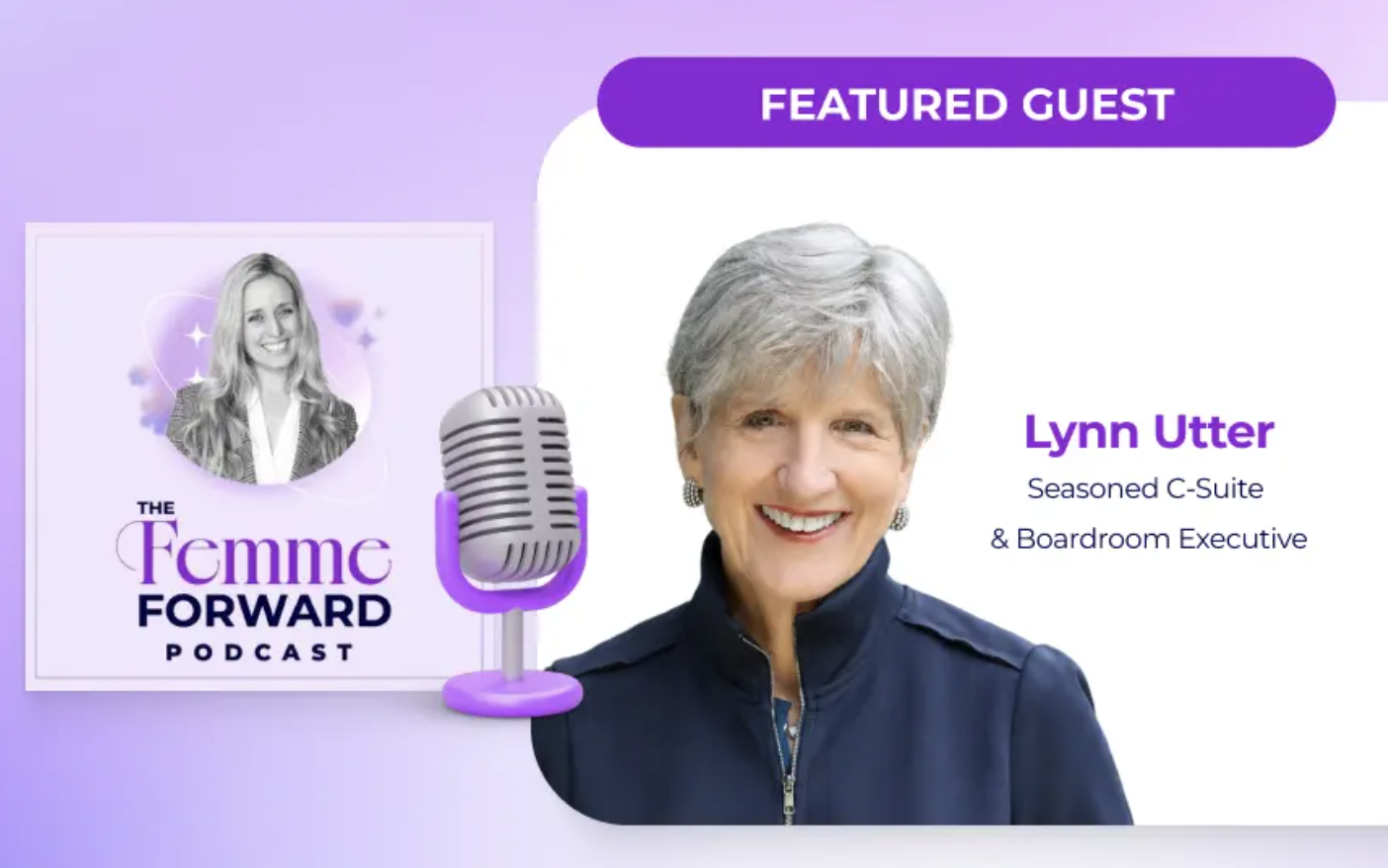
Amanda sits down with Lynn Utter to discuss executive presence, career growth, and the double bind.
Amanda sits down with The Defined Dish's Alex Snodgrass to discuss her career and what she's learned along the way.
Amanda sits down with Miracle Mama founder Whitney Rowell to talk about building a business from the kitchen table.
In this episode, Amanda Glen Smith sits down with Lori Goode, CMO of Index Exchange.
In this episode, Amanda Glen Smith sits down with Jen Dass, Chief Operations Officer of WPP.
In this episode, Amanda Glen Smith sits down with Brooks Miller, Global Head of Creator Strategy at Edelman.
Listen to Gay Gaddis on confidence, risk & reinventing success.
Deborah Wahl shares her leadership lessons, career-defining risks, and personal philosophy.
Tune in to this episode breaking down perfectionism, empathy and confidence.
Amanda and Khara talk juggling work with motherhood, managing delegation, and being your most authentic self.
From the evolution of AI to how it can lessen the mental load, Sarah & Amanda dive into the future of an AI-assisted life.
Amanda sits down with Publicis' Sara Newton to dive into what it really takes to lead, grow, and thrive.
In the first episode, Dan Mouradian sits down with Caroline Levere, SVP, Performance Creator of New Engen.
Listen to host Amanda Glen Smith and Basis CMO Katie McAdams discuss the power of intuition in leadership.
Innovid's Claire Middleton, Juli Goldman & Prisma's Steph Watson dive into the current "eras" of their career trajectories.
Listen to Amanda Glen Smitha and Unilever's Rachelle Schuimer discuss their careers.