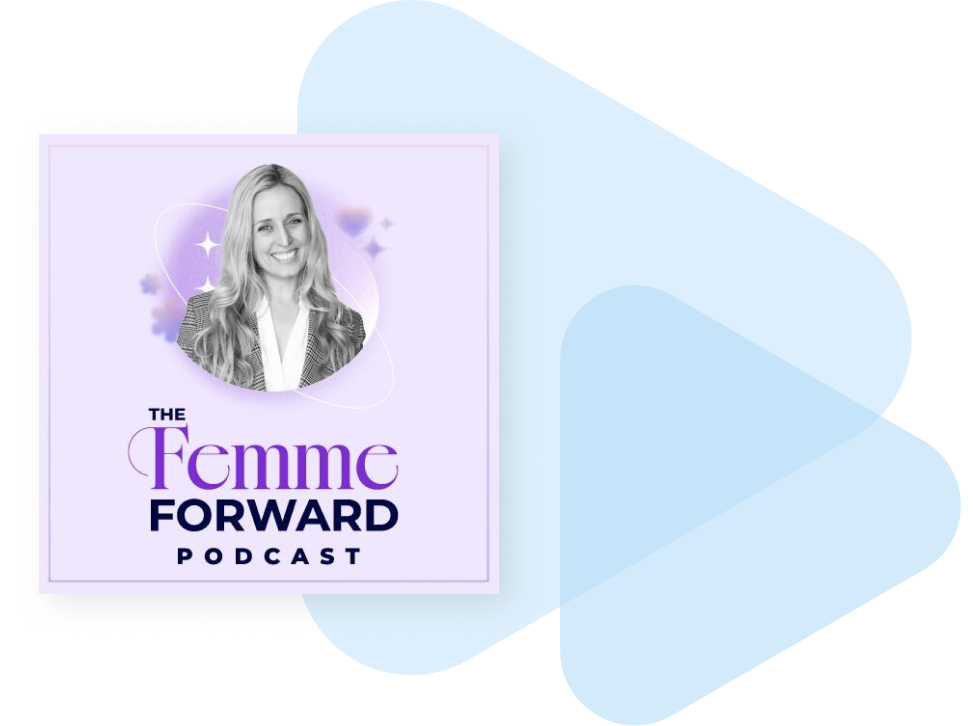
The Femme Forward Featuring Brooks Miller
Listen now
Click to listen on:


Read the transcript
Amanda Glen Smith: Brooks Miller is a rare architect of the modern digital landscape, who transitioned from the traditional agency world to the epicenter of the social media revolution at Twitter, before taking the helm of global creator strategy at Edelman.
What sets Brooks apart is her deep-seated belief in protecting the humanity of creators.
She views them not as mere marketing channels, but as independent CEOs and cultural curators. Professionally, she is a visionary who helped define how brands interact with the creator opinion layer of the internet. Personally, she brings Texas-sized tenacity and a distinctive intellectual curiosity to the table, often advocating for a more ethical, transparent, and value-driven approach to digital influence. Brooks Miller is unique in her refusal to treat social media as a static billboard.
While many in her position focus on reach or impressions, Brooks focuses on cultural fluency and humanity.
Okay, welcome Brooks to The Femme Forward. We're so glad you're here.
Brooks Miller: Hi, how are you? We did it.
Amanda Glen Smith: I am so good today. We did it.
Brooks Miller: We did it. Well, it takes a second to align schedules, especially when both of us are about to have babies.
Amanda Glen Smith: We made it happen. We made it happen. I agree, nine months pregnant for both of us makes scheduling a little bit challenging, you know.
Brooks Miller: And if we're out of breath during this podcast, that's why.
Amanda Glen Smith: Did you know there are babies pressing on our organs, which is why we can't speak as fluently as usual? Okay, let's start from your origin story. You transitioned, I
Brooks Miller: Truly.
Brooks Miller: Yeah.
Amanda Glen Smith: Mean, we were both in San Francisco at the same time at ad agencies, doing our thing,
Brooks Miller: We were. We were.
Amanda Glen Smith: and you made kind of a hard pivot into the social media landscape, the creator world. Why did you make that pivot?
Brooks Miller: I had my obligatory quarter-life crisis, which I highly recommend, frankly. No, but we had been talking about this previously. Basically, I had been working in advertising. I'd gotten my degree in advertising, and yet I was seeing something happening in the world around me, which was this rise of social media, which also shows you how old I am.
Amanda Glen Smith: Not millennial.
Brooks Miller: We are proud millennials. But something that was happening that I found really interesting was, first of all, I'd always been a highly online kid. I was the first person to have a MySpace, I was the first person to have a Facebook, an Instagram, all of it, right? I was a Tumblr kid, I was on X pages, and at the time when this was happening, I was obsessed beyond belief with bloggers. I would open up every day to a feed of my favorite bloggers. What was that called? Are we seeing... we're pregnant?
Amanda Glen Smith: My gosh, what was that called? I don't know. This is pregnancy brain at its finest. But I remember it. And I also like how you said you were the first person to have a MySpace. Like, what a claim to fame.
Brooks Miller: Obsessed.
Brooks Miller: I was obsessed with all of it. I had always been a really highly online kid, and at the time I was obsessed with bloggers. I would look at their pages every single day for updates, new photos, new content constantly. What I didn't understand at the time was that bloggers had always been doing brand deals since the beginning of time. That's how they monetized their blogs, outside of just display ads. But I had never seen people monetize on social media.
But around this time, when you and I were in San Francisco, about 2013, this new app called Instagram hit the market. For the first time ever, I saw bloggers moving their content to social media and monetizing that content on social media. It's hard to even fathom it now, but social at that time was not a place where you followed strangers. It's where you followed your friends and your family and your college friends and your coworkers, and got real-time updates. Heavy...
Amanda Glen Smith: And used heavy, heavy filters on your photos.
Brooks Miller: Heavy filters. Everything was square, there was no video. But there were also no ads. So to see an ad organically in your timeline felt like this wild, gorilla-marketing thing that I thought was so exciting. Parallel to that, I was realizing in real time that even though I was making TV commercials, nothing that I bought was because of a Progressive ad. It was because my favorite blogger told me that this new Spindrift flavor was fantastic. I'm holding up a Spindrift. Delicious. I was making my purchasing decisions because of these bloggers, who I had parasocial relationships with, and it wasn't because of TV ads. And I realized, as a person making TV ads, woo, this is maybe a problem.
Amanda Glen Smith: Yeah.
Brooks Miller: I was also naturally excited about tech, living in San Francisco, and I had a ton of coffee dates with people, trying to figure out what this all meant, what was I even talking about, and what could I do about it professionally. One of our mutual friends was at Twitter at the time, Julia Robinson Cunningham, and she very astutely told me that they had just bought a company that did what I was talking about. Of course, we didn't have any of the nomenclature of influencer marketing or creator marketing, or whatever we wanted to call it at the time, but she understood what I was trying to say. She said, "The company's called Niche. They work with creators on Vine and help them get brand deals. You should talk to them." I ended up being their first post-acquisition hire at Twitter, which was so fun. It started this whole evolution of what I'm still doing today, which is trying to figure out how to get creators paid by brands, and working with them together. It's been one of the best crises of my life, figuring that out.
Amanda Glen Smith: I love it. Also, I totally forgot about Vine. My gosh, that was such a thing as well.
Brooks Miller: I know. It was great. I didn't forget. I miss it every day. I miss it every day. It might come back, allegedly. Jack Dorsey is allegedly working on "diVine," which is to bring back the form, which I'm thrilled about. I'm so excited. I hope it works.
Amanda Glen Smith: Yes, I'm here for it. Okay, I feel like you just hit on it when you said creators. You working in this space for so long has really helped you shape some of the very rules of influencer marketing before they were really written.
Brooks Miller: Mm.
Brooks Miller: Yeah.
Amanda Glen Smith: What is the difference, and why have you shifted to calling everyone creators versus influencers? I think it's a very big distinction and a big movement, if you will.
Brooks Miller: It's interesting, because Darren Lockman and Rob Fishman, who founded Niche, the company that got acquired by Twitter, were always incredibly insistent that we call them creators. I think a lot of that was because they were introducing an entirely new marketing function to the world, and "creator" feels creative and legitimate. "Influencer" feels nasty. It feels like you're being influenced and the wool is being pulled over your eyes. It feels nefarious. So I think they were always really deliberate about that framing. That being said, influencers and creators are used interchangeably in a lot of circumstances. I feel really passionate about it for two reasons. One, I've talked to a million creators, and they all prefer to be called creators.
Amanda Glen Smith: Right.
Brooks Miller: They feel like they are creating content and creating community. That content and community can be influential, sure, but their output is creative, and I think that speaks more to what they feel like they do. So I like to call them that, because that's what they prefer to be called. And I also think it's more descriptive of what's really happening here, which is influence via creativity. So that's the way I say it.
Amanda Glen Smith: I think it makes a lot of sense. Okay, you spent, what, seven years at X, or at Twitter, previously called Twitter? Eight, eight, eight...
Brooks Miller: Seven and a half. Yeah. We can round up. We can say eight. Seven and a half, seven and change.
Amanda Glen Smith: Seven and a half, eight years. I feel like there was a lot. It was a big period of massive cultural and corporate upheaval, quite frankly. What is one of the
Brooks Miller: Huge. Yeah. Mm-hmm.
Amanda Glen Smith: biggest lessons you learned about maintaining your professional identity and brand, especially when the platform you represented, and that you were partnering with creators and influencers on, is undergoing this radical transformation?
Brooks Miller: Yeah, it was like boarding a rocket ship, for sure. The journey to Twitter was a long and winding one, right? Almost a decade there. I was there when Dick Costolo was our CEO, and then Jack Dorsey came back and was our CEO while he was also CEO at Square. Then Elon Musk eventually bought the company, and I was fired by Elon. So I kind of lived many lives there. It was crazy. But I do think one of the things it taught me, as I step back, because it's been about three years since I was there, is the importance of not losing yourself within a company. I bled blue. I loved working at Twitter. It was one of my favorite things on my resume. I had so much pride, I had all the swag, and it was such a cool thing that people would ask me about. I felt so much pride in what we were building and connecting the world.
Then getting laid off by the richest man in the world really rocked my world. I was three weeks post-maternity leave when Elon did his huge cut of 50% of the company. I think it ended up being about 80% of the company overall that was let go, and it completely destabilized me. But looking back, I feel so radicalized by it, because I realized that I'm a cog in this machine, and that's how this works, and that's what corporations are. But I have to always remember what makes me special, what makes me important, what makes me feel fulfilled and driven, and make sure I'm watering that plant and not just putting everything into a company that is not ultimately mine.
Amanda Glen Smith: Right, right. You're so proud of it, but you didn't create it, and you're also not in charge of it. Wait, if you don't mind, can we go there?
Brooks Miller: No. Please.
Amanda Glen Smith: Eighty percent. You're three weeks postpartum. How did this all happen? Did you get a Post-it note from Elon himself? I'm just very curious.
Brooks Miller: Can you imagine? No. When you lay off about five thousand people in one day, you can't really have a bunch of one-on-one conversations. But yeah, I was three weeks back from my maternity leave, and there had been so much happening in the news that we knew something was coming. We had
Amanda Glen Smith: Yes, you got an inkling of something, some upheaval.
Brooks Miller: An inkling. We delusionally thought maybe we would be fine, because I sat in the sales org, so we usually make money for the company. You keep those, and the non-essential functions get cut. But the cuts went really deep, and my laptop stopped working. That's how I found out. First my Slack wouldn't work.
Amanda Glen Smith: Wait, I didn't log in to anything.
Brooks Miller: Uh-huh. First my Slack wouldn't work, and I thought, hmm, this is not great. Then my email wouldn't work, and I thought, hmm, this is really not great. And then my laptop shut down.
Amanda Glen Smith: It's wild.
Brooks Miller: We all realized. We actually still have a text chain with a bunch of people who were on my team, where we kind of live-started adding people as their computers shut down. Our entire department got let go, as did so many others, and then we all got on Twitter and started tweeting our updates and using the platform, bizarrely, yeah.
Amanda Glen Smith: Of course you did. You're like, now this will be our expat channel.
Brooks Miller: Truly, truly. Everyone started using the salute emoji and the blue heart emoji, and that became our language for who was no longer with the company. It was wild. It was like watching election results come in.
Amanda Glen Smith: Yeah.
Brooks Miller: It was both exciting and so sad. When we really realized the number of people who were gone, it was so clear that it wasn't the same company anymore. There was a lot of survivors' guilt for the people who ended up not getting cut, and a lot of devastation, because this thing we'd all felt was so special was gone. It doesn't even have the same name anymore. It's totally gone.
Amanda Glen Smith: Right. Yeah, the identity itself.
Brooks Miller: About the laptop piece, I always recommend to people, when thinking about a layoff, that most people will get laid off at some point in their life, which is a hard pill to swallow. But it has nothing to do with you. You're a good, nice person. You're good at your job. This is how the world works. Trust me, I took it personally, and I was one of five thousand. I understand it's a roller coaster of emotions, but I always tell people to get their own personal laptop, because trying to update your resume on your phone is not great. Trust me.
Amanda Glen Smith: It's also totally logical, it makes so much sense. But I would bet the number of people who don't have a personal laptop anymore is upwards of ninety percent, right? Because you do so much, and you're so ingrained and integrated now.
Brooks Miller: Of course, of course. Even small things. During the course of working at Twitter, I got married and I had a baby, so many photos were on my computer. Thankfully,
Amanda Glen Smith: Are they gone?
Brooks Miller: No, thankfully we knew bad things were coming, so I did back up my computer. I have those files. But if I hadn't, I would have lost all of that.
Amanda Glen Smith: My gosh. Well, as you just alluded to, layoffs are part of life, and a lot of these companies are having them. But I do feel like the one at Twitter at the time was very large, and one of the first larger ones that was so public, you know? With a different lens. So that is why I also think about being three months postpartum. What did that do to your psyche, your self, your confidence? How did you go about your next step, if you don't mind me getting super personal?
Brooks Miller: No, it's great. It is personal. Work is personal. We can't help but bring ourselves to work. Don't leave all that at the door. So I had a way longer maternity leave than I thought I was going to have.
Amanda Glen Smith: Bonus, bonus.
Brooks Miller: And this is just who I am as a mom and as a corporate girly. I was really looking forward to going back to work. We had about five months of maternity leave, and I was ready to hit the ground running, speak to some adults, and get back in the groove.
Amanda Glen Smith: You're like, I've got my outfits ready. We are ready to go.
Brooks Miller: Yeah. So it was very destabilizing to be a true stay-at-home mom, against my choice and against my will. Some people I know really embraced that and were like, this is kismet, this is how I wanted it to be. For me, I felt a lot of anxiety and responsibility to pay for a newborn, pay for a mortgage, pay for a car. Our lives were built for two incomes, so there was a lot of pressure to get back on the horse and figure something out really quickly. It was a lot. It was really, really scary.
Amanda Glen Smith: That's the thing. I feel like for certain women, it totally depends on who you are, right? But with a career and work, you can usually validate your input with the output. You know you did a
Brooks Miller: Mm.
Amanda Glen Smith: good job. Let's say you had a big presentation or something. There's usually data-driven metrics to give you this sense of, all right, yeah, I crushed that, I can do this.
Brooks Miller: Yeah.
Amanda Glen Smith: With a newborn, absolutely not. There is zero validation other than lovely, amazing snuggles. It's a harder thing, I think, for a lot of women to grapple with, because you're used to an environment that gives back in a very different way than a very small child does.
Brooks Miller: I mean, a newborn doesn't give you a performance review. And for an Enneagram Three who deeply loves feedback, I really wanted the structure of a job again. I love to work, so I was looking forward to it. It was scary, big time. The best piece of advice I got was from a friend who's a recruiter. Again, I'd been at Twitter for almost eight years, and he told me, "The next job you take, you don't have to be there eight years. You don't even have to be there eight months. Just take something, try it, feel it out, and keep moving." That relieved me of the pressure of finding this perfect new job, the way you might when you're looking more passively.
Amanda Glen Smith: Yeah.
Brooks Miller: But I do love where I ended up, so it worked out great.
Amanda Glen Smith: Yeah, and tell our audience a little bit about what you do for Edelman, because I know you work with some of the largest brands out there, Amex, Mars, et cetera. That really resonates, I think, with a lot of our audience and who they're working with.
Brooks Miller: Yes. I posted in this post-Twitter kind of haze, and I really sat down and looked at, what do I want to do? What am I good at? What makes my resume pop and makes me special? I realized that, in the time I'd been at Twitter, creative marketing has exploded. It's not just a thing that marketers do. It's almost all of what marketers are doing, and the spend is increasing year after year after year. I also realized I'm kind of OG at this. I was working on Vine, I was working on Musical.ly before it turned into TikTok. I have historical knowledge here, and I realized that was really valuable in the market. And then another thing that happened when I was doing this audit of myself was that I realized I liked agencies. I started off at agencies, and then went platform side. But the thing that became frustrating at the end of Twitter, which was a good thing, is that as the creator economy grew, we had all these new opportunities: TikTok, Substack, Patreon, a podcast, a tour, a co-branded coffee company, whatever it may be. But ultimately, when you're at a platform, your job is to increase the health of that platform. So we would get feedback like, well, cool, I love this idea, but does it fit in a tweet? Because if it doesn't fit in a tweet, we're not going to do it. I realized that if I could go back to an agency, I would have the full breadth of materials and tools in my toolbox to really make cool work. Luckily, my boss from Twitter ended up at Edelman. For those listening who aren't familiar, Edelman is the largest privately owned communications firm in the world. It's about 6,000 people, family-owned. Richard comes in every day
Amanda Glen Smith: Yeah.
Brooks Miller: with his daughters, who are in all of our offices. We have some of these huge blue-chip clients that we get to work with, and creator is a huge part of their strategy. It was originally a PR firm, and now it's more of a comms firm. They understand the idea of working with people to advance your reputation, leveraging partnerships and all of those good things to build trust and audiences. So it became this really cool combination of all the tools in the toolbox, these amazing brands, and a place that really gets what we do. And then I got to work with my old boss. It's been really beautiful.
Amanda Glen Smith: I love that. It checks so many boxes for you. Do you do matchmaking? Do you find creators for certain brands in this role? Because I also view Edelman as almost a consultancy layer at points, too.
Brooks Miller: Yes. I didn't pay you to say that, but I'm so glad you did.
Amanda Glen Smith: No, that's my own interpretation.
Brooks Miller: I love that so much. Yes, I have kind of three jobs. One of my main jobs is marketing what we do, and what we do differently than everyone else. There are so many creator agencies now, so what makes us special? We're the trust agency. We're going to matchmake you with a creator who will make sure they elevate your brand instead of denigrating it. Those are the things we're really good at, and I talk about them on podcasts like this, on LinkedIn, if you're lucky enough to follow my content, I'm sorry, and in op-eds, all those types of things. But we also have to be available, and we work with clients. A lot of what we do is look at a brief or a strategy and say, that's really cool. The people you're trying to talk to are X, Y, and Z. Here are some people we think could really help you reach that audience, or really help sell your coffee, or drive foot traffic, whatever it is according to their KPIs, and then find the right creators for them.
Amanda Glen Smith: I love this. It makes a lot of sense. I've read that you have this theory of, I know, I'm reading, look at me. This
Brooks Miller: What did you read?
Amanda Glen Smith: This theory of the court of creator opinion. Can you tell us a little bit more about that?
Brooks Miller: Yes. The court of creator opinion. What in the world is that? Basically, it's marketing speak for the fact that the court of public opinion, which we all know and love, or hate, has really shifted. It has a new address, so to speak. A lot of public opinion used to be formed in person, at the dinner party or a happy hour, or in traditional media, like what's covered in the chyron of the news, or what's on the front page of US Weekly. That is what would color the way we as the public saw the world. But with the emergence of social media, and how much time people are spending on social, the court of public opinion has moved there. Because creators rule social, they're the most followed people and the most trending people, and they are pushing content into our algorithms daily, because that's literally what they do for a living. They are deeply impacting the way we see the world around us, in everything they do: reaction videos, what they share to their stories, what they comment on, what they don't comment on, what they don't cover, long-form podcasts. These things really do affect the way we feel about current events, public figures, and brands, which obviously we care about at Edelman. They deeply color our worldview. That's the whole thesis of that narrative and point of view. We have several solutions on how to talk to creators in a way that's more effective, because ultimately, if you launch a new product, a creator is probably going to talk about it, and you want them to speak well about you. There are ways to help you tell your story more healthily within those communities, and ensure that what you're trying to communicate is actually what's being received.
Amanda Glen Smith: That's super interesting. It makes a lot of sense. Is there data, are there statistics around the demos for this court? Like female creators versus male creators?
Brooks Miller: I don't know. I think those would probably have to do with the niches you're in. The thing that's so cool about the internet is that you can get really deep into stitch talk, which is people who do stitching, or book talk, or the manosphere, or looksmaxxing. There are so many niche communities. I would imagine that it varies.
Amanda Glen Smith: I don't even know what you just said. Like, a little... looks what?
Brooks Miller: See, so... I've rotted my brain. My profession has rotted my brain.
Amanda Glen Smith: I mean, I love that. I love to know that there are so many corners of the internet.
Brooks Miller: There are so many corners of this worldwide web. But I do have a compelling stat that I think about a lot: fifty-eight percent of people trust what creators say about brands more than what the brand CEO says. For example, Marques Brownlee, a very prominent tech creator who does product reviews on YouTube, people are going to trust what he says about the iPhone more than what Tim Cook says about the iPhone. Which is wild. It makes a lot of sense, because creators are just like us. They feel parasocial. They feel like our friends. They have a different payment system: we pay them with our attention, versus a CEO who gets paid by their board and their successes. So they feel more trustworthy. But it's really wild when you think about these huge blue-chip brands that want to be in control of their narrative, when they simply are not.
Amanda Glen Smith: Okay, makes a lot of sense until it doesn't, though, because I do feel like a lot of these are almost creator-led brands that have been started. I'm thinking of makeup brands, beauty brands, where
Brooks Miller: Yes.
Amanda Glen Smith: we now require a founder and CEO to also be the face, right? And the biggest influencer in market, the biggest creator in market. It's this crazy dichotomy of expecting, a lot of the time, women to be both.
So I feel like it makes sense in the masses, but then you start to get into some of these niche brands, and it becomes more about that person promoting what they've created versus not. Like, obviously Rhode and Hailey Bieber. Those things go hand in hand. Now, I know that's a little bit different. It's almost celebrity-endorsed.
Brooks Miller: Mm-hmm.
Amanda Glen Smith: Thoughts, Brooks?
Brooks Miller: I do have thoughts. Like the founder-led creator movement. You know who's doing an interesting job of that? Aphorium Beauty is one that I really love. Their founder-led content is fantastic. I have a friend who's starting a cookie brand, it's Mrs. Fields' daughter, and they're doing a lot of founder-led content, because their founder story is really interesting. Her mom was Mrs. Fields, and she's starting her own cookie brand. What does that mean? How does that feel? What does it look like to do that? I think what people really enjoy about these founder-led stories is the humanity of it. You feel like you're really on the journey with them. Also, people like to learn on the internet. We're seeing over and over that things that teach you something new do so well on TikTok, and it's interesting to learn how someone starts a business. There are so many podcasts about that very thing. So I think it's endearing. Do I think it's a forever trend? I have no idea. I'm not sure, because you also
Amanda Glen Smith: Yeah, to be determined.
Brooks Miller: have to fail a little bit in order to be a creator. You have to be a full-fledged human. I don't know how many founders are going to say that they messed up a shipping order on their TikTok,
Amanda Glen Smith: Yeah.
Brooks Miller: you know?
Amanda Glen Smith: How do you balance that when you're working with these massive brands, but also trying to protect the humanity of your creators and making sure that brands feel comfortable with that? Because that's a big risk for a lot of advertisers and marketers, right?
Brooks Miller: It is, and especially post-Dylan Mulvaney and Bud Light, we saw an influx of brands who were just absolutely terrified to work with creators. Absolutely terrified. And I don't blame them, because creators aren't static billboards. They're not display ads. They're not a commercial that plays and then cuts to the show you're watching. They're living, breathing communities, and they're real people. I think their humanity is their superpower. It's what makes us love them and trust them. We know about their dog, their friends and family, where they live, and what they're wearing that day, and all of it builds a very deep relationship between them and their audience. But real people screw up. Real people have bad tweets from years ago, or accidentally share misinformation, or talk about something they're uneducated on, or speak about politics that affects their daily life, and they can be polarizing because of that. So there's a push and a pull on that humanity thing. It's their greatest strength, but it's also their greatest weakness. The way we figure that out with brands is interesting, because a lot of the work is on the brand. Brands have to figure out who they are in order to work with creators, because creators should be an extension of their brand. But if you don't know what your brand is, how are you going to find people who reflect it? So a lot of the work we do with brands is establishing what we call a permission space, and saying, hey, totally fine if you don't want to work with creators who talk about the environment or sustainability. Sure. But also, what do you think about sustainability? What are your programs? What are your thoughts and feelings, all of it? That way we can find people who match that. Otherwise, what are we policing, really? Those things have been really helpful. So we do a permission space exercise, and then ultimately we have incredibly deep vetting. We have something called Creator Trust Score, which is, I've never seen vetting anything like it. We go minimum ten years retrospective. We vet both the creators and their partners, so their podcast partners, their husbands that they frequently show on their content, whatever it may be, and it's globally compliant and all those things. Vetting and then really getting crystal clear with the brand, essentially.
Amanda Glen Smith: Wait, wait. So you do background checks. You're, like, deep.
Brooks Miller: Essentially, but you know what's crazy is that creators have a very large digital footprint. They're professionally
Amanda Glen Smith: Right.
Brooks Miller: online. So you can learn a lot about them by looking at their tweets, their Instagram stories, their Facebook posts, and all of that. Past behavior is a really good indicator of future behavior, so it's helpful. But I always start with the brand, because I don't think it's fair to penalize creators for having strong opinions or being very loud and proud about whatever it may be, because that's part of their community. We just have to make sure it's part of the brand's community too.
Amanda Glen Smith: Right. Okay, this sounds like one of the rules of the tightrope that I know you have drafted. See, I do a lot of reading. I do prep in advance of having guests on here.
Brooks Miller: Yes. You did your vet.
Amanda Glen Smith: I did my digital footprint vet on Brooks.
Brooks Miller: Have a dark, large digital footprint as well, yeah.
Amanda Glen Smith: You do. It's mostly on LinkedIn, but you've got a large one.
Brooks Miller: No.
Amanda Glen Smith: What other rules are there, outside of just protecting trust and humanity?
Brooks Miller: There's a big conversation to be had, and a rule, around what we call elevated moments. There's a lot happening in the world all the time. There are wars, there are elections, there are NBA Finals games. There's a lot happening in the macro sense, and a lot that happens in the micro sense. Maybe your particular brand feels like it's under fire because you had a new logo, or you launched a product people do or don't like. Or you got involved in some other thing. There are a million things that can be happening, and I think brands feel like they have to boil the ocean, so to speak. But getting really tight on what you feel is an important thing to focus on, or to spiral about, in these elevated moments is really, really important. Some brands just don't have a connection to politics. If you're Downy paper towels, you don't need to worry about whether your creator is talking about an upcoming political election. It's just not something people associate with you. But other categories are different. So really understanding where that permission space lives for you, in terms of public persona, is key.
Amanda Glen Smith: Okay, that makes a lot of sense. Let's talk a little bit about these theories you have for creators. I don't know, not theories, they're proven strategies. Let me call them strategies.
Brooks Miller: No, they're good. I like it. These
Amanda Glen Smith: Yeah, theses. Do you think they translate to the average female in the workplace? Because we've had guests on the show who talk a lot about how you have to build your own personal corporate brand. You and I have seen it on LinkedIn, being active there, and it's kind of a sleeper channel, I would say, from the influencer's perspective. But what do you think translates to the average woman trying to do her best at any given job?
Brooks Miller: I know. There is no right answer, because it's hard to be a woman. It really is. It's really hard to be a woman on the internet, too. So baseline, it's hard. But all of these conversations about creators have taught me, as Brooks, and especially in the context of AI becoming so prominent, that your humanity is so special. You have to be yourself. It's so obvious when people are posting AI slop. It's so obvious when someone is moonlighting as their favorite creator and trying to pretend that's their persona too. You have to just be yourself. I have a very loud personality, a very outgoing personality, a very silly personality, a very casual personality, and yet I work in a corporate setting. So I've spent my whole career trying to figure out what my line is: of my personality, who I am, what's special about that, and then also what's appropriate, what's transparent, what I want to say in any given room. I get very wary of people who are professionalism police, because I'm like, let's not do that. Let's let everyone be themselves. As long as you're prepared, as long as you're articulate, as long as you work really hard, I think you get a lot more freedom to be yourself. But I would really encourage people who are trying to brand themselves, or who want to post more online, not to dampen what God gave you, you know?
Amanda Glen Smith: Yeah. Well, I think it goes back to your layer of humanity versus professionalism.
Brooks Miller: Mm-hmm.
Amanda Glen Smith: I struggled with this for a long time. We're similar. We just have loud, very loved people, like... as you grow in your career, it's a hard line to figure out. What is an advantage, and what is also a skill, right? How do you use those when you have specific roles or tasks you need to complete? If you go to way more foundational things, like, are you a kind human? Are you a respectful human? Are you doing things in a way where everybody feels included? Those key themes and tenets don't have to be professional. They're just values across the human ecosystem. If everybody shows up as themselves, my perspective is: bring whatever amount you want to bring. I totally understand if there are things you don't want to bring to work, or things you don't want to share that are uniquely you or part of your personal life. But you should feel like you have the ability to be your true self. As long as everyone is treating people with the baseline values of humanity, we should be pretty good.
Brooks Miller: Mm-hmm. And I think, too, if you show up as yourself, not everyone's going to like you. That's fine. That would be true regardless. But when you show up as yourself, you attract people who appreciate those innate parts of you too. It's a self-fulfilling prophecy. So you find places to work that are more your vibe. You get to be around coworkers who really see and respect what you do. But you have to first start showing up as yourself.
Amanda Glen Smith: Hundred percent. I was once told I was an acquired taste. And I said, like a fine wine? I think that sounds... okay.
Brooks Miller: Like, you're like, I heard that. You're like, I'm receiving fine wine. Thank you. Girl, I'm deeply an acquired taste. I would rather be an acquired taste than anything else.
Amanda Glen Smith: I know. I'm like, okay, fine, we'll peel back the onion a little bit, layer by layer, and see what you think then. But sounds good.
Brooks Miller: If you don't like me, acquire some taste. That's what you should be saying.
Amanda Glen Smith: Yeah, thank you for your thoughts, you know? Okay, we alluded to this at the beginning of the episode, but let's pivot a little, because we are both wildly pregnant. I'm literally going to have a baby any day now, and so are you.
Brooks Miller: Truly.
Amanda Glen Smith: Let's talk about maternity leave. We haven't really dabbled in that on The Femme Forward quite yet. I know you do, so how do you set yourself up for success on your team? What are the things you're thinking about?
Brooks Miller: I have so many thoughts. Yes, let's do it. I'm thinking about so much, so much. It doesn't get better with the second. I had my first baby at Twitter, as I mentioned, my son. We got twenty weeks there, which is incredible, here in the US at least. Other countries are like, excuse you, that's nothing.
Amanda Glen Smith: Yeah.
Brooks Miller: But here in the US, that's great. And now I'm about to have my second baby, in a totally different job, in a totally different state, in a different apartment. It's a different experience with a baby, like that's totally different, and yet the same anxieties keep popping up about how it works. The biggest thing I have invested in, I'll do two things: I'll talk about gearing up for maternity leave, and post-maternity leave. Gearing up for maternity leave, the thing I'm really trying to remind myself is that the work never ends, and therefore it's really okay to step out of it. I will not finish my to-do list before this child comes.
Amanda Glen Smith: No. Sure won't.
Brooks Miller: And that's actually just how life works. The more comfortable I get with that fact, the more I can release it and spend the time I have with my baby. But because there's such a hard deadline, like this is your last day of work, you have to get X, Y, and Z done, you could trick yourself into having this crazy to-do list. The reality is, if you have a great team, which I do, it'll be fine. The work will get done. Or it
Amanda Glen Smith: Yep.
Brooks Miller: won't. And if it doesn't get done, it wasn't that important. Then, when it comes to post-maternity leave, the thing I've invested in deeply is childcare. The whole childcare conversation is so interesting, and I'm so curious. I can't remember what y'all do, but we are a daycare family. My son goes from eight to six every day, Monday through Friday, and that is the solution for our family. I figured that out because we had to figure out what we needed as a family. What could we afford? What made us feel like we could handle life? For me, patching things together day to day, or dealing with a nanny where I had to plan what the nanny was doing, or not having family nearby, so that wasn't an option. We had all these extenuating circumstances. For me, putting him in daycare and knowing where he goes every day, for how long, with whom, I feel like he's safe. He loves his teachers, he loves his friends, we have a community. It's the greatest thing I've invested in, because it's consistent and reliable. Those were my magic words: peace of mind.
Amanda Glen Smith: And we have, yeah, we have a full-time nanny who is my sister wife. I adore and love her. My husband and I both travel quite a bit, all the time, which is why we had to have more flexibility from an hours perspective. Coming in late,
Brooks Miller: Yeah.
Amanda Glen Smith: coming in later. So daycare didn't work for us.
Brooks Miller: Yeah, well, that six o'clock pickup is life or death.
Amanda Glen Smith: It's a hard line. It's a hard line, and I can't have as many hard lines. I resonate so deeply with what you said, though, in gearing up for maternity leave. Everyone has their own individual style, but I found it so interesting, with baby number three, that the same themes exist. One being
Brooks Miller: Yeah.
Amanda Glen Smith: everyone else telling you to slow down. They're like, hey, take this time. I'm like, wait, no, no, no. I don't have that speed. That speed for me comes when the baby comes.
Brooks Miller: You're like gas or brakes. Yeah.
Amanda Glen Smith: I'm like, when the baby's here, then whoop, the switch is flipped. But until then, we have this deadline, as you mentioned, so we're going to go hard and fast to get as much done as possible, knowing, like you said, that a lot of it's just not going to get done. One of the things that
Brooks Miller: Yeah.
Amanda Glen Smith: gave me such peace and grace, actually, was something my boss told me. I don't even know if he remembers saying it, but he said, "I'm not trying to be you. I can't be you. So let's do a large percentage of things that just won't get done." And again, to your point, it's not even that they're maybe not important. It's just that no one else can do them, and that's okay. That's the end of the day. That made me feel a lot better, and differently than I had looked at it in the past, versus trying to hand off every single task you do every single day. Like you, I have an incredible team. I have an incredible leadership team, incredible colleagues, cross-functional support. The train's going to keep moving, right? And it's going to move in the right direction. It just kind of depends on what stop I get back on in a few months' time.
Brooks Miller: Yeah. Do you have maternity leave backfill?
Amanda Glen Smith: No, we do not. And I think that's very
Brooks Miller: I don't either. I don't either.
Amanda Glen Smith: It's also polarizing by country. In my experience, it's not largely widespread in America. In other countries, you do hire for the person's leave, because their leaves are much longer.
Brooks Miller: Yeah.
Amanda Glen Smith: So it's a different take on it. But what do you think about when you come back? I always tell my team, all right, it's a totally different world, and you should expect that you're a totally different person. You should also expect the business has changed entirely, but also not changed at all. And therefore you have a new role, though. You are no longer coming back to exactly the same role, or the same version of yourself that you were before.
Brooks Miller: Hmm. Yeah, your circumstances have changed, and oftentimes you've been gone for a long time. Someone on my team actually interviewed a woman who came back from maternity leave, and she had good tips. One of hers was, be new. You're new. Be new.
Amanda Glen Smith: Yeah, learn again.
Brooks Miller: Learn who the new hires are. What's been going on here? Ask these questions. Set time with this person, and act like a new person, because for all intents and purposes, at least in what we do, things move very quickly. You missed a lot, and you're not going to catch up on it all. So just be a new person and start from that day forward. I thought that was a really good way of thinking about it, because instead of feeling like you need to catch up, you can just start a new chapter. I also have a friend who told me you should start each job the way you want the job to be. If you're like, I'm going to have more boundaries, then day one, you have more boundaries. Congratulations.
Amanda Glen Smith: I like that. Yes, and I think you're right. Okay, but let's talk about boundaries. What does that look like for Brooks, huh?
Brooks Miller: Well, I always tell people, just so you're aware, no one will ever say, "I love that boundary. Thank you so much for that strong boundary you just set."
Amanda Glen Smith: What a great example you are for setting that boundary.
Brooks Miller: Literally, no one will ever praise you for your boundaries. So you just need to know what makes you happy and makes you feel sane, and stick to it. But they're like a muscle, because if you really work on boundaries, you'll start to make them, and it won't feel nearly as tenuous and strenuous as it did that first time. It's muscle memory. The boundary I have around daycare pickup is that I have to pick up my son by six. Have to. Otherwise you get charged. So I have a block on my calendar every single day at five o'clock, to give myself an hour, because I never leave at five, to go back and get him. The interesting part is I don't pick him up every day. Half the time my husband does it, and we trade off. But if I don't have that time consistently, people don't know that I'm always out of pocket. So it's a nice built-in buffer for the days he has a meeting that goes long, or the days I randomly need to pick him up five days in a row. Having that boundary, that my day ends at five, means I can get back on early if I need to, sure, but I'm unavailable from five to six, and that has been really helpful.
Amanda Glen Smith: I mean, kids taught me so much about boundaries. If you could have seen, especially with Stella, my first, what I was trying to do on calls while breastfeeding on a Zoom.
Brooks Miller: Insanity, yes.
Amanda Glen Smith: It was wild. I was like, what was I thinking? Literally. I had a crying, screaming baby. It was also COVID at the time, but still, zero boundaries. Versus now, to your point, it's better for everybody. Let me assure you. You do
Brooks Miller: You know.
Amanda Glen Smith: not want to have a call at 7:30 with my family in the state of breakfast and getting out the door at 7:30. No matter where I go, I can't hide, you know? Even if I'm in my closet, my kids are coming to that call, and you're going to get a great earful about whatever favorite monster truck we've got going that day. So those boundaries are important not only for you, to show up your best, but for everybody else too. We don't need to subject the whole world to our morning.
Brooks Miller: Yeah. You don't show up as your best self. Is that really who you want to be on this call?
Amanda Glen Smith: Yeah.
Brooks Miller: No.
Amanda Glen Smith: No, and your heart is coming out of your mouth sometimes, because of the anxiety you're trying to manage. So I totally agree. It's a whack-a-mole game, but a good one, to restate your boundaries when you come back from maternity leave, for yourself and for everyone around you, because they change.
Brooks Miller: Yeah. I've also found that the more senior I get, the more I realize that my healthy habits, whether it's boundaries, in this case, because that's the theme of this, have a trickle-down effect. Me taking time to go pick up my son every day also allows someone who is really passionate about marathon running to know they can set time on their calendar to run and de-stress and prioritize that. That's okay, because I'm showing them that the world doesn't end, that things don't burn, that work still goes on, things get done, and we can also do the things that fulfill us and fill up our cup.
Amanda Glen Smith: I couldn't agree more. I think it builds trust, too. So when your team knows, hey, I'm at the ballet studio right now, so I actually can't view
Brooks Miller: Dead.
Amanda Glen Smith: can't do that deck, but I'll ping you tonight when my kid goes to bed. It normalizes the need to be both a professional and a parent, right? So I think you can't expect people
Brooks Miller: Yeah. And can I tell you a secret?
Amanda Glen Smith: Yeah, please do.
Brooks Miller: How many times has stuff gotten figured out in the time that you didn't respond? Half, I'm telling you, fifty percent.
Amanda Glen Smith: If you let an email sit, it's wild. It's wild, you know, what happens.
Brooks Miller: Like I said, this five-to-six block. It's not that I don't get pings. I just don't respond. A lot of the time, things got figured out by six o'clock, didn't they?
Amanda Glen Smith: Yeah, or it wasn't that important after all, you know? You know what? Actually, let's talk about this tomorrow in our one-on-one.
Brooks Miller: Totally. Yeah. Yeah. It's great.
Amanda Glen Smith: I ask every guest on The Femme Forward this, but what do you view as your biggest differentiator as a woman?
Brooks Miller: My god, my biggest differentiator. I will say cutting my hair transformed my life. But no, that's not it. The bob. Change your hair, change your life. But my biggest differentiator, I think, is my personality. I've never gotten so much attention for something in my entire life as when I cut my hair. It's bizarre. But no, my personality. I'm too old to pretend to be anyone else. This is who I am. Sorry.
Amanda Glen Smith: And you own it. You own it, and you should. To your earlier point, you're not going to be everyone's cup of tea. That's funny.
Brooks Miller: No, no.
Amanda Glen Smith: Knowing that and owning that is a strength, and it's really hard for a long time.
Brooks Miller: Yeah, it really is. So I would say my personality.
Amanda Glen Smith: I like that. You often say that the best defense is a good offense when it comes to brand values. If you could give one piece of offensive, not offensive, advice to a young woman starting her career in the creator economy today, what would it be?
Brooks Miller: This is actually going to be more general than just the creator economy. This is my favorite piece of advice. Nobody thinks about you as much as you think about you. They simply do not. We are all so concerned with what's going on in our own world that it takes a lot to permeate someone else's bubble. I say that because I think it's helpful in two ways. One, it knocks you down a peg, because your problems are really not that bad. We're all on a rock floating around in space. It's not that big of a deal. Secondly, when you realize that no one is thinking about you the way you feel like they are, it relieves the pressure of putting yourself out there. Frankly, working with creators and being creative is incredibly embarrassing. You have to really put yourself out there to make work. It's subjective, it's public, it's art in a lot of ways. So if you start taking the pressure off yourself and just shoot the email, film the video, try the thing, and take the pressure off, I think you can learn a lot more about yourself and have a lot more fun.
Amanda Glen Smith: Yeah, it also removes the pressure, as you mentioned. Just get it out there. You can also take content down these days, I know that's crazy. But if you don't like it, or you end up questioning what you're doing and putting it out there, just start. Just start somewhere.
Brooks Miller: I'm sure you've re-listened to your own podcast several times. I've watched my own video. No one watches their videos more than they do themselves. I am my own biggest fan. No one is watching them like I am. So just chill. It'll be fine.
Amanda Glen Smith: Just chill, just chill. Okay. You heard it here first. No one else cares about you like you, and chill.
Brooks Miller: Just, yeah.
Amanda Glen Smith: Yeah, I love it. Okay, Brooks, I'm going to close this out with our lightning round. Don't think too fast. I'm just going to ask you a couple of questions, really get to know the real Brooks, as if we haven't already today. Okay. Flight. Global flight, any flight, really. Let's say it's like three hours plus. Are you a crazy Wi-Fi productivity girl, or do you download reality TV?
Brooks Miller: Three hours. Wow. I'm trying to move toward downloading reality TV, for two reasons. One, a friend at Twitter told me that the flight is the work. You're flying for work, so the flight is the work. And I was like, what? But at the same time, I don't get a lot of time by myself without meetings or children, so it is really nice to work on a plane. I know there's supposed to be a lightning round. My God. I am trying to be really real with myself: airplane Wi-Fi is not good Wi-Fi, and I cannot work at the same level I would like in a seat in the air as I could on the ground, in person, with somebody. So I try to do a little bit of both.
Amanda Glen Smith: Okay, no, that's a great answer. I feel differently. I have people I work with who will specifically say, you're in flight, aren't you? Because, like you said, no meetings. I love it. I think it's the most productive time.
Brooks Miller: Uh-huh.
Amanda Glen Smith: Power wardrobe: sharp monochromatic tailoring, or a pop of unexpected color?
Brooks Miller: I just did this with our friend Khaki Gaines, a stylist, who helped me with this, which is really fun.
Amanda Glen Smith: With your colors. What are you?
Brooks Miller: I am a warm spring, and I'm a Kibbe body type, soft Dramatic, or Soft Classic, or something, whatever. I must...
Amanda Glen Smith: I don't know that part.
Brooks Miller: The Kibbe body type is great. I would highly recommend it. But what I feel most powerful in is, I grew up going to a school that had uniforms, and I love a button-down, I love a blazer, I love a little preppy look. And then, according to my body type, I'm supposed to have a little bit of whimsy. So I'm your fun aunt. I'm always trying to do something a little fun, but I do love suiting and tailoring. Uniforms.
Amanda Glen Smith: Okay. Not this.
Brooks Miller: I love it.
Amanda Glen Smith: I'm in autumn. My sister-in-law also does this, and it's really helpful, you know, for shopping.
Brooks Miller: You're an autumn. Lucky. So lucky. So lucky. Mm-hmm.
Amanda Glen Smith: Okay, digital habit. Zero inbox, or do you have a chaotic four thousand unread messages?
Brooks Miller: Zero inbox person. I have realized, as I've gotten older, how difficult that is to do, but I file almost all of my emails right away.
Amanda Glen Smith: Okay. I have like a hundred and twenty-three unread. It's always a really weird small number. I mark them unread when I want to go back to them or respond at a later date, and I also flag them, as if unread is not enough. I don't know why I do both. And here we are, you know?
Brooks Miller: There we go.
Amanda Glen Smith: Okay, reset. Long, silent commute home, or high-energy dinner with the gals?
Brooks Miller: At the end of the day, I'd like to not look at my phone, listen to music, and be alone on the train. Alone with people is always really lovely, but I love to be with people. Alone with people is my dream. My God. The best.
Amanda Glen Smith: Yeah, combo both.
Amanda Glen Smith: Okay, last question. What's one skill, a brand-new skill that has nothing to do with creators or work, that you would love to hone?
Brooks Miller: I really want to learn to play an instrument. I never did. I feel like it would be so fun to just tickle the ivories and sing a song, or strum a guitar. Wouldn't that be fun?
Amanda Glen Smith: That's surprising. I can't, I mean, I was in a band. I did play instruments in San Francisco.
Brooks Miller: I forgot this about you.
Amanda Glen Smith: But then my husband can play anything by ear, as can my dad. It's really awful.
Brooks Miller: Annoying, annoying.
Amanda Glen Smith: Yes, it's a lovely skill, but it makes you feel like you're no longer the musical person in this family. Don't need to be. I will just clap and sing songs and be the vibes queen. We're going to do that instead.
Brooks Miller: Your tambourine. My dad's a musician, and I'm kind of like, you should have taught me how to do this. But he does it all by ear too, so he has no classical training. So we're just two dopes plucking strings, except he's good and I'm bad.
Amanda Glen Smith: Yeah, sambourine.
Brooks Miller: Sure. Yeah.
Amanda Glen Smith: Yeah, you can start. You can start now.
Amanda Glen Smith: Okay, Brooks, thank you so much for joining The Femme Forward. It was my god, the best having you on. Great, raw, unfiltered conversation.
Brooks Miller: Raw, baby. Thank you so much for having me. And let's go have babies and be done. Log off.
Amanda Glen Smith: I know. Let's do it. Let's do it.
Tyler Marcum: You're listening to the Mediaocean Podcast Network. For more of our shows, visit www.mediaocean.com/podcasts.
Related resources

IAB's Chris Bruderle sits down with Dan Mouradian to discuss the changing live TV landscape.
Raj Muhar, startup founder & CEO, joins host Dan Mouradian to discuss AI's role in creative.
C16 Biosciences' Shara Ticku dives into having confidence, intuition, and navigating male-dominated spaces.
Host Dan Mouradian and Chief Creative Officer Walt Geer discuss taking career risks, emotional storytelling, and more.
In the latest episode of Creative x Tech, host Innovid's Dan Mouradian sits down with Klick Health's Devon Taylor.
Host Amanda Glen Smith sits down with Zeta Global's Nicole Muscatello.
Xumo's Eli Zang joins host Ziggy Zografakis on the debut episode of The Other Side of the Screen.
Amanda sits down with Lynn Utter to discuss executive presence, career growth, and the double bind.
Amanda sits down with The Defined Dish's Alex Snodgrass to discuss her career and what she's learned along the way.
Amanda sits down with Miracle Mama founder Whitney Rowell to talk about building a business from the kitchen table.
In this episode, Amanda Glen Smith sits down with Lori Goode, CMO of Index Exchange.
In this episode, Amanda Glen Smith sits down with Jen Dass, Chief Operations Officer of WPP.
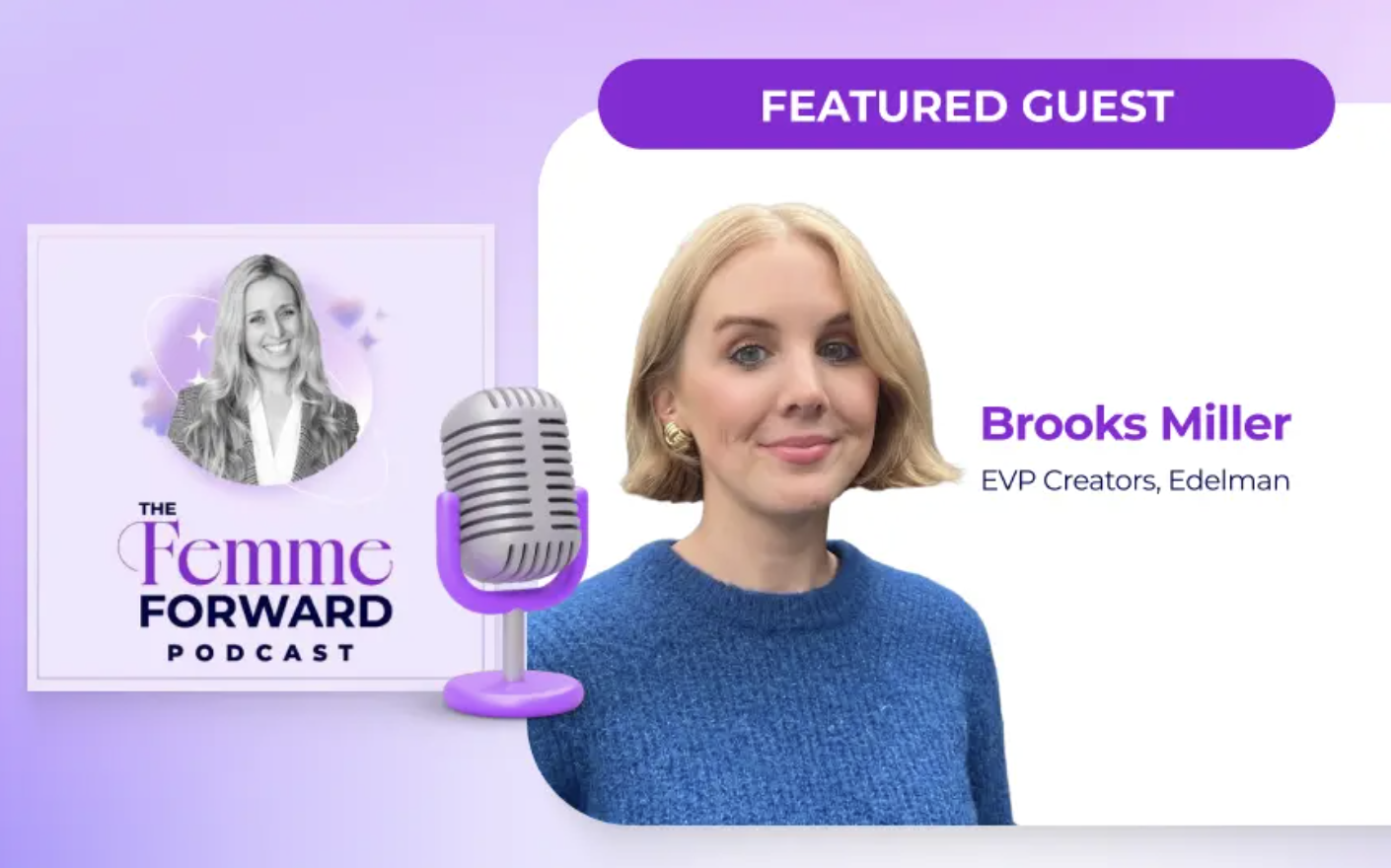
In this episode, Amanda Glen Smith sits down with Brooks Miller, Global Head of Creator Strategy at Edelman.
Listen to Gay Gaddis on confidence, risk & reinventing success.
Deborah Wahl shares her leadership lessons, career-defining risks, and personal philosophy.
Tune in to this episode breaking down perfectionism, empathy and confidence.
Amanda and Khara talk juggling work with motherhood, managing delegation, and being your most authentic self.
From the evolution of AI to how it can lessen the mental load, Sarah & Amanda dive into the future of an AI-assisted life.
Amanda sits down with Publicis' Sara Newton to dive into what it really takes to lead, grow, and thrive.
In the first episode, Dan Mouradian sits down with Caroline Levere, SVP, Performance Creator of New Engen.
Listen to host Amanda Glen Smith and Basis CMO Katie McAdams discuss the power of intuition in leadership.
Innovid's Claire Middleton, Juli Goldman & Prisma's Steph Watson dive into the current "eras" of their career trajectories.
Listen to Amanda Glen Smitha and Unilever's Rachelle Schuimer discuss their careers.