Creative x Tech Featuring Caroline Levere
Listen now
Click to listen on:



Read the transcript
Dan Mouradian: Caroline, welcome to Creative x Tech. Tell us a little bit about yourself and why you're here today.
Caroline Levere: Thank you so much for having me. I'm the CEO and co-founder of GrapevineAI. We're a performance creator-whitelisting business. We work with a few hundred brands, primarily in the direct-to-consumer space, producing content from authentic UGC creators that brands can whitelist. I sold my business to New Engen earlier this year, so now I'm part of the broader New Engen family.
Dan Mouradian: Congratulations on the sale. That's amazing.
Caroline Levere: Thank you so much.
Dan Mouradian: We're here to talk about the intersection of creativity and technology. You mentioned creator content, which, to me, always suggests authenticity. But advertisers also want scale, and those goals don't always go together. How do brands scale creator content programs without sanding off the authenticity that really matters to them?
Caroline Levere: Like you said, authenticity is number one, along with being able to relate to your customers. In my opinion, it's all about the types of creators you use and having diversity in what they look like, who they are, their backgrounds, the personas they identify with, and the audiences that follow them. You don't want to work exclusively with influencers who have two million followers, because then you can lose authenticity.
I think it's important to work with creators across all parts of the funnel who speak to your different customer personas. The creative itself is going to do the targeting, so you have to let creators speak authentically about who they are and why they like the product.
Dan Mouradian: I love talking about what works, but I think it's equally important to talk about what doesn't. What's the fastest way for brands to accidentally make creator content feel less authentic?
Caroline Levere: For me, it's making the content too scripted and being too forceful about what the creator says. The way we handle briefs is to say, "These are the hooks you need to hit, but when it comes to the testimonial or problem-and-solution content, speak authentically in your own voice."
When brands put really strict guidelines around what creators say, how they look, or what they wear, the content can feel less authentic. Creators might not feel like themselves. The same thing happens when brands make the content look overly branded, with branded fonts, overlays, and logos. You want it to look and feel like the creator. That's why you're using them.
Dan Mouradian: You hired them for a reason.
Caroline Levere: Exactly. Let them do what they know how to do. When brands get particular about tiny nuances, that's when the content fails.
Dan Mouradian: That's great advice for our audience. You chose this person or this type of content for a reason, so let it breathe and be what it is. Of course it's branded, and you're paying for it, but you're working with that person because of who they are and what they've done historically. Don't force it.
Caroline Levere: Exactly. You picked the creator for a reason. Let them have the creativity that got them to where they are.
Dan Mouradian: You mentioned your former company, GrapevineAI, which you founded and recently sold. I'm going to indulge a little here because AI is in the company's name. A lot of today's conversations about creativity and AI are about things that weren't possible before but are now within reach. If we're sitting here in the future, what's something that will feel completely normal then but sounds unrealistic today? I'd be remiss to suggest a date as far away as 2030.
Caroline Levere: That's such a good question. I'm so bad at thinking about the future because it's hard enough to keep up with today. I swear things change every minute. There was a period last year when I thought creator content was done and everything would become AI-generated. I thought we'd stop using real creators and Grapevine wouldn't exist. I can't emphasize how differently I feel today, just a year later. I was wrong about what I thought would happen this year.
I think AI adoption will ebb and flow. We'll take a lot of steps forward and then some steps back as the pendulum swings. It will also be very brand-dependent. One thing I think will become normal is using AI throughout the entire creator-content process: sourcing creators, helping with negotiations, posting, and editing.
We may also see more AI-assisted edits that use a creator's likeness, with their permission, to fix something they said incorrectly or make other adjustments. We're already moving in that direction, and I think it will become more common. But I still believe that, to connect with consumers and maintain authenticity, especially in more sensitive product categories, you'll need a real person behind the content.
Dan Mouradian: That's something we see a lot on the open web and connected television. Brands are using AI to gain scale through things like translation or adapting content for global markets and languages. AI has reduced a lot of those barriers. Is that a conversation in the creator economy? I can see it walking a fine line with authenticity if you're using generative models to translate a creator's speech or redub their lips. Is that happening today, or is it off the table?
Caroline Levere: It's happening with some creators. We're using it more for small edits. If a creator filmed something that isn't quite compliant, we may want to adjust it rather than do a full reshoot. But we have to talk with the creator and make sure they're comfortable with it. You don't want AI versions of these creators all over the internet without their approval.
That's probably the extent of our conversations right now: small changes or touch-ups. For example, if a creator is a doctor wearing scrubs and there's a stain on them, we might edit that out. One of our clients wanted to change the color of a creator's scrubs. You can't make this stuff up. Even in that situation, we'd go back to the creator and make sure they're comfortable. Our creators are whitelisted, and the ads run from their handles, so ultimately they need to approve what we're doing. Otherwise, we risk turning them off from this industry entirely.
Dan Mouradian: That's part of why I asked. I'm curious where you're seeing resistance and where creators are comfortable with the changes. Someone might say, "Sure, change the color of my jacket," but feel very differently about changing the words coming out of their mouth.
Caroline Levere: Exactly. There's a big difference between a small edit and saying, "Now that we know what you look and sound like, we're going to recreate you delivering an entirely different script." Even if it's for the same brand, that's a different angle and a much bigger ask. I completely understand why creators would resist that.
Dan Mouradian: That's valid. I appreciate your description of AI adoption as a pendulum that may swing too far in one direction and then correct itself. Experimentation is part of the creative process. You have to put ideas into the world and see how people respond. If the world's greatest artists never showed anyone their work, how would we know what they created? Without a response from the market, you don't know how your work is landing.
Caroline Levere: Exactly. Like I said, last year I thought we were moving rapidly toward all content being produced by AI. Now I think we've pulled back a little. We'll keep moving forward and backward, learning what consumers are comfortable with. Ultimately, as marketers, we want consumers to buy products, so we have to learn from them.
Dan Mouradian: Consumer comfort is interesting because it changes depending on who the consumer is. Demographically, we see older audiences consuming media differently from younger audiences. Gen Alpha's comfort with generative creative may be very different from mine. I might recognize something as AI-generated and wonder whether that turns me off from buying the product. Maybe it does; maybe it doesn't. As demographics and consumer behavior change, those comfort levels will shift too.
How are you preparing for the next generation of consumers in the kinds of content you're guiding creators to make? Are there rules?
Caroline Levere: That's a great question. We're starting to tap into different trends and push the boundaries a little, using our team and our creators to test what works. If we see a trend taking off with younger audiences, we try to understand why it's resonating and how to apply that insight.
Right now, for example, we're seeing some really unusual hooks that might not immediately relate to the product. I don't always understand them myself, but they get people's attention. Maybe the hook is AI-generated and then the content moves into something real.
It also depends on the creator. The things a 22-year-old creator is comfortable doing, saying, or making their content feel like can be very different from what creators in their 40s, 50s, or 60s are comfortable with. Our clients often want those older demographics because they see higher customer lifetime value from those audiences. We've found that a lot of our creator network is gravitating toward people in their 30s and 40s and older. We have a lot of millennials.
Dan Mouradian: If consumer reporting is to be believed, millennials are currently one of the biggest buying groups. That may shift as younger audiences age into higher income brackets.
Caroline Levere: Exactly. And sometimes you need content that appeals to both younger consumers and the people making the purchase. We have a client whose product is for teenage boys. The content needs to appeal to the boys themselves and to their moms.
Dan Mouradian: When I was younger, I'd see commercials on Nickelodeon and infomercials for every product and think, "Mom, I need that!" My mom didn't buy me any of it, but I wanted everything I saw advertised.
Caroline Levere: Exactly. Kids still see products they want, but now they're seeing them on Instagram or TikTok instead of traditional commercials.
Dan Mouradian: That's an important part of marketing: connecting with a consumer who then influences the purchase decision in their household. So, what's one thing about human creativity that technology will never be able to replace?
Caroline Levere: I think it's the human element behind the creative idea. At the end of the day, humans understand what other humans want to see and what will resonate with them. Technology can replace a lot of production work and help generate or build on ideas. You can tell it, "Here are things I like. Give me variations. Show me what's different and how I can build on them."
But it starts with a human who knows how to use the technology. Human discernment is also critical when evaluating what the technology produces. We need people to guide it and to ask, "I'm the consumer. What do I want to see? What relates to me?"
Dan Mouradian: That's fair. I always think of these technologies as tools. An artist or creator will know how to use those tools better than someone who comes in from the outside and declares that there's a new, next big thing.
Caroline Levere: Exactly. And our creators aren't using AI to produce their raw photo and video footage. We may have creators writing articles who use AI, but the creators filming that content are doing it themselves.
Dan Mouradian: Amazing. Thank you so much for joining us today. I really appreciate the conversation.
Caroline Levere: Thank you. This was great.
Related resources

IAB's Chris Bruderle sits down with Dan Mouradian to discuss the changing live TV landscape.
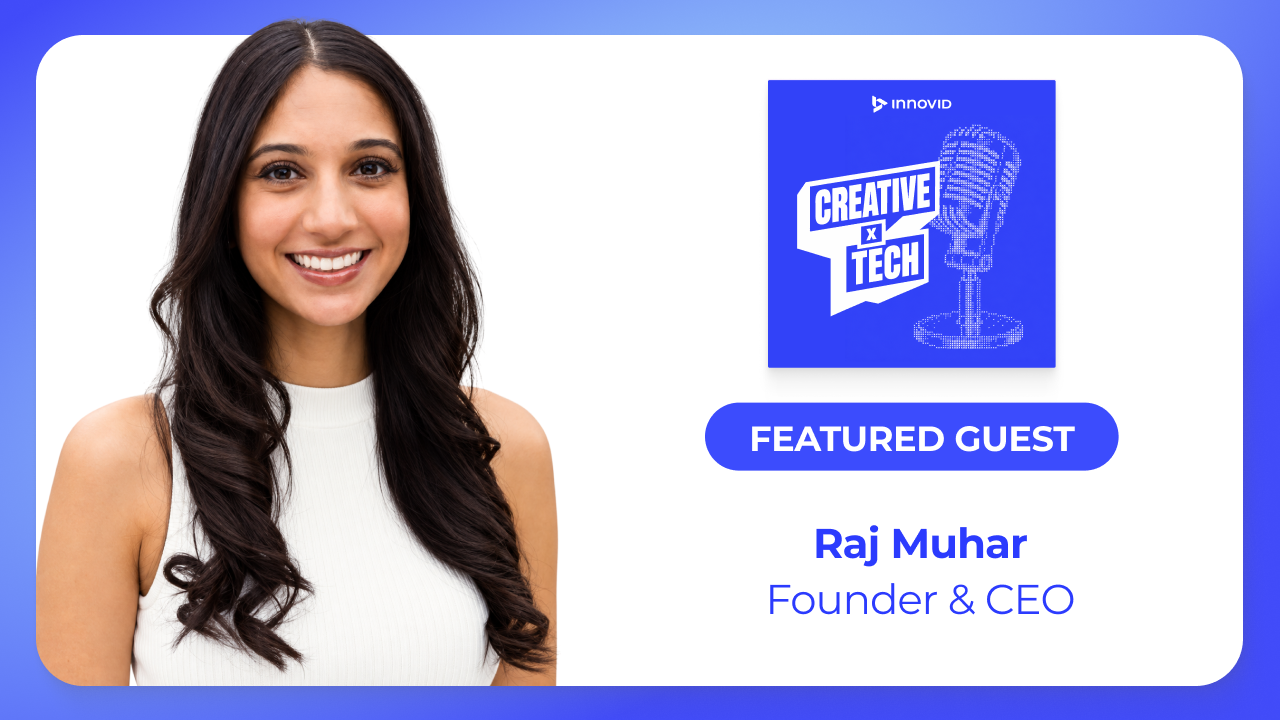
Raj Muhar, startup founder & CEO, joins host Dan Mouradian to discuss AI's role in creative.
C16 Biosciences' Shara Ticku dives into having confidence, intuition, and navigating male-dominated spaces.
Host Dan Mouradian and Chief Creative Officer Walt Geer discuss taking career risks, emotional storytelling, and more.
In the latest episode of Creative x Tech, host Innovid's Dan Mouradian sits down with Klick Health's Devon Taylor.
Host Amanda Glen Smith sits down with Zeta Global's Nicole Muscatello.

Xumo's Eli Zang joins host Ziggy Zografakis on the debut episode of The Other Side of the Screen.
Amanda sits down with Lynn Utter to discuss executive presence, career growth, and the double bind.
Amanda sits down with The Defined Dish's Alex Snodgrass to discuss her career and what she's learned along the way.
Amanda sits down with Miracle Mama founder Whitney Rowell to talk about building a business from the kitchen table.
In this episode, Amanda Glen Smith sits down with Lori Goode, CMO of Index Exchange.
In this episode, Amanda Glen Smith sits down with Jen Dass, Chief Operations Officer of WPP.
In this episode, Amanda Glen Smith sits down with Brooks Miller, Global Head of Creator Strategy at Edelman.
Listen to Gay Gaddis on confidence, risk & reinventing success.
Deborah Wahl shares her leadership lessons, career-defining risks, and personal philosophy.

Tune in to this episode breaking down perfectionism, empathy and confidence.
Amanda and Khara talk juggling work with motherhood, managing delegation, and being your most authentic self.
From the evolution of AI to how it can lessen the mental load, Sarah & Amanda dive into the future of an AI-assisted life.
Amanda sits down with Publicis' Sara Newton to dive into what it really takes to lead, grow, and thrive.
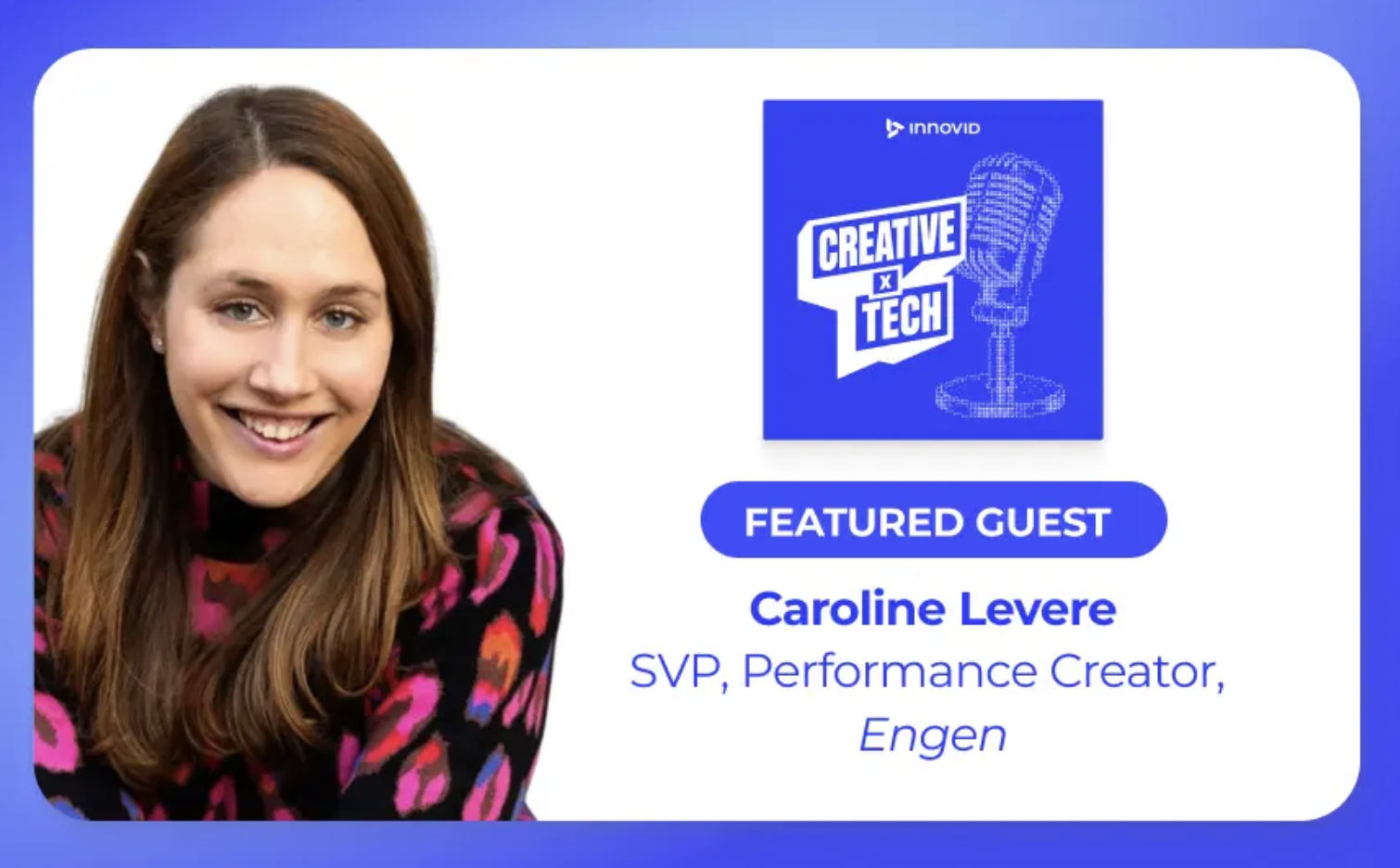
In the first episode, Dan Mouradian sits down with Caroline Levere, SVP, Performance Creator of New Engen.
Listen to host Amanda Glen Smith and Basis CMO Katie McAdams discuss the power of intuition in leadership.
Innovid's Claire Middleton, Juli Goldman & Prisma's Steph Watson dive into the current "eras" of their career trajectories.
Listen to Amanda Glen Smitha and Unilever's Rachelle Schuimer discuss their careers.