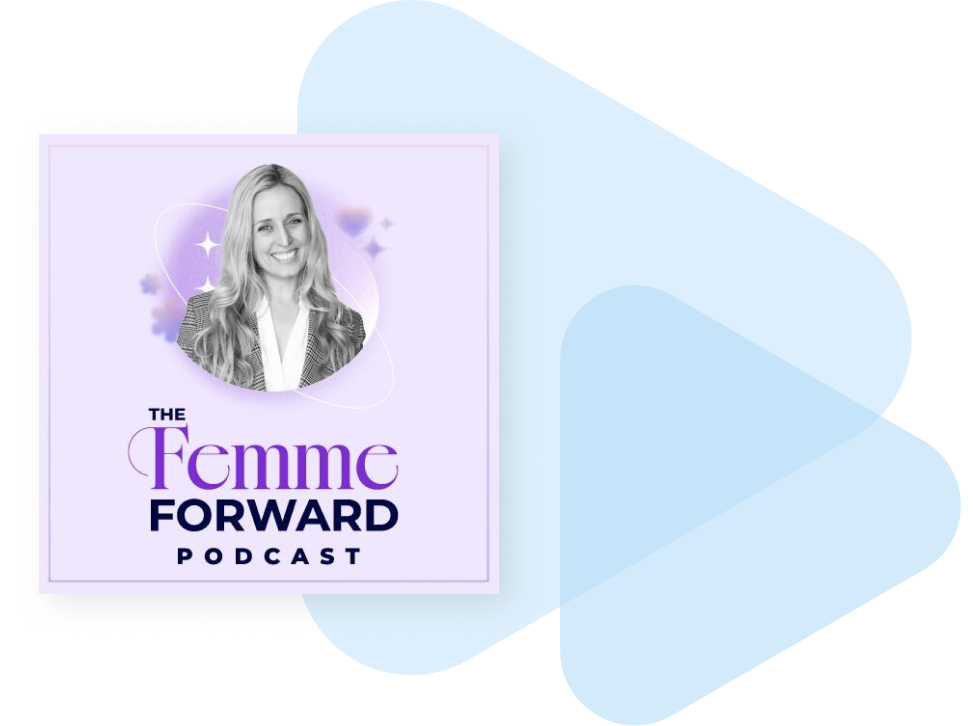
The Femme Forward Featuring Forbes Hall of Fame CMO Deborah Wahl
Listen now
Click to listen on:


Read the transcript
Amanda Glen Smith: Deborah Wahl is a powerhouse of transformational marketing, possessing a rare Midas touch for legacy brands in need of a digital soul. A Detroit native who rose to become the first female global CMO in General Motors history, she is as much an engineer of human sentiment as she is a business strategist. Personally, she is defined by her relentless joie de vivre, a philosophy she adopted in the eighth grade. That allows her to navigate high-stakes corporate turnarounds, from all-day breakfast at McDonald's to the everybody-in EV movement at GM, with infectious, high-energy optimism. She doesn't just manage brands; she revitalizes their cultural relevance for the modern age. To put her career in perspective, Deborah was not only the CMO of General Motors, but also of Chrysler, Pulte Homes, Cadillac, and McDonald's. She now sits on multiple boards, including MediaOcean, First American Financial Corporation, and Safeguard Products International. Deb, thank you so much for joining Femme Forward. We are so happy that you are here.
Deborah Wahl: Okay. I am so excited to be here, and what a wonderful topic to be talking about.
Amanda Glen Smith: I love it. Let's dive right in. According to the Automotive Hall of Fame, you were appointed global CMO of General Motors back in 2019 and officially became the first woman to ever hold that position in the company's history. I want to start by discussing the concept of risk versus reward and the professional big bets that got you there.
Deborah Wahl: It's interesting that you framed it like that. For me, I felt like everything I did in my career was a risk. It was brand new. I was always the first woman to do anything in McDonald's history, across General Motors and the auto industry. At one point it just became something you accept. You say, this is what it is, and let's go get everything we can out of it, because the most important thing is that we get everything we can out of every day.
Amanda Glen Smith: This is a personal sentiment, so bear with me, but do you feel like women have to feel twice as perfect and half as risk-averse as men? Or, because you were the first, was it truly innate to Deb, to who you are?
Deborah Wahl: I never thought about being the first until people would always say, "You're the first person to get that." I mean, really? That's so strange. But I was born and raised in Michigan, which is all about grit and being tough and getting through. I saw it in my dad's business. He was an entrepreneur with lots of businesses, and it was just, you've got to go and try hard and do it. I think that's true for anyone who rises really high up the ladder, men or women. There are just a lot fewer women, so we have less camaraderie to relate to and fewer role models. But the most important thing I learned early on was to love risk and love a challenge. Don't be afraid of it. Lean into it. I remember very consciously, when I got a job at Mazda, which was a big jump for me, I was in charge of all of marketing, and I had to go to Japan to present a worldwide strategy and convince the Europeans, the Japanese, and the Americans to completely change billions of dollars of investment. I was thinking, who am I? And I had to embrace that feeling of, I don't know what I'm doing, my palms are sweaty, I can barely breathe. You need to know that that feeling is part of it. I needed to look forward to that feeling, because it meant I was on the edge and able to do something extraordinary.
Amanda Glen Smith: It's so funny you say that, because you're not the first to say it. That's been a common theme throughout Femme Forward: if you are pushing yourself, you should be a little scared. That's the edge of the comfort zone, in a good way, because it means you're growing and moving forward. Sharing that is really helpful. You look at someone on stage or on Zoom, and you think they must not have any stage fright or butterflies, that they do this all the time. Then to hear the vulnerability of you saying, no, I was scared most of the time, my palms were sweating, and that's a good thing to embrace, to move through the risk to the next big challenge. I think it's important that we keep sharing that, because if you're not scared, you're usually not pushing yourself hard enough.
Deborah Wahl: Totally, and that's the only way we grow. In a world where it feels like things should be so much easier, and parents are shielding everyone, we're trying to take that away from people, when that's really the only way you grow. The biggest thing no one ever talked to me about is understanding what those signals are for you, so you recognize them every time. After doing a lot of speeches, I'd think, oh my God, why is this happening? Once I realized those were signs and they'd go away once I got there, that was really important. Whatever your signs are, learn to recognize them, identify them, and walk through them.
Amanda Glen Smith: That's important too: being in tune with your own signs and your own body, and then doing things to temper or combat them. One of mine is definitely my heart racing. I was telling somebody the other day, maybe I shouldn't have three cups of coffee before I go present. I have control over that. I can scale back to decaf. You have to understand the factors you're experiencing, but there are also things you can add to your day-to-day to help bring those feelings down when you're in that state.
Deborah Wahl: Yes, I love that. No one ever really talked about mind-body awareness. In this phase of life, what I'm seeing is that executives are much healthier. They're much more in tune with it, and they're really thinking about it and making sure they do. For me, I lived on no sleep for about 35 years, four hours, six hours at the most. Six hours was amazing. And I'm like, how dumb was that? I didn't recognize that there are other things you can do to be sharper, more brilliant, and even do more extraordinary work. I think that's something we'll be looking for from this next phase of female executives.
Amanda Glen Smith: I think so too. It goes without saying, but you're a mom, so your sleep is already tempered. For me personally, I went through a phase of thinking that shutting down, going for a walk, or meditating before my workday started was selfish. The best way it was described to me is that you're a corporate athlete, this is your job, and if you can function at a certain level, everything else starts to flow with those around you, whether that's your internal teams, your larger organization, or your clients. We have this whole history of hustle culture, grit, and grind, which is so important and still part of the DNA. But balancing these other signals and skills is just as important for you to show up as your best self.
Deborah Wahl: Absolutely. Absolutely.
Amanda Glen Smith: I want to go back to the international portion you mentioned. Early in your career, you moved to Brazil for Ford, and international moves can be risky. You lose visibility to headquarters. Were you scared? Were you excited to take the leap? Tell us about it.
Deborah Wahl: At first I was thrilled, because the idea of going to another country, working in marketing, and understanding that culture, how people make decisions, I loved that idea. At the same time, I was thinking, wait, I'm changing countries, changing jobs, and changing industries. And by the way, I have to learn to do business in Portuguese. As much as we sometimes think from America that everyone speaks English everywhere, in Brazil you had to speak Portuguese. I remember my first meeting with a dealer in Brazil. He was furious about the strategies that had recently been rolled out and implemented. I didn't know that. I walked in, my Portuguese was not great, and he sent me to a chair in the middle of the room, like a hostage situation, and yelled at me for about fifteen minutes. Of course I understood only so much, but I got the general gist that there was a lot of relationship-building to do. Many people will tell you at different points in your career, oh, that's so risky, you can't do that, be careful. I've found that every time I embraced it, my world opened up. I met so many interesting people who were always there to help. In Brazil we had crisis after crisis. It was a crazy job, but it prepared me for higher-level jobs, learning to work with uncertainty. One day we were about to do a launch for the Escort, and it was being built in Argentina, and the plant blew up the day before the launch was scheduled to begin. You can't make this stuff up. Things like that were all over the place. Learning to deal with that, seeing people make decisions quickly, and having to pivot and be agile as early as possible in your career is really foundational.
Amanda Glen Smith: So there were so many rewards you couldn't have put on a pros-and-cons list before you made the decision and took the risk. But you got so much out of those situations.
Deborah Wahl: You have to have a certain sense of confidence, in business or just in who you are. I think anyone can do it. Embracing risk is the best thing in the world. I learned to drive on a racetrack in Brazil, and then I used those skills on regular driving in Brazil, because everyone in São Paulo thinks you're a race car driver. You get to do things you would never have had access to in other places, by going and doing something you've never done. Another important thing about international assignments is that you learn very quickly that there are a million different approaches to solving the same type of problem. If you only grew up in one system, one education system, one MBA system, you might not see that. When you're working in other cultures, they've all been taught to address things in very different ways, so you can pick up a lot of benefits from that.
Amanda Glen Smith: On the flip side, I'd imagine it's also interesting to see that some problems are universal, regardless of what country you're in. It's the same problem you're dealing with. I love that story. I can't imagine just sitting in that chair only knowing, oh, thank you for your time. I studied in Argentina and went to Brazil, and that's all I knew. I thought Portuguese would be so similar to Spanish, and then I was like, no, never mind.
Deborah Wahl: Exactly. That's funny.
Amanda Glen Smith: Looking back at your career, you worked on a lot of legacy brands: Lexus, Cadillac, Ford, Mazda. It can feel like the default in corporate America is to play it safe. In your experience, how do you teach an organization to distinguish between a reckless risk and a necessary risk that you want to move through?
Deborah Wahl: That's an excellent question, because when you're faced with a company or brand that isn't growing, a certain panic sets in, and people start throwing everything at the wall to see what sticks. The company where I experienced this most was McDonald's. In 2014, I went to McDonald's. The brand was very challenged, there was a lot of negative brand sentiment, and there was a lot of negative press about anything the company did. It was really important to distinguish what the core things were that would work. We had a thousand ideas. One of the first I latched onto was a gigantic luxury burger that was going to be amazing. The CEO at the time asked me, "Deborah, what percentage of the total sales would that burger account for?" I was thinking maybe this much. He said, "It's a billion-dollar brand we need to focus on." That was my first lesson in creating change at legacy companies: you have to focus on the core, because unless you can get that really moving, the rest of the company can't come along. You have to find something substantial enough.
The second thing I think is important for defining reckless versus necessary is to assess the culture of the company. Every company has a very different risk appetite and different reasons for taking risks. Being able to dissect that is critical for any executive who comes into a new company. The third point, which by the end of my career my team could practically recite, was: where's the true business case for this? There are great ideas that can change a brand, but unless you can sell something that's real and solid, that people will actually buy, whether it's a service or a product, show me that first, and then show me all the great positioning around it. That's often harder for people than I anticipate. You can have great ideas, but if you can't get someone to buy and pay for your idea, it's not worth anything.
Amanda Glen Smith: For our listeners, Deb is the mastermind behind all-day breakfast at McDonald's. That was a massive shift. For consumers there was a huge upside, but internally, you're now serving breakfast all day, and there are many things you have to manipulate. I'd love to spend a moment on that story and the change you led there, because it's talk about risk versus reward: massive reward for a lot of consumers, but pretty risky.
Deborah Wahl: For a marketer, you think, oh my God, I found the dream. I asked the team to come up with what people have been asking for across our social media over the last five years. All-day breakfast was, by far, the number one request. There was no question. I thought, this is so easy, let's present it and go. Little did I know, because I'd come from automotive, and before that home building, which is pretty intense in terms of manufacturing process. I thought, we're flipping burgers here, how hard could this be? Well, delivering that in a restaurant at the scale McDonald's operates is incredible. We had to buy new equipment in the kitchens, and we had to change the flow. If you've ever seen the movie about the history of McDonald's and the founder, there's an incredible sequence about how you get the product cooked for your customer and out the door in seconds flat. It takes a lot of coordination inside. As I presented to my first group of owner-operators, they said, "Ha! Funny, funny. We're never doing that. Not in a million years." Then you think, all right, what am I going to do? I knew the idea was brilliant, that it would be a catalyst for change and for the jump we needed to revive the brand and put it in a different position. So then came the hard work. It was hundreds, at least 500 meetings, with owner-operators, the supply chain group, the production group, and the menu group, but mostly the operators, over and over. It took a year to sell it through. When someone asked me to walk through it, I said, no, really, I was personally in at least 500 meetings. Suddenly you realize the negotiations behind big change. Anyone who doesn't understand the implications of big change, as great as it sounds, needs to step back and understand how much a leader has to personally put in to make it happen.
Amanda Glen Smith: A year. You have this perfect, amazing idea, and it's fascinating that it took a full year to get it sold in and bought in before you could even start executing. I love that story. At General Motors, I want to go there too, because you also led a major cultural shift: you weren't just marketing cars, you went into the entire EV game. Zero crashes, zero emissions, zero congestion. For a century-old automaker, that's a massive departure, a risk again. Did you have a similar experience with all-day breakfast?
Deborah Wahl: First of all, there has to be a point where you individually become convinced of the value of a proposition. Mary Barra, who was CEO then, had already laid out a vision of a world with zero crashes, zero emissions, and zero congestion, and I could immediately see the sense of that. It made so much sense that the auto industry would deliver increasing value to customers by doing that. Going into the EV market was a whole other ballgame, because we're Detroit. We are the core of the ICE, the traditional combustion engine, and I'm speaking as a Detroit inhabitant. So to have an idea that could completely change that was a big, big change. In the first couple of meetings I had on it, we would meet with extremely talented engineers, and the reaction was again, not a chance in hell, this is never going to happen. That made me realize you really have to show the value of how this can work and move forward, and why. The value proposition is key. If many people like me started driving EVs, you'd say, my God, these vehicles are incredible. To me it's an inevitable moment that will still arrive. The most crushing thing as you work on something like this is seeing when things stall out and people are taken aback. So we pushed a lot of ideas. Myself and some of the leaders I worked with helped take it to the first level, just to make people aware it could be an option, that there's value in it, that it's amazing to drive, it's fun, it's seamless, there's no shift shock anymore, and no loud noise. I've never been a fan of loud noise. I like to be able to focus and do the things I want to do in a car. Then you figure out how to take elements of the culture and the population and introduce this idea to them, define the value for them, and take it further. We really had to work on the pivot in the business model and where things go. I was very, very proud of the work. We took an organization in about 18 months from something that never considered it to having an incredible plan that would show leadership. If you've checked out the electric vehicles GM has on every level, from the Equinox and the Blazer to the Chevy Bolt, they're fabulous, really strong vehicles. I still drive my Bolt. It's a $44,000 electric car with every bell and whistle. I've had it for almost three and a half years, and not a single issue. But I think you learn that it takes a lot of personal belief and enthusiasm too. It doesn't help if you say, I think this will be good, so I'd like everyone to do it. You can't be sitting back.
Amanda Glen Smith: That's what I was going to say. Both of these initiatives, and any major change you've made, show that you're very invested. You are the personal brand ambassador. You have to really believe in what you're selling to get other people on the ride. Thank you for sharing. Let's talk about data, Deb. In our industry, everything is data-driven or data-obsessed, but sometimes the big rewards come from doing things that are brand new, with no data to prove they'll work. How do you build internal political capital to take a risk when you don't have a previous case study or proof point?
Deborah Wahl: I'm sure much of the audience already knows this, but the first invaluable thing is the relationships you have throughout the company with other leaders, not just at your level, but above you and right below you. Those are critical. They have to believe you're credible. You have to look at how these ideas, which could be amazing, also benefit them. My boss, Steve Carlisle, once said, go into every meeting understanding the position the other person is coming from. Pretend you're in their shoes and sitting in their seat, and make sure you really understand that. The challenge is that this isn't something you can do the day you have a great idea. You have to work on those relationships consistently. I mentor a lot of CMOs and upcoming marketers. Not all of them, but the majority don't spend that time building relationships. That's number one. Number two for credibility is relationships outside the industry. I've been part of the ANA and the MMA, and throughout my whole career I worked on developing relationships with people outside the industry. That gives credibility to where you're coming from, because you know what's happened in other places. And then, without customer data, my favorite thing was understanding what models each company uses. Some people use Bain models all the time. Some companies love McKinsey models. Maybe they have their own. Toyota had a format for how every argument was presented that you had to learn. It was on a big A4 sheet back in the day, and it was really strong, but you had to learn their business-model language so you could build the strategic arguments. You might not have customer and performance data, but you should be bringing a lot of data and provable theories, presented to senior leadership and the board in the same mode. That's why I love marketing. You have to understand the culture and language your consumers or stakeholders speak, and that's how you sell those models and then start proving them out one by one. It takes time, but there's no substitute for that kind of thinking, scenario planning, and steps.
Amanda Glen Smith: I like that framing. You may not have the data on the specific thing you're trying to achieve, but there are enough similar things, either in a different part of the org or at a different company, that you can leverage those learnings as part of your narrative. Let's talk about the risk of saying something. Women often shy away from direct feedback. Not all women, of course, but we're empathetic, and we take into account a lot of factors, including how the recipients may feel. How have you combated that?
Deborah Wahl: It's the hardest thing to do. In a large corporation we had a joke: the person who sticks their head up and says something is the first in the whack-a-mole game. There is real risk to it. I'd never advise anyone to push back in an open meeting if they hadn't already aligned with several of the participants and worked it through, so they understand the lay of the land and have seen everyone's position first. That's when it becomes savvy. You've probably heard me say this at board meetings: men were so good at reinforcing their colleagues' positions, building on what a man had said and making the point even stronger because it lent credibility. I find women are usually terrible at that. They don't say, "I'm going to build on Amanda's point." Actually say those words. Men say those words, and that eases the risk as you bring up other things. I also think it's important to know when to be quiet. Not everyone needs to know how you feel about everyone else. Which is hard, when you think it all the time.
Amanda Glen Smith: All the time.
Deborah Wahl: It's unbelievable how people take offense, or won't support something even if it's the right thing, because they think you don't like them, or they know you won't support their position. As you get higher in an organization, that understanding and political finesse is extremely important to get something done.
Amanda Glen Smith: These are great nuggets for our listeners. I'm hearing: listen more, and have a filter when it's necessary. It's okay not to share your perspective at every point. Number two, build off what other colleagues are saying. We have this big moment right now for the "yes, and," and that's an easy way to build, and to your point, be pointed about it: I'm going to build off what my peer just said. The third lesson I'm hearing is that some things you want to have one-on-one, or make sure you're in the right audience or group for a dispute or healthy conflict, before you have it openly. I had a boss, and it takes years to get to that level of trust, but when we were about to really disagree, we'd tell the whole room, "Hey, we're about to have some healthy conflict, because respectfully, I completely disagree with what you just said, and here's why."
Deborah Wahl: Yes, and I love your point that showing positive examples of it is great. I once had a boss who was brilliant at this. I was strong on something. I was young, I was coming in hot, and he told me in the room, "Forever, everyone, great presentation, Deborah, but we're just not doing that." I was like, what? I put all my books together, huffing and puffing, and walked out the door, all upset. And he just started laughing. It was clear that him not agreeing didn't change his opinion of me or my capabilities overall. He just thought it was a really bad idea, and he was completely right about it. I'm glad he won and I didn't. You have to understand that. It's okay, as a leader, to tell people, "You know what, I love you, I love all your passion, but we're just not going to do that," because the leader may have more experience than you do.
Amanda Glen Smith: Yes, I love your passion. I love your presentation, but no. Let's go to another topic that will put your career in perspective for our listeners. You've led massive marketing organizations responsible for billions in spend and strategies that touch nearly 100,000 employees globally. In some circles, you're known as a transformation agent. But transformation, especially after mergers, can be really exhausting for a lot of folks on your team. How did you help manage that energy?
Deborah Wahl: You have to be a little less firm about positions and leave some room in the beginning, and make sure people are aware of that. I teach a resilience model that I've adapted from my own experiences and others'. It has three elements: reality acceptance, because you have to accept what's in front of you; meaning-making, because you have to make meaning anyway, even within that; and improvisational adaptation, which is being agile about these things. Talking about that with teams is important. The conversation I'd expect people to have is something like, "I feel very strongly about this, there are bigger political reasons or something else, and we are going to change, and I need you all with me." The other thing that really helped my team was that I'm part of the MMA, and the MMA has think tanks. One of them is called MOST, which stands for Marketing Organization Strategy Think Tank. Really clever, right? It's a wonderful model started by a professor at Emory. It looks at how you structure your organization. There's usually a set of up to 30 skill sets you need in your teams to succeed, but what are the three or four that will make a difference? Where do people stand on those? What's their training level today? What do you need to do to get them up to speed? What I love about this model is that it shows people things are changing and we'll have to be agile and adapt all the time, but we're going to invest in you so you have the skills to handle it. When we went through changes, structural changes, changes in the number of people, and people had to be let go, all of which take away energy and the ability to perform at your best, implementing those things showed the team that they believed in me and that we believed in them. Part of it is recognizing how you help your team have that. So in this environment, what skill sets do people need right now to be strong at? Where is the company going, and where might the gaps be? Then show people you're going to give them a path to bulk up their skills so they can address these changes and stay relevant. In the world of AI today, that's really important. It worked because it gave meaning to my entire organization about their role. It showed a belief that people weren't going to be left behind, that it wasn't "you can't do it, so you're out." It showed a path to keep adapting, that we have to be agile as a group. When you show people that you're willing to find dollars to invest in their growth, they see more meaning, and they can handle their own challenges as pivots are required. And they're changing at a more aggressive pace than I've ever seen before.
Amanda Glen Smith: That's so helpful. I really like both of those almost acronyms for managing change. Let's dive into people. You've said human capital is the most important asset. Coming from industries focused on hardware, software, or a specific brand, how do you protect the humanity of your team?
Deborah Wahl: I preach this all the time: no matter what technology we have at our fingertips, nothing truly big happens unless individuals are invested in it, and most of it happens because relationships are built on trust. I don't think we're going to lose that in the world of AI. In fact, it might become even more important. So carve out time, first, to develop those relationships and trust, and to keep evolving your skill sets and approaches. How often do we say, if people could just adapt this model, it would be so much easier? And then I think, that's so much work. Then I'd have to learn something new and do it. But the people who do that are going to rock it ahead of everyone else. Understanding that part is important, and we're never going to lose that. We need it.
Amanda Glen Smith: We need it. I agree. People are the most important asset of any organization. That's said a lot, but even with the rise of AI, as you just mentioned, it's even more important. You have to fact-check everything, and people want a real human connection with so much of what we're doing. A key tenet you have is pushing change and cultural shifts in the market, and I think one of those tenets is curiosity. As you moved into executive roles, how do you keep that level of curiosity without coming off as a micromanager?
Deborah Wahl: It's very hard. That's the problem. When you're really engaged, you think, wait, I want to know my whole media flow. Shouldn't I want to know? The reason I honestly got involved in MediaOcean was that most CMOs were leaving media decisions and the whole chain to their agencies, and I was fascinated. I wanted to know where my money was, and how this all works, without it being behind walled gardens. So I think curiosity is hard. My assistant once said, look, you're involved in too many meetings, and you're constantly asking your team to meet with all these new people, and it's chaotic. You have to have more organization in this whole approach. That's also the part about being a leader: you have to be really disciplined about your time and the time of your team. Once I had my son, I became a much better manager. Everyone was like, thank God she's not texting us all night long anymore. She's actually got to do something else with her child. It took me way too long to realize I didn't need to text on Sunday night and stress everybody out. I'd think, oh good, this will all be ready for Monday morning. But instead, it made everyone work all day Sunday because they were stressed, because it was ding, ding, ding. So protecting each other, managing without micromanaging, and keeping curiosity productive is important. Pick your themes carefully. I couldn't get into everything. I had to pick three or four areas, based on where we needed to grow the fastest and what we should dive into.
Amanda Glen Smith: Value creation becomes an important bucket, but it's hard when you really want to know all the answers. As women rise in their careers, it's something you have to learn to let go of. It's uncomfortable to delegate or trust others when you used to know every single answer. I want to pull on the CMO thread a little, because the role of the CMO has changed. It used to be marketing as advertising, and now it's marketing as growth. For women listening who aspire to be CMOs one day, what is one skill they need to cultivate that had nothing to do with the CMO job ten years ago?
Deborah Wahl: Take a basic financial course so you can read income statements and balance sheets, and really understand all of that. It goes back to the flow of money. Follow the money. That's incredibly important for CMOs today, and that's why the growth aspect has become the focus. It always really has been. Creativity got a lot more bang for the buck, but it was only valuable when it created growth. And I want to see one thing on every CMO's résumé: how much growth did they create? If it's a public company, how did they impact the stock price? Those are the things I'm really looking for. Beautiful campaigns and the latest cool thing are nice, but I want to see that core focus.
Amanda Glen Smith: That makes a lot of sense. You introduced me to a forum with a lot of CMOs, and one of the big outputs was, you need to marry your CFO. I took that not only for CMOs, but for any executive role. You need to be in lockstep with finance to understand how you're making money, where it's going, what your profit margins are, and what it all looks like for you to be an effective leader and understand why the business is moving the way it is. So many roles in our industry are creative and amazing, so it's hard to think of that as a key pillar, but it's so important, because at the end of the day, we can all love what we do, but we're still running a business.
Deborah Wahl: Absolutely. Put those listening skills to use in your CFO discussions. I spent a lot of time trying to convince a couple of CFOs to see things from my perspective, and why it was strategically better to invest those dollars. They weren't having any of it, because it didn't fit in their world or their financial analysts' world. I probably wasted too much of my time and my team's time on that. Learn from that lesson: really listen to what they're looking for, figure out how to deliver it, and be a team.
Amanda Glen Smith: You've operated at a level where there's often zero margin for error. As women, we also feel a crushing pressure to do it all, and to do it all right. You want the perfect career, the perfect leadership style, to be the perfect mom, to have the perfect life. Have you dealt with that over your career?
Deborah Wahl: I don't know if, for me, it was a desire to be perfect. It was a desire to do it all, which is really hard. The hardest thing for sure is being a good mom. That's way harder. I probably spent more time on my career because I could figure that out, and I got promotions, and you get rewarded. As a mom, there aren't a lot of rewards. There are rewards in love, but there aren't a lot of statues or promotions for it. It's a much harder job. The hardest thing my son ever said to me, especially now that I've retired and have more time, which is really good, is something I think about. Kids in their twenties need more time than teenagers, actually, because teenagers are busy in school. He said, "Mom, you were always great. Financially, you provided me with the safest, most stable environment, everything I could need. But you just weren't there a lot of the time." I said, "What are you talking about? I was around all the time." He said, "Yeah, but you were on your phone." He and his cousins had a game they'd play when I'd be in the room for the holidays, and inevitably I'd be watching my phone for business or some crisis, and they'd start gabbing and saying outrageous things, and it went right over my head. They still try it to this day. What a statement. I was like, my God, really? The ability to be disciplined with your time, set expectations for your team and your leadership about when you're on and when you're off, so that all of your attention can go to the people in front of you, fully present, 100%. I'll share my favorite interaction with Oprah Winfrey, who I think is magical and amazing. I was pregnant when I was having lunch with her, and she said, "Just remember, make sure your eyes light up when your kids enter the room." I'll never forget that, about being present and focused on them. All of those things are much harder than having an amazing career.
Amanda Glen Smith: Do you think that, as your son aged, you set expectations with him, the way you did with your team, your leadership, and your corporate side? Did you ever do that with him, like, here's what I'm going to make happen, and here's what I'm not going to make happen?
Deborah Wahl: That's a great question. I wish I had. I really love that idea, so they're part of the conversation and understand where those expectations are.
Amanda Glen Smith: It's not my idea. I read it a couple of weeks ago, but I did try it with my daughter, who's in kindergarten. I said, "Listen, I know you really want me at all these things, because I get a lot of heat, like, all these other moms are here and you're not. So here are the choices. I can do lunch duty, where you serve lunch in the cafeteria and see your child for, I don't know, fifteen seconds, but you see everyone else's children too. Or I can chaperone the zoo field trip. What's more important to you?" And she chose, and she was at the zoo. I thought, great, that's one time. I'm not going to sign up for cafeteria duty. I'm just kidding, I did sign up. But you know what I mean? Putting some boundaries on my own time, asking, why am I doing all this, and what really matters for them? That's the thread I wanted to pull, because there's so much more to say.
Deborah Wahl: I love that. I think it's so smart, and it engages them in the conversation. I'd just add, get off the phone when you're around your kids.
Amanda Glen Smith: Yes, I know, which is hard to do. Okay, let's talk about giving back to your career. We're in a complicated cultural moment in some circles. DEI has become a taboo word or phrase, and in some ways that means there's less formal support for women than there was a few years ago, when we made a lot of massive change. You've been the only woman in the room for decades. How do you continue to advocate for yourself and other women in corporate environments where those safety nets are being pulled back? What advice do you have for us?
Deborah Wahl: Never in my history did I think we'd be at this stage in 2026. I'm incredibly disappointed. It shows we still have a lot of work to do. What am I doing? I think being vocal about supporting candidates, and not having any qualms about supporting women for positions, is extremely important. We still need to raise the issue, because we all know a diverse workforce and a diverse team performs better. There's amazing richness of data on that. This is a moment where you can't be too quiet. Are we all changing our language so no one gets put in jail or whatever? The threat is there, but there are still ways to ensure advocacy, mentoring, and pulling people up, and making sure that when candidates are presented, there's a really good slate from all different backgrounds. We have to do more work now than we ever did in the past, and be incredibly supportive.
Amanda Glen Smith: We've seen it in the last few years too. There was a lot of focus on female leadership and female circles, and then it became more all-inclusive. Personally, I think we still have to have spaces just for women to share and advocate for one another. Do you agree or disagree?
Deborah Wahl: I basically agree, but my biggest mentors and the people who helped me the most were often men. So widening our circle of relationships, reaching out, and being purposeful about it is important. On the other hand, I stay engaged with several women's and professional groups, because there's a camaraderie and sisterhood I really love. There's an immediate recognition that's really good. I encourage those groups, and several of the groups I'm involved in are looking at how we actually get much more engaged in mentorship for the next generation, making sure they understand the benefits of an amazing career, and how we can make sure more women are supported so they have that opportunity and can go further.
Amanda Glen Smith: I love that. You're a great example for everybody, and that's mentorship in itself, such a gift to show how you were able to accomplish it all. We talked a lot about what a career can take from us: time, energy, stress, time away from family. But what about what it gives in return? Looking back on your career, what did it give you?
Deborah Wahl: As I look back now that I'm past it and onto the next phase, I can't believe how lucky and fortunate I was to have all those experiences. And now, at this age, the independence, the confidence, the energy, and the capability from all the skill sets I learned are making this phase of my life, my sixties, more rewarding than any other decade I've had so far. I never really thought much about going after the full-time job or what it could have been, but it's astounding how amazing it is. I see friends who decided to pursue different paths, and they don't have financial independence, and that's really constraining. You can't underestimate how much that does for your choices and your ability to go in any direction you desire. It's so valuable that we have to protect that and make sure people are aware of it. And finally, back to curiosity, I was able to meet so many people from all walks of life and engage with and understand these industries, and that's so rewarding. It makes me see life on a much broader basis than I ever would have. And finally, it gives you a lot of empathy for your fellow humans and what's happening to them, and it lets you reach out and be kinder and do more for everyone. So I encourage everyone to think about that: the rewards of all that risk-taking and growth come to fruition when you decide to say, now I'm going to move on to the next phase and do all the other things you haven't done yet.
Amanda Glen Smith: So just keep going is what I'm hearing. Go for it.
Deborah Wahl: Go for it. It's so good. Your challenge is resilience. Learn how to manage the stress. Keep your joie de vivre. Keep getting that joy out of life while you're working, and then translate that when you're ready to move to the next phase into something even more valuable for yourself.
Amanda Glen Smith: I love that. Let's expand on your self-mantra. I know you've had it since about eighth grade. Is that right?
Deborah Wahl: Yes. I went to an all-girls school, and we had a headmistress who introduced me to joie de vivre. I'd never even thought about France or French or anything until then. She explained it's finding your bliss on a daily basis, making sure your focus in life is the joy of living, no matter what your circumstances are, and how you absorb and experience that, because that's the point of being here in this lifetime. We get so caught up and engaged. I always came back to that when I was making a big decision. What direction will give me this joie de vivre? How do I find that? Is this going to do it? If the answer was no, I just said no and didn't go. Each of those decision points seemed heart-wrenching, but afterward it was so obvious. It gave me a beacon to focus on life and make decisions, including who I wanted in my life and when it was time to move on. Careers are certainly a big part of that, but you have to have that joy. We spend so much time at work. If you can't feel that in your work, you're probably not doing the right kind of work.
Amanda Glen Smith: That's almost like your North Star. Are you going to find joy in this next step of your life or career? When you look back at everything you've accomplished personally and professionally, you have that North Star with you. Did you have any sort of plan or vision board to get you where you are?
Deborah Wahl: I'm old, so no, I didn't have a vision board. We never even talked about that. But I always spent a lot of time reaching out and looking for mentors and people who could inform me about the choices they made in life and what they had done. I had an amazing woman named Lois Miller, who was an icon in the advertising business for years, and she embodied that. She showed me what you could do and how you could really enjoy it. When I worked at Toyota, several women in senior management had formed a group that said, "We're here so you can stand on our shoulders." They pulled us through, and they showed us not only work things, but how to manage life and figure out how to do it. There are so many wonderful people who can give advice if you search them out, listen to them, and it's worth it.
Amanda Glen Smith: What's next for you? You left GM in 2023, and you're on a number of boards. For those who don't know, Deb also travels the world. What's your second act?
Deborah Wahl: What's so interesting is that the skill sets I've learned through my career mean that no matter what I decide to focus on, I can make something happen and make it successful. I'm really trying to find the things that matter most to me. I'm chairing a nonprofit in Detroit called Friends of the Children. We take the most at-risk kids, who've had massive trauma by the time they're five. Can you imagine? We help them with paid professional mentors, and they go through life until they're successful, graduate from high school, and stay out of the juvenile justice system. Being able to have an impact on that is amazing, but it's the hardest job I've ever done. I have to learn how to fundraise, find board members, and do all these other things, and help manage the team. I have to look at all their finances every month. It takes the skill set we have, but it's really hard, and everything's new again. How do you ask people for money? So I'm finding things that are maybe not as macro. It's certainly not a $5 billion budget, but it's really important and it matters. Doing things like that, time after time, is amazing. I'm also traveling the world and learning such an appreciation for this earth. There are so many incredible corners, with history and lessons for us. On every trip, I study the country, I learn its history and its business history, and then you see it in action. There's something to learn from every single place you visit. I'm still on that learning journey, and there are a hundred other things I still want to do and accomplish. I just know you make the most of every day.
Amanda Glen Smith: You've dropped so many pearls of wisdom for us. Deb, if you could look back 25 or 30 years, and talk to yourself as a marketing communications manager, what advice would you give her?
Deborah Wahl: That you don't have to work twenty hours a day to be successful. Spend more time with the people around you. Make sure you have strong relationships surrounding you. And have a lot more fun and less stress. Looking back, I was so stressed all the time. I was so busy working. I had no time for any of this. As I got older, I realized I'd get more done if I worked less, and I got wiser about how I develop relationships. There are phases, so enjoy them, and enjoy the people. Think about the people you like being around. Even on your leadership team, there are people who enjoy life and who you can engage with. That's really valuable.
Amanda Glen Smith: Okay, the last question, which is usually our opener on Femme Forward, but we had to dive right in because we had so much to talk about. What is your biggest differentiator as a woman?
Deborah Wahl: I would say no fear. I actually do have fear, but I ignore it and just go for it on anything. Always say yes.
Amanda Glen Smith: And have fun. Enjoy while doing it. I love it. Deb, thank you so much for joining Femme Forward today. It was such an honor and a pleasure to walk through so many of your pearls of wisdom and advice for our audience. I cannot thank you enough.
Related resources

IAB's Chris Bruderle sits down with Dan Mouradian to discuss the changing live TV landscape.
Raj Muhar, startup founder & CEO, joins host Dan Mouradian to discuss AI's role in creative.
C16 Biosciences' Shara Ticku dives into having confidence, intuition, and navigating male-dominated spaces.
Host Dan Mouradian and Chief Creative Officer Walt Geer discuss taking career risks, emotional storytelling, and more.
In the latest episode of Creative x Tech, host Innovid's Dan Mouradian sits down with Klick Health's Devon Taylor.
Host Amanda Glen Smith sits down with Zeta Global's Nicole Muscatello.

Xumo's Eli Zang joins host Ziggy Zografakis on the debut episode of The Other Side of the Screen.
Amanda sits down with Lynn Utter to discuss executive presence, career growth, and the double bind.
Amanda sits down with The Defined Dish's Alex Snodgrass to discuss her career and what she's learned along the way.
Amanda sits down with Miracle Mama founder Whitney Rowell to talk about building a business from the kitchen table.
In this episode, Amanda Glen Smith sits down with Lori Goode, CMO of Index Exchange.
In this episode, Amanda Glen Smith sits down with Jen Dass, Chief Operations Officer of WPP.
In this episode, Amanda Glen Smith sits down with Brooks Miller, Global Head of Creator Strategy at Edelman.
Listen to Gay Gaddis on confidence, risk & reinventing success.
Deborah Wahl shares her leadership lessons, career-defining risks, and personal philosophy.
Tune in to this episode breaking down perfectionism, empathy and confidence.
Amanda and Khara talk juggling work with motherhood, managing delegation, and being your most authentic self.
From the evolution of AI to how it can lessen the mental load, Sarah & Amanda dive into the future of an AI-assisted life.
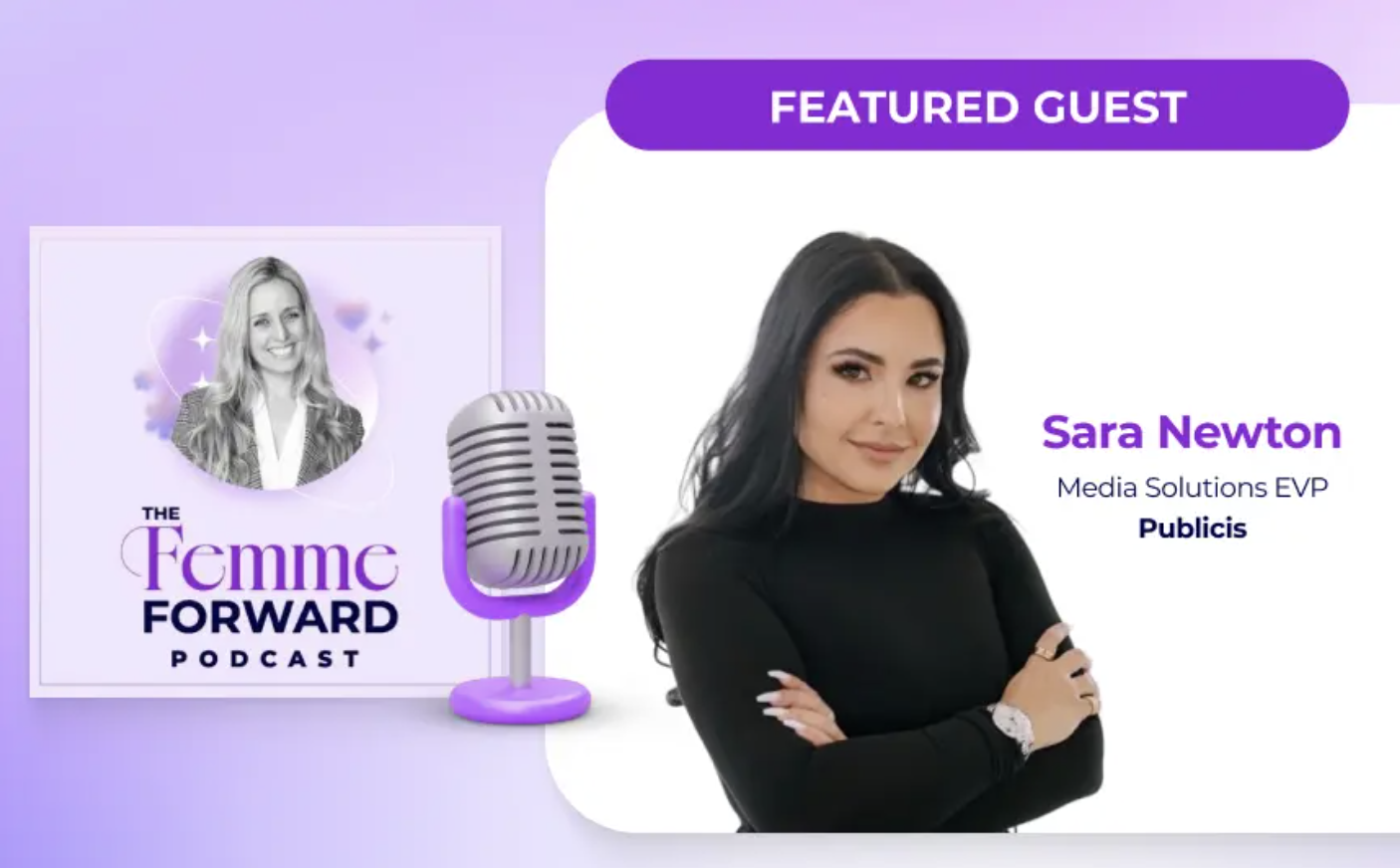
Amanda sits down with Publicis' Sara Newton to dive into what it really takes to lead, grow, and thrive.
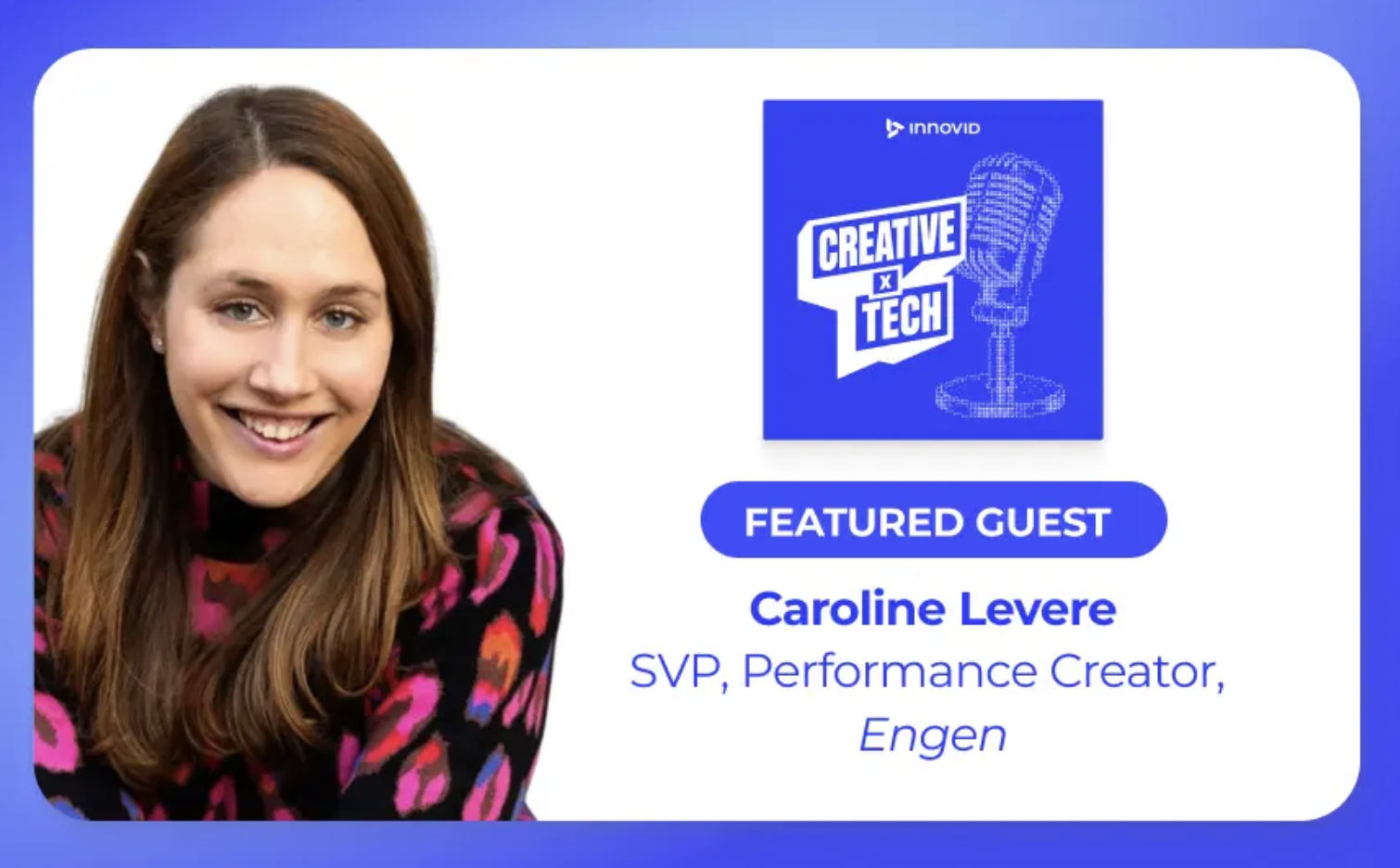
In the first episode, Dan Mouradian sits down with Caroline Levere, SVP, Performance Creator of New Engen.
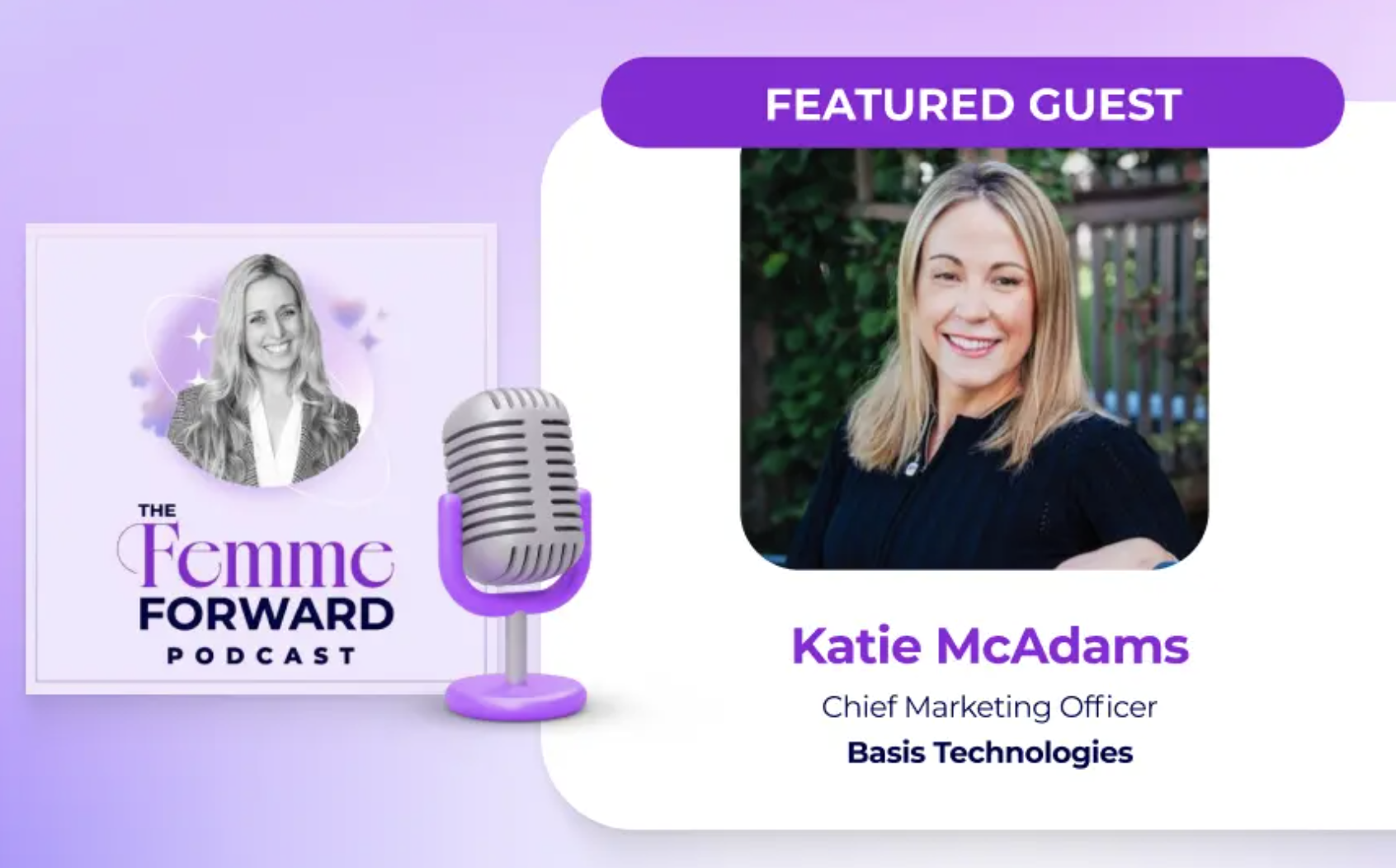
Listen to host Amanda Glen Smith and Basis CMO Katie McAdams discuss the power of intuition in leadership.
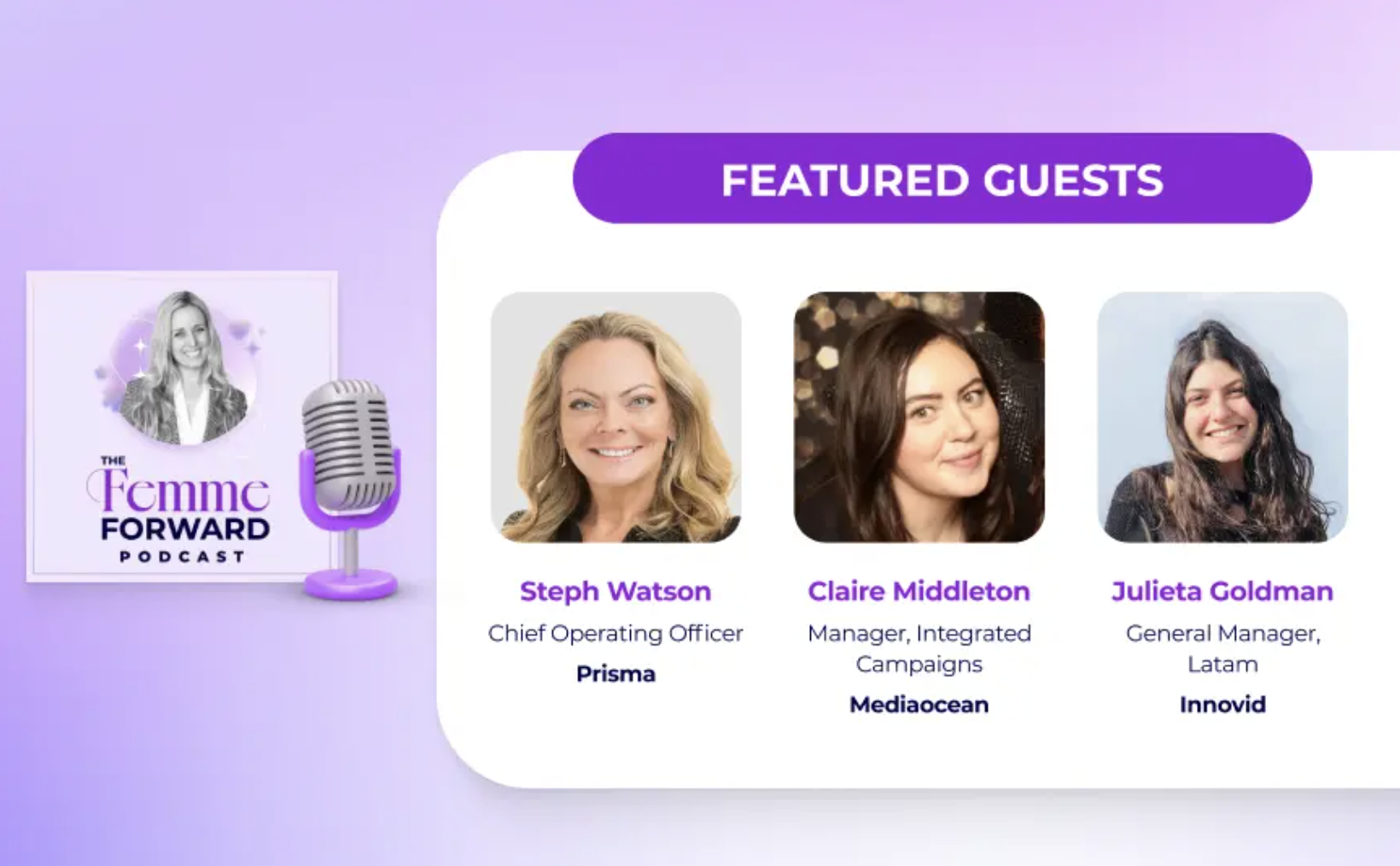
Innovid's Claire Middleton, Juli Goldman & Prisma's Steph Watson dive into the current "eras" of their career trajectories.
Listen to Amanda Glen Smitha and Unilever's Rachelle Schuimer discuss their careers.