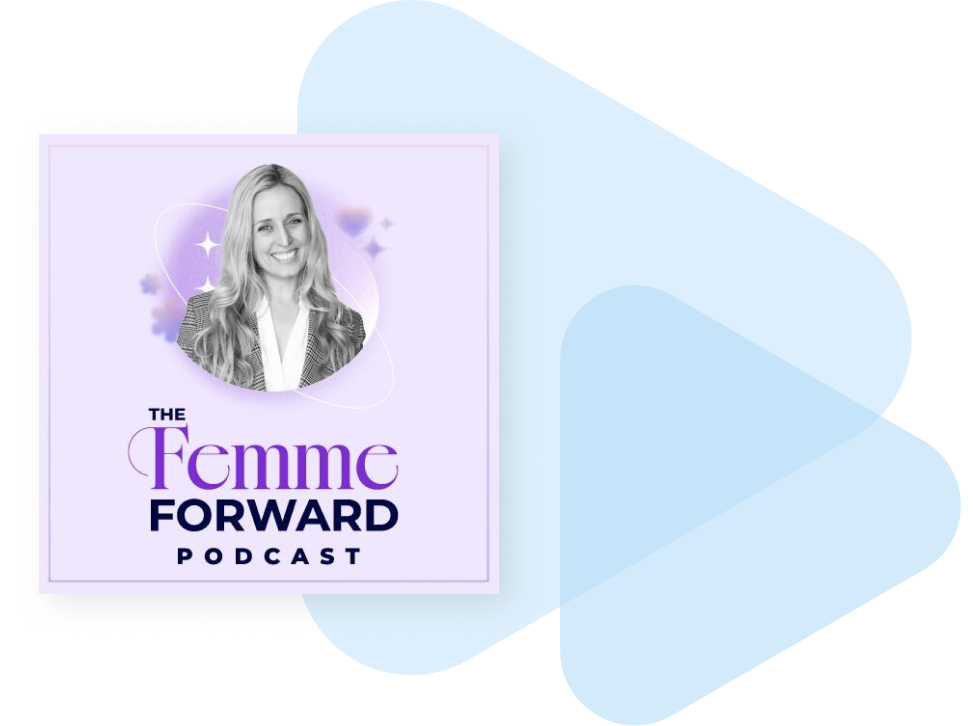
The Femme Forward Featuring AI Empowered Mom's Sarah Dooley
Listen now
Click to listen on:


Read the transcript
Amanda Glen Smith: Today we are exploring the most significant tool for gender equity in our lifetime, Gen AI. But we aren't looking at this through a theoretical or hype-driven lens. We are looking at it through the eyes of a woman who is architecting AI strategy at a Fortune 500 enterprise, long before ChatGPT was a household name. Our guest today is Sarah Dooley, with 20 years of experience in digital transformation, including a major career at Visa, an MBA from UT Austin, and AI credentials from MIT. Sarah is a seasoned expert in business operations at scale. But Sarah recently did something bold. She took that elite corporate expertise and pivoted. She founded AI Empowered Mom, a platform dedicated to helping mothers use GenAI to dismantle the mental load and reclaim their most valuable asset, their time. Hi, Sarah. Welcome.
Sarah Dooley: Hi Amanda, I'm so thrilled to be here.
Amanda Glen Smith: Thank you so much for joining us. I'm so happy to have you. This is the most timely topic ever right now. Okay, Sarah, thank you so much for joining. AI in general is everywhere, as we know, but I think for women specifically, this topic and this episode is going to be incredible. So thank you for joining us. We start Femme Forward with the same question, and I'm going to give it to you. As a woman, what do you think is your biggest differentiator?
Sarah Dooley: My biggest differentiator as a woman and as a human in the AI world is my empathy. My dad jokes that when they made me, they turned on the empathy valve and then broke it off, because I am wide open, pouring out with empathy, and I just can't help it. I like to think about others and put myself in their shoes, and I think that is a big differentiator. I can think about my customers, my clients. I can think about other people, my competitors, people on the other side of the world, and I put myself in their shoes, and that makes me a better human.
Amanda Glen Smith: I love that. I think that obviously makes you a very empathetic and generous leader, but I also think that is a skill set for being a woman that differs a little bit in terms of having that empathy and making sure it can radiate outwards to others. So thank you for sharing.
Sarah Dooley: Thanks for the opportunity. I didn't always think of it as a strength. When I was a leader and a manager, and members of my team would cry, I would cry right along with them. That's not really the leadership view that most business textbooks have. But I'm right there with people, so I can feel what they feel, and I do think it's part of my superpower.
Amanda Glen Smith: I think too, in this new AI journey, it definitely is one, because you're building for yourself and for the customers you're listening to. So let's get into your journey a little bit. Tell our audience where you started in dabbling in AI, to becoming a founder and having this as your full-time job.
Sarah Dooley: Sure. My career has spanned two decades, and digital transformation is the thread that runs through all of it. I started in professional services and marketing research, when marketing research was transforming from face-to-face interactions, like focus groups, in-depth interviews, and store intercepts, to using technology to gather insights at scale. I went back and got my MBA to beef up my quant skills, and then I went deeper into professional services, working in consulting. Every year, every project, I was getting more and more technical, because I love the feeling of building something. At the end of a tech project, I'd hand off an intranet or an app or a CRM and tell my clients, here is your customer relationship management tool. We built this, and now it's yours. That was very satisfying to me.
Amanda Glen Smith: You don't hear every day, just going to pause on this: I'm going to go get my MBA to beef up my quant skills. So, no big deal.
Sarah Dooley: Look, my qualitative arm was very strong, but my quantitative arm was puny and weak. I did need that MBA. I thought I knew it all. I thought I had this life under control. I loved doing technology implementation projects. Then I had three kids in 18 months, and my life turned upside down. I left professional services and moved into corporate technology roles, and that's when I really dug into AI. I started overseeing AI projects in corporate IT at Waste Management, and then full-on AI at Visa.
Amanda Glen Smith: We're going to get to that in a minute.
Sarah Dooley: While I adopted it at home, I saw an opportunity to help people use it in their lives. Before I knew it, my full-time gig was gone, and my side hustle became my full-time hustle.
Amanda Glen Smith: When I met you, you were in this role, and it wasn't really common to have these AI roles. In terms of your time at Visa, did they have that role open, or did you craft it for yourself with your experience from Waste Management?
Sarah Dooley: At Waste Management, I was in a portfolio role. That meant I managed a portfolio of technical projects and programs between two business units. I sat on the tech side and partnered with customer operations, sales, and customer marketing, and I managed and oversaw all of those technical projects. Waste Management is our nation's largest trash and recycling company, but it's really a big tech company underneath, headquartered in Houston. I started that job during COVID, working remotely. When we met, I had recently left my tech portfolio role at Waste Management and joined a team at Visa. Initially I joined to do a similar kind of job. I sat in technology, but I oversaw a portfolio of projects and programs with another business unit. Visa was meant to be the people team, but the timing just worked out. It was right when generative AI had become generally available, ChatGPT was everywhere, and Visa was all in on AI. They plucked some people out of my little corner of the tech world and gave us the mandate to roll out generative AI, use Microsoft Copilot, use a secure instance of ChatGPT, and get everybody in the organization adopting it. I'd rather be lucky than good, and in that instance, I definitely was. I had a little AI in my pocket, but I was not gunning for an AI role at Visa. When the opportunity came, I snatched it up, because I could already see how this was going to transform work and transform my life. I think I was pretty early. I could say I had a dedicated generative AI title as early as 2023. I might be one of the first people to have that job.
Amanda Glen Smith: I think you were really one of the first I had ever heard of. It's incredible and very innovative that Visa created a team focused only on AI. We'll get to this later in our conversation, I'm sure, but I want your thoughts on whether you think that's necessary for organizations to really move the needle when it comes to adopting AI.
Sarah Dooley: The team was organized around generative AI, but we soon tacked on automation. The team was magic when we were using generative AI tools to help people become more productive, while also automating processes and workflows to make work easier, and then layering generative AI on top of that. I don't think teams and enterprises need dedicated generative AI teams forever. They need teams dedicated to helping everybody improve their processes, clean up their data, and understand how to use AI safely and responsibly. I think what we'll probably see is these teams stand up, get organized for a little while, and then put themselves out of business. If they're successful, maybe they become a center of excellence, and that just permeates through the organization, and you don't need a generative AI and automation team anymore. It's just part of how everybody works.
Amanda Glen Smith: I think that's smart. It's almost an internal agency for change, and then ideally everybody adopts it, and you can go back to the way things are now versus the way things were. Would you elaborate a little on the difference between Gen AI and AI for our audience? I don't know that everybody knows there's a massive difference, or that they're as well versed in AI as you are as the expert.
Sarah Dooley: Okay. AI has been around, as the wonderful gentleman I worked for at Visa used to tell me, since long before I was born, and many of us were born. The term artificial intelligence was first coined in the 1950s by a group of scientists who gathered at Dartmouth, and it's so cute, they said, let's get together over the summer and build a thinking machine. Of course, we're still here, decades later, working on developing these thinking machines. Artificial intelligence is the umbrella term for computers that simulate thinking or thoughtful tasks that used to require a human mind. The goal for artificial intelligence is to create something that can surpass human intelligence, something smarter and wiser. Generative AI is a new type of AI, like ChatGPT or Microsoft Copilot or Claude or Gemini or Grok. All of these new generative AI tools are chatbots on top of large language models. What's special about them is that they can generate or create new content. That's why they're so great at research, brainstorming, being a thought partner, and making songs or creating images, because they're trained on huge amounts of data. They look for patterns in that data and predict what should come next in their response. So generative AI is just one big type of AI. If AI is a mall, generative AI is Neiman Marcus. If AI is all of medicine, generative AI is dermatology. You get the idea.
Amanda Glen Smith: I get it, and it's so helpful. My mom and dad are both listeners of Femme Forward, so thank you in advance for that. That's a very easy-to-follow explanation. Let's chat about your full-time hustle. Taking your experience at Visa, how did you pivot and build AI Empowered Mom as your full-time gig?
Sarah Dooley: The goal at Visa was to get all employees to adopt generative AI in the first year to improve our productivity by 10%, and then the next year to improve it by 10x. Now, that's not attainable, just FYI. Even at Visa, we knew that wasn't attainable, but it's very aspirational. So when given this task, I put on my market researcher hat first, and I started talking to groups of employees, just like I did at the start of my career, in focus groups and online interviews. I did surveys to understand where they were in their AI journey, whether they had tried generative AI tools, and how they felt about it. I encountered a lot of skepticism and a lot of fear. People were deeply worried about their jobs and the future. I worked with so many coders, and one of the first tasks generative AI was really good at is coding, so people were rightfully very concerned. Because of that empathy, my human superpower, I worked hard to understand their point of view. As we rolled out the technology, we did workshops, and I shared a lot about how I was using AI in my personal life, in my crazy life with three kids: how I used AI for toothbrushing songs, to power up my yard sale, and to help me with my HOA communications. Sharing those things really resonated with people, because it de-risked it and gave them a safe place to try, where they could fail safely. You could try it at home, make your meal plan, write a toothbrushing song. It's much lower stakes. At Visa, we had great success rolling out, first by understanding the human needs and attitudes about AI, next by meeting people where they were, and giving them safe, low-risk places to try it. I got hooked on two things: helping people adopt AI responsibly, and how much it was helping me at home. I started talking to other moms, other parents, other caregivers at pickup and at birthday parties, and they were not using AI the way I was, and I couldn't take it. It was keeping me up at night. For people who give their time to others, who care for others, their time is the most valuable thing. So I started hosting these little AI nights in my living room here in Austin. We'd have moms over, break into small groups, vent about what was bothering us, and then use AI to tackle the problems, teach prompting, and show how different tools worked. That turned into a newsletter. People invited me to speak at their companies or to their teams. After a while, I ran out of vacation, I ran out of runway, and I ran out of energy trying to build AI assistance and drive adoption at work while also driving adoption of AI for families in my spare time. But this is my passion, and I think you can tell from how fired up I get about it. I think this is what I am meant to do. So while it was sad to leave my wonderful colleagues at Visa and the safety of an amazing job and role, I couldn't not pursue my side hustle and make it my full-time hustle. I left about a year ago. I write a weekly newsletter that publishes every Sunday night, I do a podcast, and I have a book deal, and my book will be published by Wiley. Next year, I'm doing consulting and a lot of speaking to organizations and teams, both enterprise and nonprofit, and at schools and PTAs, all in the name of helping people use AI safely and responsibly to reduce the mental load, make life easier, increase AI literacy, and help our families emerge in this AI era safely.
Amanda Glen Smith: We can definitely tell it's a passion, and we're so glad you pursued it. It's a gain for all of us and a benefit to every one of these listeners. I want to dive in a little more on some things I've seen in your newsletter and podcast. One of the big things you saw in your research and in working with all of these individuals is that women approach AI with more skepticism, because the penalty for being wrong is higher. Tell us more about that, what you've learned, and how you think we should combat it.
Sarah Dooley: You know, Amanda, you and I met because we were both part of the Women Who Mean Business program at the University of Texas Executive Education. In that program, we learned about the double bind for professional women: the challenge of being seen as both likable and competent, and how difficult that is for women. I'm seeing AI use emerge as a new double bind for women too. There is pressure to use these tools to make ourselves more productive, stay up to date, and stay ahead with how things are changing in the professional world, but the stakes are higher for women. When things go wrong, the repercussions are different. The data shows that women are held to higher standards than men, and I think this is true for a lot of groups outside of the majority. Harvard studies from 2024 back this up. They showed that women were lagging in their adoption of AI, that they feared being seen as cheating, and that when they got things wrong, and AI does get things wrong, they paid a higher price. Part of being a generative AI tool is that if it doesn't know the answer, it will generate one. We call these hallucinations. That can create a lot of egg on the faces of people who use these tools and don't check their sources and check all of the output. Lean in, but read.
Amanda Glen Smith: So you're telling me Gen AI is really faking it till it makes it, which is what we've been told our whole lives to do. That's what AI is doing too, which is okay.
Sarah Dooley: ChatGPT specifically is the best at faking it till it makes it. Based on all that training, if it can't find the answer in the tons and tons of data it was trained on, it will generate it. It will fake it. Then we, as humans using it, will be held responsible, as we should. But the stakes for women are higher. Some studies have just come out on this too. It just doesn't sit right with me, which is why I'm so passionate about normalizing the use of AI, talking about when AI succeeds and when it fails for everybody, and creating more space for managers and leaders to use it and encourage their teams to use it. It's especially important for managers and leaders to talk about when AI doesn't work, because that creates a safe space for everyone to communicate that way. If I narrow it down to one thing, the reason this is so important is that AI is not going away. It's here to stay. The people who learn AI now, and advance their AI literacy, get gains personally, in their teams, and in their organizations, and those gains compound over time. If you adopt AI now, you will have an advantage over your career. If we as women and as leaders hold back, we miss the chance to keep up and to have those compounded advantages over time, which is why this matters so much to me.
Amanda Glen Smith: How do you think we de-risk it for women? You mentioned we want a safe space for people to experiment, that we need to be vulnerable as leaders and share what we're doing and also what's not working, where we tried to use AI and failed. What else should we be doing to stay ahead of that curve?
Sarah Dooley: Okay, we should use generative AI for its stated purpose, to generate. When precision counts, when accuracy matters, when there's math, using generative AI is risky. We should keep a human in the loop at the beginning, to set the strategy and decide how AI is going to be used, and always a human in the loop at the end, to check any outputs. We should set up boundaries, whether that's in our families, our teams, or our organizations, and agree on where we're going to use AI and where we're not. For example, a boundary I've set in my household is that my kids can play around with AI. They use Claude, they use Suno AI, they use Gemini, but they always do it with parental supervision. My twins are six, my big girl is eight, and they are never using AI on their own. I don't know how long we'll hold that boundary, but as long as I can. At work, I would never send an output that came from AI without putting my eyes on it first. These are boundaries that work for me. So the way we de-risk this is that, for our little corners of the world, we figure out which boundaries work for us, set them, hold them tight, and keep AI within our workflows and environments while keeping ourselves safe.
Amanda Glen Smith: I think you can't create that approach without a playground to play within the bounds of AI and figure out the rules for your team, your organization, or your output. You have to fail and get some things wrong to figure out what we don't need. I'll give you an example. Maybe you can tell me if there's a better tool out there. So far, in my attempts at building PowerPoint slides, the output is not up to par with where I need it to be for anything I've tried. There are these beautiful, non-editable versions of something that I then cannot manipulate or put into the right template or branding. It might be user error, but I've had people on my team create these amazing masterpieces, and I'm like, but I can't edit it. We have to be able to collaborate and share, but I'm sure in three weeks or three months, it'll be flawless. Who knows?
Sarah Dooley: I totally agree. If you have a vision in your mind for what you want your presentation to look like, if you have brand standards you have to adhere to, or if you want to iterate and work together in partnership, AI is not the tool for presentations. I create my presentations in Canva, which uses some AI capabilities, and I can pull them out and make them editable, but mostly it's human work. People love Gamma, and people are crazy about tools like that, but it's not for me. I know the folks at all of these AI companies, especially Microsoft, with whom I work very closely, are working hard on this. The ability to chat with our slides will be amazing once they get it right. We're just not there yet.
Amanda Glen Smith: It's going to be incredible. It's like having a design partner in real time. I love that. Let's talk about adoption, because the Visa standards you set earlier in our chat are high, right? 10% the first year and then 10x the second year, which you said everyone knew wasn't something you were going to attain, but you're going to strive for it. At the rate and speed AI is moving, with people building their own agents, what are some guidelines for how we challenge organizations to make sure that not only are users adopting and changing behavior, but the entire organization and company at large is adopting AI usage?
Sarah Dooley: Okay. I have three things to do. One is very fun and inspiring, and two are deeply unfun but so important. The first is starting with humans: understanding their motivations, understanding where they are in their AI journey, creating safe spaces, creating the right tool set, and giving them opportunities to play. We did a ton of hackathons, which are so fun. I never would have thought, in my forties, I'd be here with my hackathon T-shirt, excited to stay up late with my colleagues. Hackathons are a great way to learn. Contests for prompting, different ways to incentivize people to have fun and learn AI, meeting them where they are. There are so many great ways to encourage AI adoption in safe spaces, in clean sandboxes, and help people learn and grow. Having speakers like me come and talk about ways they can use AI in their home life is also great. Helping people get access to AI tools they can use for productivity at work and in life is wonderful. Meeting people where they are is so important. The other two things, which are not that fun but are so important, are first, setting up effective governance standards and creating safe places so your data is clean, so your AI tools have access to the right data and not the wrong data, so your client and customer data is protected, and so people know what they should and should not put into an AI tool. AI governance isn't going away anytime soon. It's hard work because the landscape is changing so rapidly, but it's so important. Effective governance tools, a governance body, and someone keeping an eye on how AI is used are the second thing. The third thing, which is unsexy but important, is effective license management. These tools are expensive. Giving them to every member of your team sounds like a fun employee perk, but not everybody needs them. Be thoughtful about who needs a license, create a little demand, and then manage the supply. This is one of the things we do at Visa. I had a wonderful presentation and chat this morning with a company that talked about how they give out their licenses: you have to apply for one, state your business need, and show that you're using it. I don't believe in a Big Brother model where you watch how everyone uses AI. But if people aren't using AI tools for 30 or 60 days, pulling that license back and giving it to someone on the waitlist is a very effective way to manage costs and adoption. So: understanding the people is number one. Setting up the governance body is number two. Managing licenses effectively is number three, so you're spending your money in the right place, and creating a little VIP section for using your AI tool.
Amanda Glen Smith: A little phone call goes a long way. It sounds like pulling that license back. Sarah, tight ship.
Sarah Dooley: That's right. That's how you run a tight ship.
Amanda Glen Smith: I love it. Let's talk more about AI Empowered Mom and that pivot. You went from a high-level strategist at a global giant to building your own business, one woman show, from the ground up. What does it feel like now to be an entrepreneur and a founder? What challenges did you know were coming, and what hit you in the face that you had no idea was on your docket?
Sarah Dooley: I thought it would be a lonely journey working solo, but it's not. Being part of communities of female founders, being part of groups like the Women Who Mean Business group that you and I are part of, and building a community of AI users keeps me in great company. I'm not lonely at all. I thought the gig economy would make it easier to stand up teams and then split them apart. I was so used to working with global teams in my tech roles that it's been really challenging figuring out how to use contract labor, when to keep things close to me, and when to hand things off. It's been a real learning journey. I took on a wonderful social media intern. I thought the youth would know about content, but my content is so personal that it was hard, and in the end I had to take that back. We parted on great terms, and she taught me a lot, especially about TikTok, but it wasn't something I could hand off. Handing off development work is also hard right now. It's hard to vet technical and contract teams, especially globally, because things are changing so rapidly. I built a little AI assistant for my AI Empowered Mom community, and we used a team overseas to help build it, and in the end they couldn't deliver on everything we bought. It's really hard to assess people's experience and what they know how to do, how much AI can help them, and how much know-how you need to have yourself. Again, we parted on good terms, but the lesson I learned is that the things that are core, I really need to hold close, and I should find other things to hand off. Let contract teams work on automation, which is tried-and-true, easy work, automating different workflows. When it comes to cutting-edge AI work, keep that close, because that's my secret sauce. So it's not lonely out here. I'm in good company, but it has been a bumpy road.
Amanda Glen Smith: What about managing all these agents now? You went from managing large global teams, coders, and all these different people, to managing your own team of AI agents. What are some of the tasks you used to delegate to a person that you now delegate to your agents?
Sarah Dooley: I use Claude. I made an intentional switch to Claude this year, and I've built assistants to help me with my podcast, my newsletter, content creation, speaking engagements, and consulting work. I have a specific one for each of those. I'm pretty big on not anthropomorphizing my AI assistants. I don't gender them and I don't give them names. But I'll say it did tug at my heartstrings recently. I did a demo for a group of female founders showing how I use an AI assistant to run my podcast. I'm the human: I decide who the guest is and what I'm going to talk about. Then I've trained the AI assistant to write the discussion guide, prepare the media kit, come up with the questions, and help me with the editing, all of the things I do on a repeated basis. I asked my podcast assistant, can you describe how we work together? And Claude described it like this: you bring the magic, you bring the special sauce, you have the strategy, I take on all of the work, and I'm executing on your vision. I was like, oh my God.
Amanda Glen Smith: Oh no! We're partners!
Sarah Dooley: It made me feel like, thanks for boosting me up, Claude. You're gassing me up here. I love this division of labor, and how the knowledge and awareness Claude has about what I hold and what Claude works on has been fantastic. I don't think of AI as my colleague. I think of these as teams of assistants that take tasks off my plate. But I guess Google goes with the theme. It's not lonely out here. I've got plenty of friends, women in my community, plus my AI assistants to take on my menial tasks.
Amanda Glen Smith: I love it. At Innovid, we built our own agents to help automate a lot of the tasks required for managing omnichannel media, and we have the Innovid Orchestrator, which is basically the conductor between all these agents. You're your own conductor, not only for AI Empowered Mom but for all the agents in your life, which is where we all need to strive to get to. It's very inspiring, because right now I view Claude as one agent doing a lot of multiple things, versus getting to the next level of building individual agents to assist you with different tasks. It's where we all need to get to eventually.
Sarah Dooley: That orchestration layer is magic. I was recently visiting with a group of small business owners, and they asked what the big skills people will need in the future are. For me, management skills are the answer: understanding how to manage a team of agents, a team of AI assistants, how to keep training them, keep giving them feedback, keep refining them, and get the best out of them. The same way I would have a quarterly check-in with my team members, I have a quarterly check-in with my AI assistants. I think these are the skills we are going to need. We're going to need communication skills to figure out how to best communicate with other humans, because that's something special that AI can't do, and we're going to need to communicate with AI. And we're going to need management skills to manage big teams of non-human entities. It's really exciting.
Amanda Glen Smith: I didn't think about that. We're going to have to do performance reviews, basically, but maybe more streamlined versions.
Sarah Dooley: That's right. I hold back the empathy with my AI assistants. I give real feedback: this is what's not working, and you'd better do this, or else. I just heard on the New York Times this morning that somebody gives their AI assistants ten commandments. At Visa, we did something like that too. We had ten commandments for anything before it went into production, and one of the commandments was that if you don't follow all of these, it will be very embarrassing. Apparently that's compelling to AI. AI doesn't want to be embarrassed. We'll put that in our performance review: don't embarrass me.
Amanda Glen Smith: The more you know, folks. Make sure your AI agent is trained on non-embarrassing behaviors today.
Sarah Dooley: Right.
Amanda Glen Smith: Let's go back to those sessions you hosted in your living room with moms, women, and parents, talking about the mental load, because I think that's where a big part of the passion for AI Empowered Mom started, right? Why is AI the secret weapon for redistributing some of the unseen labor that generally falls on women, or can fall on women?
Sarah Dooley: The mental load and invisible labor, this kind of ghost labor, is so hard to quantify. It's hard to measure in minutes, hours, or effort spent, but it weighs so heavily on parents. I did interviews with over 100 families, all different kinds: nuclear families, stepfamilies, grandparents, a dog mom, single parents, solo moms by choice. I talked to them about how they use AI, and I asked what the mental load means to them. After ten interviews, I thought, God, this is heavy. The way parents described what the mental load did to them, how heavy it was, how it was always in their minds, and that there was nowhere for it to go. After 25 interviews, I thought I was onto something. After 100 interviews, I thought, something must be done. We have to come together to support each other. There's a wonderful book, I have a copy right over here, about the mental load by Dr. Allison Daminger, and she helped me understand the difficulty of quantifying it, because even tracking the number of decisions you make is hard. But some of the things that weigh the heaviest in the mental load are the decision making, because decision making is fatiguing and taxing on your brain. The millions of micro-decisions parents have to make, plus evaluating options, coming up with options, constantly thinking ahead and predicting what comes next: generative AI is great at many of those things. Being able to hand that off creates more space between partners, between parents and children, and between parents and their aging parents. And creating that space allows us to spend more time connecting, finding joy, loving each other, being quiet, and taking care of ourselves. That's why the mental load matters so much to me. I wrote a book proposal, and I had someone who is not a parent review it, and he said, what is the mental load? And I think you talk too much about the mental load in here.
Amanda Glen Smith: Keep watching.
Sarah Dooley: I don't talk enough about the mental load. It's everything.
Amanda Glen Smith: I'm barely getting started. Tell us more. What are some examples of what a household or family outsources to AI that our listeners need to know about?
Sarah Dooley: Basic stuff, like meal planning. When I talk to parents, dinner is a universal annoyance. Why didn't I realize before having kids that I'd have to decide what they ate every night for the rest of their lives? What a surprise. Generative AI tools can help. There are dedicated meal-planning tools, and I built a meal-planning tool. You can use off-the-shelf AI tools to make the most of the ingredients you have on hand, whether that's snapping a picture of your fridge and pantry and saying, create a list of meals for me this week, or having it craft meal plans around your specific dietary needs. Every Sunday morning, I get a custom grocery list delivered to my inbox, and that's what I start with. It updates based on seasonality, but then I think about the meals I want for the week. I work with my AI agent to figure those out, and then we create and update the grocery list and the meal plan, and I don't even have to think about it. I'm already ahead this week. The beans are made. We're having beans later, beans and greens, pasta tomorrow night. All of that decision making has been taken off my mind. Another big one that bothers me is how I became the reminder of everything in my family: who had Library Day, what day is Spanish, when's trash day, when's recycling, because our recycling is every other week. I took on responsibility for all of that reminding, and why did I do that? It made me miserable, and it turned me into more of a nag than a person in my family's life. So I've outsourced all of that to a voice assistant. Every morning at 7 AM, Alexa booms out and tells us the reminders for that day.
Amanda Glen Smith: Wait, I need more. So you're all sitting having breakfast and then Alexa just pipes up at 7 AM, or 11 AM?
Sarah Dooley: 7 AM every day, even on the weekends, because we are an early-riser family. It'll be like, today is Tuesday. Cora, this is your reminder: Spanish binder.
Amanda Glen Smith: I love this. I had not thought about this one. Library Day is a real thing too.
Sarah Dooley: It is.
Amanda Glen Smith: We're in tears that we can't check out a library book because you didn't bring it back, but it's one more thing to add to the list for the backpack.
Sarah Dooley: In my kids' school, Library Day is every six days. It's impossible.
Amanda Glen Smith: It's everything. So Alexa gives you your reminders for the day.
Sarah Dooley: That's right. The trash reminder happens at night, trash and recycling, but everything else, my kids now set their own reminders, and it's removed me from it. It's helping them develop their own agency. If they forget something, that's on them, between them and Alexa. It has nothing to do with me. It's been a game changer. I can set all those reminders from anywhere on the go, using voice-to-text and so on. Reminding, meal planning, reading emails and summarizing what's coming in, and managing the calendar: AI is fantastic at all of these things. These are some of the biggest thankless jobs that happen over and over, with no end in sight until the family's out of the house, or maybe we don't need a calendar anymore because we're in a nursing home. Handing those off to AI is, to me, nothing but joy.
Amanda Glen Smith: I definitely want to do the morning roll call of reminders. That's a good one. I definitely do the meal planning, and I feel like that one is a massive time saver, but the roll call, we're going to go for that. This is good. Tips and tricks from Sarah Dooley, you heard it here first. Let's talk about AI literacy. You've said AI adoption is an issue for women because we have higher risk, and maybe we're a little more risk-averse because of it. If we don't use AI to get our time back, what are the repercussions?
Sarah Dooley: We're at risk of missing the compounded benefits we talked about before. Every bit we learn right now, the time savings compound over time. But more importantly to me, I consider myself the CTO of my family. I am the chief technology officer deciding the tech stack that people in my family have access to, and it's not just my immediate family. I bet other people find themselves in this position in the sandwich generation. I'm the one my in-laws come to with tech troubleshooting, and my parents come to me with questions. And our kids are getting exposed to AI. If your kids are in school, they're getting exposed to AI. I hear often from parents who say, I'm learning AI from my kids. Honestly, that makes me really sad, because that is too much to place on children's shoulders. Their little brains aren't developed enough to know the difference between safe and unsafe technology, as we've seen with social media. So I need to know about AI so I can make those decisions as the CTO and keep my kids safe. I also need to help my parents and in-laws. Elder abuse and elder scams are on the rise, and fraud that targets our elders is growing exponentially, and AI is powering a lot of it. So I taught my parents to take a screenshot and send it to AI first when they see something and think, I'm going to click on this. They use AI to decide what to click on and what not to click, to evaluate their decisions, to brainstorm as a partner, to see what might be real and what might not, and to fact-check things. This matters to me across generations. If I, as the CTO of my multigenerational family, don't keep up with this, I can't keep the rest of the people who depend on me safe. That's why I think this is so important.
Amanda Glen Smith: I've always heard of being the CEO or the COO of your own family, but not the CTO. I love that. That's going to be our new line. Also, are you telling me, Sarah, that all these texts I get, not everybody wants to buy my house right now? Is that what you're saying?
Sarah Dooley: My gosh, they really want to trim my trees, and actually, they probably do. My parents recently went down a rabbit hole clicking things, and somehow managed to rent a car. I think they used a service like Turo. Turo is like the Uber of car rentals, but they were renting from an individual, and they were going to have to go to that person's house to get the car.
Amanda Glen Smith: And the keys.
Sarah Dooley: They knew how to use AI to figure it out. They backed themselves out of it by taking screenshots, understanding what they had signed up for, getting in touch with their bank, canceling the transaction, and then going back and booking a normal rental.
Amanda Glen Smith: That's amazing.
Sarah Dooley: I felt so proud of them. Probably nothing would have gone wrong, and this individual would have been a great person to rent a car from at their house. But this is not the thing I want my septuagenarian parents spending their time on. So these are the things we have to help people with.
Amanda Glen Smith: Totally. Speaking of that, how can moms and parents model responsible, empowered AI use for their children and family, versus being tech-avoidant? I think we saw this with the rise of social media, and now the next big bucket is AI. These are both unknown buckets that parents fear and try to learn how to grapple with. What are some recommendations you have?
Sarah Dooley: I used to start by saying you just need to talk to your kids and find out where they are. Talk to your teens, talk to your elders, talk to everybody and find out where they are with AI and where they're exposed to it. But that doesn't cut it anymore, because we need some basic AI literacy to carry on that conversation and to have credibility in those discussions. So first, find ways to use AI to help you. Think about the things that are weighing on you: writing thank-you notes, planning meals, packing for a trip, whatever you dread doing. Think about a way to try that with AI, and then talk about it with your family. That's the opener. Say, I used AI for this new recipe. What do you think? You don't like it? Well, I'm not surprised. Or, I used AI to plan the stops on our recent trip, and we showed up at a restaurant that was closed. Can you believe it? AI doesn't know what restaurants are open and closed. These are the little openers. We have to try it first. That increases trying things with AI and understanding what works and what doesn't, the little wins and the little fails. It gives us the opening to have conversations, increase our AI literacy and that of the people around us who are modeling that behavior, and create an open door to talk about it. We can't try it once and be done, any more than setting parental controls on devices for our kids is a one-time thing. We have to keep trying, keep learning, and keep having these conversations.
I know it's annoying. We're tired of AI. AI fatigue is real. I feel it too, even though this is my love, my bread and butter. But to be the best people we can be in this AI era, we have to keep up, keep learning, keep trying things, and keep talking about it.
Amanda Glen Smith: Okay, so helpful. To round out our time, what are some AI skills every woman needs to future-proof her life right now?
Sarah Dooley: Okay, let me give you three. One is stop typing, start talking. Stop using your keyboard and fingers to communicate with AI, and start talking to it, whether that's using the microphone on your phone, your device, or your laptop, or opening voice-to-text tools within Claude or Copilot. A lot of the investment happening in the AI space is in future devices that are screen-free. There's going to be less of a screen.
Amanda Glen Smith: Okay, audio.
Sarah Dooley: Audio. So we need to be talking, not typing. Second, we need to improve our prompting. "Prompt engineer" isn't a real job, I don't think. We are all prompt engineers. Use simple frameworks like giving AI a role, a task, and a format. Write a better prompt, and you get a better result. Third, try multiple tools. Don't just try one, because I have three kids. I had one kid and I thought this is what kids are like. Then I had twins right after, and I thought, my god, there are three different types of kids, and I have all three of them. It's the same with AI. We have to start using different tools, experimenting with them, and running safe little experiments in our sandboxes, and understanding where they perform well and where they don't. The best productivity gains come from people who use two or three AI tools. Not one, not more than four, just two or three. So quit typing, use better prompts, and try multiple tools. These are the skills that will help us. And organize your AI use into projects, notebooks, or whatever your tool offers, like a project or a Gem, to communicate about the same topic in one place and give AI context and files to access. That will level up your AI game right now. If you do one thing today, create a smart project.
Amanda Glen Smith: Okay, this is so helpful. I was kind of stressing because I use all three. Right now I use ChatGPT, Gemini, and Claude, and I was trying to invest more in one. So I appreciate that it's okay. They have different strengths, is what I'm hearing, and we can use them for different reasons.
Sarah Dooley: That's exactly right. I think Gemini is great for shopping or anything that requires maps, because of all the data they have access to.
Amanda Glen Smith: Perhaps, yes.
Sarah Dooley: I think ChatGPT is great for creating images. To me, it's still the best for image generation. And Claude is where I really get the lift for productivity. That's where my projects are, that's where I'm automating. Claude is my coworker, my copilot, helping me with work.
Amanda Glen Smith: Okay, so helpful. I'm going to move us into our lightning round. Don't think too much. I'm just going to ask a couple of questions. What's the human non-negotiable for you? One task in your life that you'll never allow AI to automate?
Sarah Dooley: Caring for my children.
Amanda Glen Smith: That's a good one. Prompt of the day: what's the most common prompt you type into any of your AI tools?
Sarah Dooley: It's not typing, I'm talking. In the morning, when I'm doing my hair or driving home from drop-off, I go hands-free and say, here's everything that's on my mind today. Please organize my day and help me make the most of it. Also tell me what I can actually get accomplished versus what is too much. Every day I dump that mental to-do list, that mental load, out of my mind and let AI plan my day for me. I love how Claude can turn it into a checklist. Then I go back and check things off, and that little thrill of checking things off is my number one thing that I do almost every day.
Amanda Glen Smith: It's the old-school way, which I still do: crossing it off your list. The physical act. I love that. What's one thing you thought would be automated by now, but surprisingly isn't?
Sarah Dooley: Signing up for camps and activities. Why do I have to do this a million different places? I can't wait for the tools to take this off my mind.
Amanda Glen Smith: I love that. Favorite AI mom hack?
Sarah Dooley: Make it a song. Sing about it. If you're not using Suno AI to create custom songs for your family, you're in for a treat. We have our own Christmas carols, our own Mardi Gras songs, songs about the state capitals, and songs for all the softball teams they're on. If you're not using Suno AI, get a free account and write some songs for your family. It's so fun.
Amanda Glen Smith: Okay, so helpful. What about a beauty or travel hack? I know you do a lot of conferences and speaking engagements. Do you prefer eye patches or hydration packs?
Sarah Dooley: I prefer drinking water. Give me all the water. I bring my own huge, embarrassing water bottle and drink all of it. That is my only hack. Send sunscreen.
Amanda Glen Smith: Okay, Sarah, you have been such a delight and a joy. Thank you so much for sharing your passion and your love for AI. This is incredibly helpful for me and our listeners. I can't thank you enough for joining Femme Forward.
Sarah Dooley: Congratulations on this. Thank you for what you're doing for women. You're lifting us all up. I'm so excited to follow you forward. Thank you, Amanda.
Amanda Glen Smith: Thanks, Sarah. That was so many good nuggets. My gosh.
Sarah Dooley: You're so good. I'm so impressed with this. I've got to level up my game. Thank you both so much.
Amanda Glen Smith: We were making a K-pop Cajun Christmas song about three little girls named Rose Quarantz, and I love it. I also feel like I need to embrace technology more. We got rid of our Alexa because I got weird about people listening to me and not feeling like I had anything of substance to say. But for the reminders, I don't have anywhere to do that, so I need to get an Alexa back.
Sarah Dooley: Whether it's Alexa or another home speaker, something can help you with that. The screen-free devices from OpenAI are supposed to come out later this year. Who knows if we're going to want that in our homes. But if you hold out a little longer, the AI companies will come to you.
Amanda Glen Smith: They're going to come to me. They're going to be like, listen.
Amanda Glen Smith: Okay, Sarah, you're the best. Thank you so much.
Sarah Dooley: Thank you both so much. I loved this experience, and you guys are doing great work.
Amanda Glen Smith: You are too. You're such a natural. You just flow. Let me know if you need me to slow down and breathe and record anything else. Y'all have a great day. Thanks again, Sarah.
Sarah Dooley: Thank you. Bye.
Related resources

IAB's Chris Bruderle sits down with Dan Mouradian to discuss the changing live TV landscape.
Raj Muhar, startup founder & CEO, joins host Dan Mouradian to discuss AI's role in creative.
C16 Biosciences' Shara Ticku dives into having confidence, intuition, and navigating male-dominated spaces.
Host Dan Mouradian and Chief Creative Officer Walt Geer discuss taking career risks, emotional storytelling, and more.
In the latest episode of Creative x Tech, host Innovid's Dan Mouradian sits down with Klick Health's Devon Taylor.
Host Amanda Glen Smith sits down with Zeta Global's Nicole Muscatello.
Xumo's Eli Zang joins host Ziggy Zografakis on the debut episode of The Other Side of the Screen.
Amanda sits down with Lynn Utter to discuss executive presence, career growth, and the double bind.
Amanda sits down with The Defined Dish's Alex Snodgrass to discuss her career and what she's learned along the way.
Amanda sits down with Miracle Mama founder Whitney Rowell to talk about building a business from the kitchen table.
In this episode, Amanda Glen Smith sits down with Lori Goode, CMO of Index Exchange.
In this episode, Amanda Glen Smith sits down with Jen Dass, Chief Operations Officer of WPP.
In this episode, Amanda Glen Smith sits down with Brooks Miller, Global Head of Creator Strategy at Edelman.
Listen to Gay Gaddis on confidence, risk & reinventing success.
Deborah Wahl shares her leadership lessons, career-defining risks, and personal philosophy.
Tune in to this episode breaking down perfectionism, empathy and confidence.
Amanda and Khara talk juggling work with motherhood, managing delegation, and being your most authentic self.
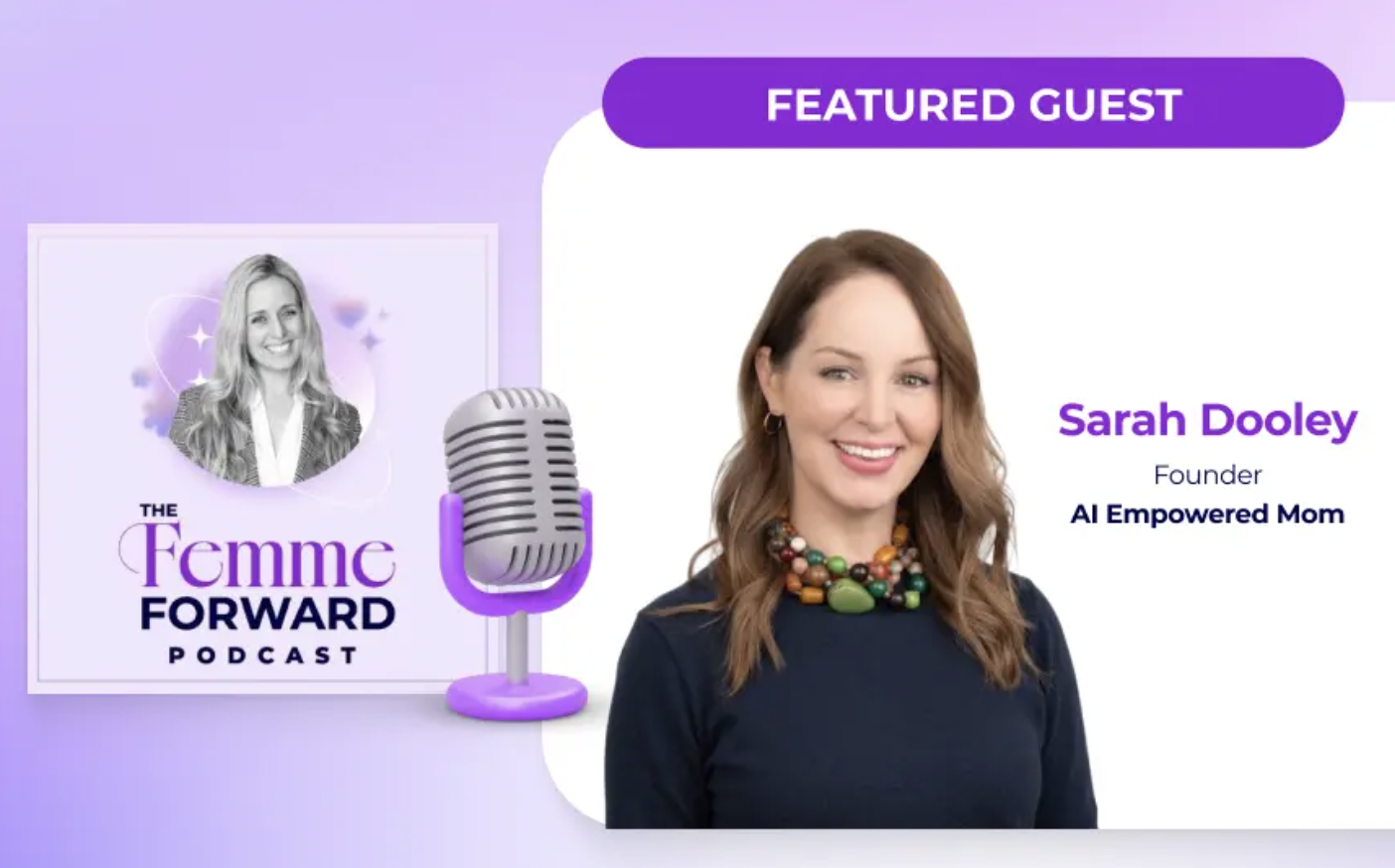
From the evolution of AI to how it can lessen the mental load, Sarah & Amanda dive into the future of an AI-assisted life.
Amanda sits down with Publicis' Sara Newton to dive into what it really takes to lead, grow, and thrive.
In the first episode, Dan Mouradian sits down with Caroline Levere, SVP, Performance Creator of New Engen.
Listen to host Amanda Glen Smith and Basis CMO Katie McAdams discuss the power of intuition in leadership.
Innovid's Claire Middleton, Juli Goldman & Prisma's Steph Watson dive into the current "eras" of their career trajectories.
Listen to Amanda Glen Smitha and Unilever's Rachelle Schuimer discuss their careers.