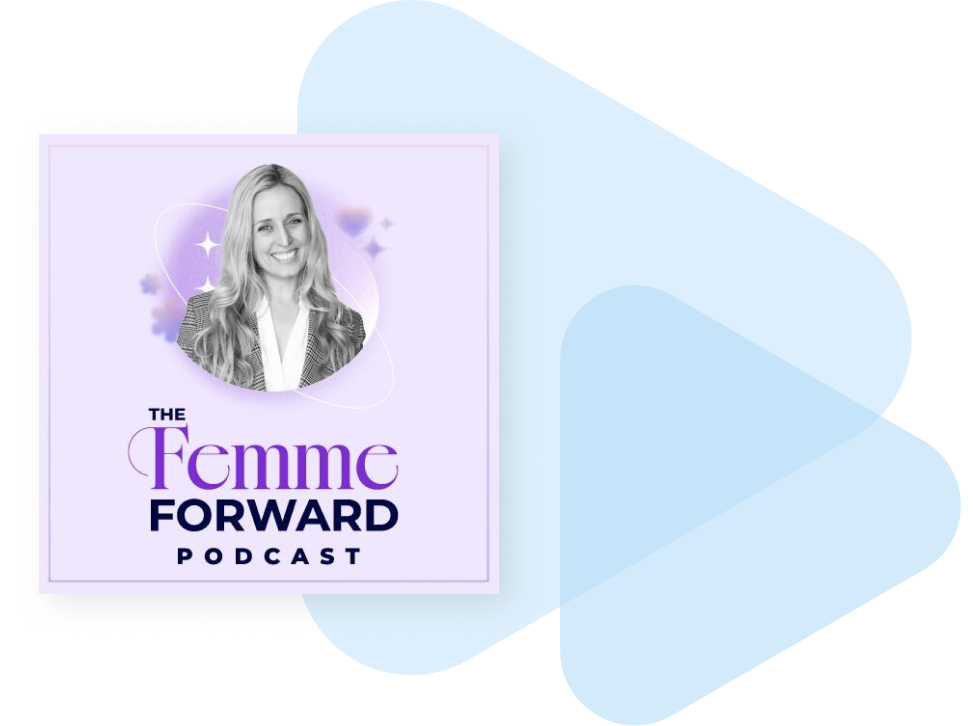
The Femme Forward Featuring Gay Gaddis
Listen now
Click to listen on:


Read the transcript
Amanda Glen Smith: Today we are joined by a true titan of industry and a pioneer for women in business, Gay Gaddis. Gay is the founder of T3, which she grew from a $16,000 investment into the largest independent female-owned advertising agency in the US. But she isn't just a CEO. She's an acclaimed fine artist, a fierce advocate for working mothers, and the author of the bestselling book, Cowgirl Power.
Gay Gaddis: She can do.
Gay Gaddis: You.
Amanda Glen Smith: Whether she's leading Fortune 200 boardrooms or painting landscapes at her Double Heart Ranch in the Texas Hill Country, Gay proves that you don't have to choose between creative passion and corporate power. You just need the grit to chase both. Hi Gay, welcome to The Femme Forward. We're so happy you're here.
Gay Gaddis: Hello Amanda, so nice to see you today.
Amanda Glen Smith: Okay, so back in 1989, you started with $16,000 from your IRA to begin T3, and over the next 30 years, scaled it into a digital powerhouse with offices in Austin, New York, Atlanta, and San Francisco, servicing clients like Dell, UPS, and 7-Eleven, eventually leading to a successful exit. Can you take us back to the beginning and give the audience that spark that led you to begin your own business?
Gay Gaddis: I never really thought as a child, or really growing up, that I would have a business. But ironically, I grew up with entrepreneurs. Both sets of my grandparents were entrepreneurs, and my parents both had their own businesses. So I guess that's just how I grew up, watching people navigate the ups and downs of that lifestyle and how you manage it. But what was happening in the 80s in Austin, Texas was pretty difficult.
Gay Gaddis: We were facing a very, very horrific recession, and it wasn't just Texas, it was the entire country. As the 80s rolled on, it became really devastating. The savings and loans failed, real estate wasn't worth the dirt it was built on, and most companies were really struggling. So I had written a business plan to turn around the company that I was working for. I thought we needed a new philosophy, a new way, a new approach to navigate this really difficult time. But I made a mistake. I had my plan all together and I announced it to our advisory group at the advertising agency, and the president came into my office about an hour later and said, "Well, you never really ran that by me, and I'm not going to support you in this." So I became hysterically upset. I didn't cry, but I was really mad, because I knew it was going to work and I knew it was the right thing. But I did make a mistake. I had not included him in my thinking along the way, which is something we all need to be aware of. If you're going to do something avant-garde and try to change the game, you better bring along the key players. I was young and naive about that, and I didn't do it.
Gay Gaddis: So what do you do? There was no place to go to work, because no one was hiring anyone in a recession. So I marched down the hall, I quit, and I had to start my own company. I took out the only money I had available to me at the time, which was $16,000 in savings in my IRA, and started my little company with the concept that I was going to use this business plan, and failure was not an option. I had to make it work. It was really, really wild times. I hired two people. I went way out on a limb with every ounce of risk I could take. Somehow we started becoming successful, and then the rest is history.
Amanda Glen Smith: I mean, what a gamble. How did you know that you could really bet on yourself, or did you feel like there was no other option, and you were just going to go full steam ahead?
Gay Gaddis: Well, it's kind of half and half. The interesting thing was, I knew I could run advertising accounts. I came out of a creative background, as you mentioned, and soon became more of an account person, someone who's running accounts, managing accounts, and running the money on the account. So I knew I could do that, and that was already giving me confidence that I could run a business. But I didn't know how to run the entire business, of course. I just knew how to run accounts. A lot I had to learn, so much I had to learn. But you don't do it overnight. I was not trying to do like some startups, where you have this huge investment that you have to put in and then you have to run it up. I never built it to sell, although I did many years later. I just took it one day at a time and one small client at a time, until, like you said, one day we started working with Dell in 1992.
Gay Gaddis: Everyone says, well, that was a huge piece of business. Well, it really wasn't back then. Dell was fledgling, an up-and-coming small company in Austin. We got a few projects with them, took one step at a time, and then it became a 16-year relationship that changed the entire philosophy and direction of our company. We became very digital, a big digital agency. Not digital savvy, but more of a digital-type agency. A lot of that was because of Dell. A lot of it was also because of our own curiosity and the innovation that we always tried to have at the center of our company: What's new? What's next? What are we going to tackle? Where are customers going to be? If customers are out there doing things on the internet, then by golly, we better be the best ones out there. So it was really an evolution. People look back on it now and say, "Gosh, how did you get to be so big and do all that?" You take it one day at a time, one client at a time, but you have to take big risks along the way. I was always hiring ahead of our clients. A lot of entrepreneurs and companies will wait until there's a piece of business, then they'll hire people and go from there. But when I saw a great person, we would try always to hire them, and we'd say, "We're going to get business around you." It almost always worked to hire ahead of the clients. That was really the secret to our success.
Amanda Glen Smith: Love it. Okay, let's talk about hiring for a little bit, because you knew the creative side and you knew the client side. When you were starting out, were you hiring for roles that you didn't have those strengths in, or how did you go about that hiring plan at the very beginning?
Gay Gaddis: At the beginning I needed some people who could do what I can't do. That is a really big tenet of everything I teach in my leadership: knowing yourself. I have a long history with the Myers-Briggs Type Indicator. I know it really well, I've taught it, and I've been exposed to it for decades. I actually built my company around it, because I know what I'm good at and I know what I'm not good at, from a strengths and weaknesses perspective. So I would always try to hire people who could do things that I couldn't do. I was really good at selling. I was really good at building relationships. I was also good at running the money in the company. I knew how to make money and I knew how to watch our dollars as we went along. But there were so many different types of people I needed. It wasn't just skill set, which was important. Some people were more technology oriented than I could ever have been. But I also hired people who had a different way of looking at things, a different personality type. Some people are really detail oriented and I'm not, so I have to have them in my surroundings. I have to have them in my company and in my life for me to be successful. I tell everybody in my training and my leadership: get to know yourself really well, find out what you do well, and then hire or find people to surround yourself with who will shore up your weaknesses. That's how you're truly successful. If everyone can do the same thing, it's easy to hire people like yourself. I mean, I'm an ENTP on the Myers-Briggs. I love ENTPs. Some of my favorite people are ENTPs. But if I surrounded myself with all ENTPs, we would have a disaster on our hands, because we only do certain things well. I need the detail, the analytical, the different types of thinking. That's how we built teams at T3: we always looked at who we needed to build out a team that would bring in a different way of thinking.
Amanda Glen Smith: Love that. I also like the concept of owning your weaknesses, like your strengths and your weaknesses, right? As you mentioned, you have to know what you're not good at. I think for women, that can sometimes be hard. We're trying to do everything perfectly, all the time, in so many different parts of life and career. So I think really leaning into owning what you're not good at, or even what you don't like doing, is important, right? There are other people who actually like to do some of those things.
Gay Gaddis: Well, there are reasons why you don't like to do them.
Amanda Glen Smith: Yeah.
Gay Gaddis: It's not that. I see people beat themselves up over and over, thinking, "Gosh, if I could just get better at doing this, then I'd do well," and all that. That's not true. If you focus on the things you really do well, and sometimes we have to do things that we're not good at, because life throws all kinds of challenges at us, there are times where you just have to put yourself in a situation where you're not really that great at it, but you get through it. The faster you can get out of that and find someone else to do those tasks you don't do well, the more you're going to soar. You're going to do better. It's really frustrating when you find yourself day in and day out doing things you just aren't happy doing, because you're never going to be good at them, and it's okay. We can't be good at everything. That's just not the way we're wired.
Amanda Glen Smith: Yeah, there's a reason for it. We like to say, at our company, it's almost an 80/20 rule. About 80% of your job, you should be very leaned in, passionate about, and excited about. Maybe 20% is admin, or things nobody likes to do, at the end of the day, that are part of it. But if you can have the majority of what you're doing be something you're passionate about and love, then we're probably in balance.
Gay Gaddis: Well, we sometimes say that admin is something no one wants to do, or it's the dirty work, or whatever. There honestly are people, and personality types, who get a thrill out of getting that done. They like it because they're good at it. They love to organize things, they love to check things off the list, and they like to direct people like me to remember to get up every day and do my duties.
Amanda Glen Smith: Right.
Gay Gaddis: I get an email every morning that tells me everything I'm supposed to be doing. I don't put that together. I have a wonderful person who does that for me, and that way I feel organized when I wake up, instead of waking up in a new world every day, which is what would happen. So every task usually has someone who feels good about it, because that's just how they're wired, and they appreciate each other. That's how we all get along.
Amanda Glen Smith: Yeah. I love that. Okay, let's go back. You said you did eventually exit, right? You sold T3 in 2019 to a private equity firm, now part of Material, and you've really transitioned your focus to a lot of leadership development and your art. Obviously, we met in the Women Who Mean Business program, which we'll talk about in this episode as well. How have you evolved with your identity as a founder and entrepreneur, and how did you feel about selling your baby, selling what you built from the ground up?
Gay Gaddis: It was very difficult, because I loved that company and I still love the people who were there with me through thick and thin, through all those years, who helped us go into areas that nobody would have believed. We were first to market in so many things, and I had creative, innovative people all around me that I enjoyed so much. It was hard. It was a difficult decision, but it turned out to be a good thing. A lot of people along the way would tell me, "Don't wait too long to exit your company, because especially women will maybe hold on, because it is your baby in a way." It is, and it was. Some people are fortunate enough to have a family that will come on and take on the business, but my family decided they didn't really want to do that. So the only option, at some point, was going to be to sell the company. And you don't want to wait until you're in a downturn and nobody wants to pay for it. We were really on a high. We were doing very, very well. We were in a very good cash position. Everything looked good. That's when my family had a meeting, surrounded me, and said, "It's time to think about selling T3." I cried. I didn't want to do it. It was just a horrible thought, but I listened, and we did go to the market. We looked to see what was out there, and we had some incredible interest in the company.
Gay Gaddis: I did finally decide to sell it, which also turned out to be interesting timing. Timing is everything. You can't always plan these things. My husband was diagnosed with a very serious illness right around that time. I didn't know how bad it was until later. Then we were facing COVID a few months later, and everything exploded, and prices were going down. No one wanted to buy anything. So I was able to close the deal, get my interest out of it, and move on before COVID and before my husband's illness reached a point where I could not have really run the company anymore. God was smiling on me, or I guess I was paying attention. It's hard to sell a company, but then you can also move on. And as you said, there are other things beyond running your company. If you're talented, if you're interested, if you have energy, I'm not one who's just going to sit by and retire. That's just not me.
Amanda Glen Smith: Right. No, never.
Gay Gaddis: It doesn't have to be the same type of thing. I'm an entrepreneur, so the leadership programs I've started are entrepreneurial. I started these things, and I've brought people in to help me run them. The same goes for being an artist. It's an entrepreneurial endeavor. You are creating things and running a very small business, or sometimes a bigger one, selling your work. So it all fits in the entrepreneur house, which is what I am. I've been an entrepreneur since I was a child. I didn't think I'd started a business necessarily, but I was doing entrepreneurial things. Even at four years old, I started a parade. It's the funniest story.
Amanda Glen Smith: What kind of parade?
Gay Gaddis: The funniest thing. I lived in a small town near Houston, by the way, where I grew up. My mom would go into Houston all the time, and sometimes she'd take me, but one day she came back with a little drum majorette costume for me to play in or whatever, and I just loved it. I put it on and marched around the yard and the house. Then I came back in one day and said, "But drum majorettes lead parades, don't they? Don't they have a parade behind them?" I was about four years old. She said, "Well, yes, many times they do." I said, "Well, I need a parade." This was years ago, when it was safe to do these things. I wandered around the neighborhood, going door to door, asking all the kids if they wanted to be in a parade. They said, "You can decorate your dog. You can make your little wagon into something." Before it was all over, I had encouraged and enticed people to be in this parade so I could lead it. My parents helped, all the neighborhood kids got into it, and it turned out to be a really fun thing. I marched down this dirt street in Liberty, Texas, followed by a ragtag group of dogs and children and clowns in costumes, dancing down the street. It was my very first time that I gathered people to follow me, and I'll never forget it.
Amanda Glen Smith: Love it.
Amanda Glen Smith: It's in your DNA, clearly.
Gay Gaddis: I guess so.
Amanda Glen Smith: Okay, Gay, we've talked about being a founder and an entrepreneur. At The Femme Forward, we like to begin every episode with differentiators. As a woman who's built something from the ground up, what do you view as your biggest differentiator?
Gay Gaddis: Probably that I have an unusual level of confidence. I'm not just saying that because I'm telling you that. I've had a lot of 360 feedback through the years, and even recently, a lot of my peers and friends will tell me, "I've never known anyone with such confidence as you." I don't know exactly why, except that I was always told as a child that I could do anything. I've made little progressive steps of success all the way, and that does build your confidence. I talk about that in my book, Cowgirl Power: confidence really comes from doing your homework, knowing your stuff, and then having the courage to go out and speak up, because you do know what you're talking about. And that makes you competent. Once you're competent in something or in an area, it does lead to confidence. So I've always done the hard work to get to a place where I felt competent in an area I wanted to be competent in, and then that led to my confidence. It's not just bloviating confidence that comes from nowhere. It comes from really studying and working and experimenting and trying, and bringing people along. You have to find a way to make something work. Then you have a seat at the table. Then you must speak up. Then you get this confidence. I've always felt like I had a lot of confidence, and maybe that's the difference.
Amanda Glen Smith: What role do you think failure plays in that confidence and in building that muscle over time?
Gay Gaddis: You have to be willing. When you take a risk, you have to know that failure is there. You don't just take a risk and jump out and say, "Whoopee, I'm going to do this and it's going to be great," even though you may be foolhardy enough to do that. When you take a great risk, or any type of risk, you have to understand how serious the failure can be. How difficult will it be? How severe will it be if you fail? What would you do if you failed? That actually makes the risk a little more exciting, because knowing there's probably a big failure makes the hunt and the excitement even better for me. I say to myself, "You know what? There's a very good chance this could fail. But what am I going to do to make it different? How am I going to change the game so that if there is a failure, I'll learn from it, pivot very quickly, and move on?" A lot of people stay determined to get something done in an area where you've proven the failure is there, and you've got to move on quickly and not dwell on it, just keep going after it and going after it. So risk-taking and failure come together. I think the best business people know how to mitigate that.
Amanda Glen Smith: I think you nailed it when you said fail fast. So you're weighing the risk and the rewards. If you do fail, that's okay, but lean in and find the solution faster. It sounds like it's been helpful to you to build that confidence over time, even when there is failure involved, because there's always going to be some sort of failure when you're taking these huge risks.
Gay Gaddis: Well, yes, and the other thing is, there are a lot of naysayers out there. There are a lot of people who are going to tell you that you can't do that. I face that as a woman, and as an entrepreneur, and as a person whom bankers, friends, colleagues, clients, or whoever can come in and say, "You know what, that's just not going to work." That almost gives me determination to say, "Yeah, well, let's just try it. I'll show you." I love to prove people wrong, but not in a mean way. I think it's kind of clever. But again, you do want to fail fast. I've seen people drive something into the ground because they want to abandon something they know is not going to work, but they just won't give up. That bulldog tenacity can be a bad thing sometimes.
Amanda Glen Smith: Right, to their detriment. Okay, Gay, I want to talk about something that's very close to your heart, which I know is branding, not only for clients at T3, but for individuals, and for women specifically. Tell us a little about why you believe building your personal brand is so important, and how women can cultivate it.
Gay Gaddis: All things need to have an association, so that we as humans can associate you, Amanda, or someone or something, with a believable story, an authentic path, and consistency along that path. That doesn't mean we can't change and be different and innovate and do new things, but people have to know what they're getting when they know you or when they know a company. Let's say Coca-Cola is a company. They have that same red color, and they have products you would probably believe came from them. They made that historic mistake when they changed the flavor of Coke one time, and it almost lost their business over it. But when you open a can of Diet Coke, it's going to taste like it does. That's consistency.
Gay Gaddis: I was watching the Mets and the Yankees play the other night. The Mets were out there in these kind of loud, garish costumes, is what I'd call them. They almost look like baseball uniforms, with all these wild shorts and purple and stuff coming out. And then here are the Yankees, good old Yankees, in their pinstripes. I said, "Okay, I know the Yankees. Thank goodness they're consistent. We know they're not going to mess with that." So it's really just saying, how do I apply that to myself? What do people expect when Gay Gaddis comes in, or when T3, my company, walks in? How can we be authentically who we are, not try to be somebody else, but have consistency? For individuals, I say, okay, do you have a set of colors? What does your website look like? What kind of messaging are you sending out? If you're doing social media about yourself, or doing any kind of talk or programs, make sure people say, "Yeah, that's something Gay Gaddis would do. That looks like her brand. Her typefaces are consistent." All these things make a difference. We think it's only for big brands, like I mentioned, but it's for all of us. You have to think about how people know you. Will they remember you? That's the thing. You want to be memorable, if you want people to do anything with you. Unless you want to just hide in obscurity, you want to be memorable, so they know what they're going to get. All of those things are really important. Think about the words you use. If you're writing something, is that on brand, or does it sound like some totally different person or thing that could not be you? I just want people to say, "That's Gay Gaddis. I see it. That's who she is." We work at that. I have a small team, but we work at it. I'll say, "That's not on brand," or, "That's perfectly right on." We think about it, and it's part of just the way we approach life.
Amanda Glen Smith: You have a very distinct cowgirl presence in your branding. Did you lean into that at any certain point, or has that always been a part of Gay Gaddis?
Gay Gaddis: I think it's always been a part of me. We talk about your superpowers, what you're good at. You look back at what you were good at as a child. What I was good at was art. I was good on my feet. I could stand up in front of the class. I could speak very early. I was also on horseback by the time I was five years old. I grew up around farmers and ranchers, and those people are very close and dear to me. Their values and ethics, the way they approach life, are all part of me. So that's my early cowgirl days. You learn a lot from dealing with horses. They teach you a lot, and you don't mess around with them. You have to know what you're doing, and they expect you to. Those are all things that built who I was as a child, and you carry them with you the rest of your life.
Amanda Glen Smith: Do you feel like you've shifted or evolved from when you first started T3 and your brand to the established leader and entrepreneur you are today? It sounds like there have always been these core tenets.
Gay Gaddis: Yes, I think that, you know, I always wanted to do kick-ass work, and that's on the cover of my book. I felt like we wanted to do the best work, the most creative work, the most interesting work, and that leads you to other things. What I've had to deal with, as I've matured, is something I think all of us have to deal with. You may be known as an entrepreneur for starting a company. If it's successful, you're kind of tied to that, but then you move beyond that. If you are successful, and not many women are, there's a small percentage, Amanda, of women who are able to sell their companies like I did. They just don't do it, or they never get to the size. It's pretty rare. I didn't realize that until I got into the selling process. But you have to understand that as we evolve and change as human beings, you need to carry with you who you are, always. It has to be believable, it has to be you. It's kind of hard sometimes for me to realize that young girl who started that business had a lot of naive things going on. Maybe that's why she did it. Had I known everything, I probably wouldn't have. But now I've evolved into this person, and wow, I did do that. It's kind of humbling. It's a really interesting feeling as you move into the next phase of life: what do you want to do with it, why did you build those things, and what can you do with what you learned and what you built on? What I'm trying to do today, by talking to you, is figure out how to help somebody else navigate this thing called life. I listened to people when I was coming along, and there was some very good advice I got. Some I listened to, some I didn't, but it was from people who really could help me. What I try to do now is, if you've learned that and you've had the experience, what do you do? How do you share that?
Amanda Glen Smith: Well, you have the best badge of honor, so you're helping a lot of people by chatting with me here today. I know you mentioned the kick-ass work and that the rest will follow. At what point did you realize in your career that it was equally important to also tell the story of your own value?
Gay Gaddis: My values always came out, and I don't know that I ever abandoned that. People would say, "Wow, you're just authentically you," and I'd say, "Yeah, because I can't be anybody else." But the reason I started telling the stories more is that I'm a pretty good storyteller. People would say that, "You tell funny stories, and we love it. Tell us your story about this, or tell us that one." Several years ago in Tampa, I was invited to give a speech at a large chamber of commerce event. There were a thousand people there, targeted really to women, but there were quite a few men there as well. I gave my speech, told my story of my company and the entrepreneurial dream, and after it was over I was surrounded by people. They said, "Where's your book? We want to buy your book and we'd love for you to sign it." I said, "Well, I don't have a book." They were all just kind of aghast. They said, "Well, you need to write a book. Somebody's got to tell this story." So I went back to the office and started talking to my colleagues. I said, "Well, maybe I should write a book. Maybe it's time." So it kind of came together. I won't go through all the details of how, because writing a book is a pretty complicated process, especially if you have a major publisher and go the route that I did. But the book came together, and I did write it. It's in my language, in my words, because again, that's authentically me. If I'd had a ghostwriter or a business writer write the book, it would never have been right. If you like the way I talk, you're going to like the book, because it's the way I talk, and my newsletters are the same way. I write those every other week, and anyone is invited to join my newsletter free. It's one of those things where you have to stay on brand, and be you. But a lot of people, especially women, said, "We want to be encouraged by your story, and you need to tell it." So I did. Things have happened to me since I wrote that book. There's almost like another era that's happened since it came out, and I've been toying around with what to do with the rest of this story. I have some ideas, but I haven't quite cooked what I'm going to do yet.
Amanda Glen Smith: Ooh, maybe a part two. We don't know, we don't know. I love that. I never knew that you were basically asked to write a book by people in your audience. That's such a great and unique story.
Gay Gaddis: That's right. That's a really good lesson for everything. A lot of us will come out and sometimes just want to do things because we want to do them. That's great. When I started painting again, I was painting just for me, and then all of a sudden it turned into a real thing. But you need to listen to your audience. That's how we were successful in my company, a marketing company like T3. We always went to our client's consumer: What were they looking for? What did they want? What would they buy? If you listen there, that informs you on everything else you should do. If we were just creating and doing a bunch of things that nobody was interested in, or in a way that people weren't getting information, we would not have been successful. Our ear was always to the ground on what was going on with the end audience, and that's how I think we have to play out anything we want to do. There are a lot of things we just want to do in life, for a hobby or for pure joy, and we don't really care whether anybody wants it or not. But I really think that anytime you're trying to build something, you need to think about where the audience is going.
Amanda Glen Smith: I like this. It's almost a theme we've had throughout this conversation, which is listening. Listen to the universe, and you get those nudges. Listen to your audience and your clients, and also listen to yourself, because all of these things can come from any direction and get you into your state of flow and who you are authentically.
Gay Gaddis: Right. That's one of the reasons growing up on ranches matters, and the reason I spend so much time at my ranch, which is where I am right now. That's where I can hear what's going on inside of me. If we don't stop and listen and be very quiet, I will sit outside sometimes, and all I can hear are the birds, maybe my dog panting, maybe a breeze, and that's it. I can be outside like that for hours, and it's in those quiet moments that ideas come to me, or a sense of direction comes to me, or I just talk to myself. My mother used to say, "If you're feeling down or something's not right, why don't you just go have a good talk with yourself?" That's how she said it, but what she meant was to go someplace quiet, where you're not hearing the noise out there, the other voices, or the music, and you're hearing just what's inside of you. You'd be surprised how it will direct you and ground you and bring you back.
Amanda Glen Smith: And it gives you perspective. I love that. There's so much talk about self-care and rituals and meditation, and all these things really do work. It sounds like yours is just sitting outside and being in nature and listening.
Gay Gaddis: That's why I paint outside a lot. I paint en plein air. Sometimes I paint in my studio now, but I like to be outside when I'm painting, because I like the stillness and the quiet, or whatever sounds are out there. It's very peaceful.
Amanda Glen Smith: Do you make yourself do it every single day? Is there a cadence to it, or is it whenever you feel like you need to reset?
Gay Gaddis: I have a hard time with rituals. I do have some, but I have a different way. Every day is a little different, and I like that. So I don't have a set time where you're going to do this. A lot of painters and artists say, "All right, from this hour to this hour, I'm going to paint or be in my studio." Well, I don't do that. Or, "I'm going to write from this time to this time," or, "I'm going to do this meditation from here to here." Some days, now, I don't have to, just like my mom would say, I'm shot out of a cannon in the morning. I have a little bit of time when I'm waking up to make coffee and just be quiet for a few minutes. My dogs have a little ritual with me, and that's about it. Those are times I can be prayerful, meditate, think, or slow down for a minute. I'm very grateful for those times now, because through the years I was up early. We had three children, off to school and all the stuff you do with that, and my company meant getting on an airplane at 6:30 in the morning and heading off to Atlanta or wherever. Those days were go, go, go, go, go. I did not have time to listen sometimes, but I always did, because I've been fortunate my entire life to have a place in the country where I can get out and have a few moments of peace. That's what always kept me going.
Amanda Glen Smith: I love that. I envy that. Right now I'm in the shot-out-of-a-cannon phase, Gay. I try to get up earlier than my kids, and then one of them inevitably walks out. I'm like, what?
Gay Gaddis: Of course. No, you can't get ahead of them.
Amanda Glen Smith: You can't. Okay, let's pivot a little to something I know you're known for, which you've talked about in our conversations: the rules of a meeting. Why is it so vital for women to have a protocol for how they show up in professional spaces?
Gay Gaddis: It's very important, and I don't know why, but I see it over and over: women will sometimes not speak up in a meeting when they know what to say. This goes back to what we were talking about a few minutes ago. The way you get the competency to do that is to really do your homework. Study the topic, know what's going on. When we would go into a company at T3 that we were trying to do business with, I would tell everyone on the team, not just the account people and not just the planners: everybody on this team, you better know what goes on in this company. You better be reading their sales reports. Look at their annual reports. See what's going on. See what consumers think of them. Look at the research. So we would walk in knowing a lot about the company, and I think it sometimes surprised clients that everyone on the team had something to say about where they saw the company going or what we could do for them. It all goes back to really learning your stuff. Get competent and understand it. If you do not speak up, you're actually doing everyone a disservice, because you know it. You know you know it. Now, you may not be 100% right, and that's okay. A debate is okay, or someone saying, "But you didn't realize this, and this, and this." Okay, that helps me know more. So don't be afraid to speak up. I always say this to women: you don't just sit at the table with your hands clenched under the table, waiting to say something. Say it. Be confident, be bold, not brash, not arrogant, but confident enough to speak what you know. You don't have to talk about a bunch of stuff you don't know. That's one thing I don't like: going into a situation where I don't know what's going on. I can wing all kinds of stuff, and you have to, but if there's a serious reason to be in a meeting or a room or any situation, then I better know what's about to unfold, and I better know a lot about it. Then I'm confident enough to walk right in and do what I...
Amanda Glen Smith: So Gay, when we're talking about the rules you navigate in a meeting or in the room, what do you think helps women make sure they're not just thinking about how likeable they are? I think that's where a lot of women get tripped up. They want to be confident, as you mentioned, but sometimes they feel like they can come off abrasive or too strong. What do you recommend?
Gay Gaddis: Always, when you go into a meeting, be prepared. Sometimes you have to be spontaneous, and that's okay too. But this is where the competence-to-confidence model I talked about a few minutes ago really comes in. Whenever you go into a situation, into a meeting, and when we went into client offices, you need to know as much as you can about that company, those people, the situation, and the circumstances.
So then you walk in feeling competent. Once you're competent, you have no reason not to add your opinion, your thoughts, or your advice, because you have the confidence to do it. When you walk into a meeting and you don't know what's going on, and you don't have a sense of direction, that's when you're in trouble, because you'll never be able to speak with true confidence and know your stuff.
I just use that term, know your stuff. Always try to figure out where you're coming from, who's in the room, and what the audience wants. We've talked about this. Where's that consumer? Where's that audience going? How do you meet the needs of that audience at that moment? And when you've got it, you have to speak up. There's no reason to be shy about that. It's not just arrogance. It's really just, hey, I have something to add here, and I need to say it, and I need to be a vital part of this meeting or this discussion.
Amanda Glen Smith: And on the flip side, I think of the listening theme, back to learning and listening. If you are part of a meeting and you are there just to listen or to learn, that is totally okay. But I don't hear a lot of women say that out loud. I hear that more from male counterparts. They're like, oh, I'm just here to listen and learn. I'm going to be a fly on the wall.
So I think that's an interesting dynamic to think about: when you need to know your stuff, as you said, which is the majority of the time, and then also when that is your role, and you can lean into that role to listen and learn.
Gay Gaddis: That's okay too. Yes, this is absolutely correct. Maybe you say, I have not had an opportunity to learn what you can tell me today, so let's get that going here. Then I will add my thoughts as I come along. I'm here for you to tell me more about this situation or this opportunity, and let me absorb it, and then I will make comments as necessary.
Amanda Glen Smith: Okay, game.
Gay Gaddis: That's good, because that way it doesn't look like you're just sitting there. You have a reason to be there. The reason is learning, knowing your stuff. It's a great dynamic to make sure people understand.
Amanda Glen Smith: Right, yeah, you're trying to learn. I agree, and asking questions along the way too. Okay, you built a career on deep, meaningful connections. What, in your perspective, is the difference between networking and actually building a community that sustains you?
Gay Gaddis: Well, first of all, there are many, many people you will meet through life, especially if you put yourself out there, like I say. I've met thousands of people, literally thousands. Almost every situation had some kind of connection, but some are going to be much more beneficial at the time to you, or to your family, or to your business opportunity. And it has to be a two-way street.
So yes, I may meet somebody who has a lot of information about something, or who is interesting to me, let's say in the art world. I did meet a person like that who ended up changing my whole life in art, and we still have a relationship today. I met her over ten years ago. The way we have a relationship is not constant contact, but we help each other. I will talk to her about things she needs. She has helped me tremendously. She advises me on things, and I advise her, and we keep up with each other. Maybe it's just a text message here and there, or a note I write her. But you have to have a purpose in continuing a relationship with somebody. If there's a time when the relationship really is not mutually beneficial, then maybe it dissolves, and that's not a bad thing. We can't keep up with everybody.
But there's also a group of people I try to keep up with, and it's not so much because it helps me. I love it because I call myself a master connector. If I can help someone I'm mentoring or working with connect with somebody else I happen to know who's going to help them, that is a wonderful thing to do. It's so exciting when you see those connections made, and it changes lives. I've seen it over and over. But you have to work at these relationships. They don't just happen. You've got to follow up with people. Maybe you send them an article you think is interesting, or ask about what their kids are doing. How can you help them? There are so many ways to stay connected, but you have to work at it. Sometimes it's through my newsletter. I know I'm connecting with people, and I'll get feedback on that, and that gives me a chance to talk to that individual and say, I'm glad you found that useful, how are you doing? It's always looking for ways to connect in some meaningful way, so that people don't forget you and you don't forget them.
Amanda Glen Smith: Right. Yeah, the idea of building meaningful connections. I also want to tug on what you mentioned about value from both sides, and it being an exchange. Why do you think that in some cases women aren't as good at that reciprocity that I think some men are pretty good at?
Gay Gaddis: Yes, that's the word I use, and I learned that a long time ago at Harvard Business School. I was speaking there, and I was at a dinner party they had for the speakers. One woman was giving us a little talk, and she started talking about reciprocity. She said men are better at that. She asked us, what does that mean to all of you? The first thing that came to my mind was, well, if I have reciprocity at this golf club, maybe I can play at that one if I go to that city. But it's really much more about the reciprocal roles we have with each other. Men, I have found, seem to get that. It's almost like, okay, some guy picks up the phone: I need this loan to do this and this and this. By the way, I've got an idea for you on a real estate thing. Can I help you with that? It may not be immediate that they have a reciprocal offer, but they will say, well, let me get back to you if I can help you with something. Thanks so much, buddy, for doing that for me.
Women don't think like that. They don't thank each other in the same way and keep that up. I always say that, and it's so interesting. I have mentored many young people, and a lot of times women will thank me. They'll write me a handwritten note, or an email, or a text. A lot of times, though, when guys have helped, and I've helped them, I'll get a note, and many times in the note or the email, even though they are so much more junior than I am, it will say, let me know if there's anything I can ever do for you. That's a different twist. Girls don't do that in my experience, not very often, but guys will put themselves out there and just say it, or maybe even suggest something. Maybe I can help get you a speaking opportunity over here, because I'm working in this club or whatever. Women don't think upfront to sometimes offer right out there, what can I do for you? That's the difference in these relationships, and it makes you bond to someone so much more immediately, because all of a sudden you're going, hey, we've got something we're going to work on together. That's different than just a thank you.
Amanda Glen Smith: That's so interesting. I mean, putting those ideas together, I don't know if you remember this, but you once told me, kind of our class, that networking isn't who you know, it's who knows you. I cite you all the time, because when I started this podcast, you were so right. So many men connected me to other incredible female founders and leaders in the space, and they said, do you know this person? She should be a guest on your podcast. I thought that was the perfect culmination of both of those things, because I didn't ask. It was more like, okay, I know this person, I know your brand, you all would work well together, go forth. That's so interesting.
Gay Gaddis: All right. Yeah.
Amanda Glen Smith: Okay, I know at T3 you also have this incredible program, T3 and Under, and a lot of our listeners are all different walks of life and different stages of their career and building families. Tell us a little bit about that program and what made it so important for you to implement.
Gay Gaddis: It started out of absolute panic and need. We were working with Dell early on, and we started building a team around Dell. Ironically, and I still don't know how this happened, I always laugh and say there must have been an ice storm or something, but four of the key women who worked for me on the Dell business got pregnant within a few weeks of each other. It was really terrible for me, because I was happy for them that they were starting their families, but I knew what that meant. Two of them did not have to come back to work. The other two kind of had to, but probably not really. This was a time when women didn't just immediately say, oh yeah, I'm going to work through this and come back. So I sat down with them and said, I have this crazy idea. Why don't you just bring them to the office? They said, what do you mean?
I said, just bring them up here. Get through those first few weeks, and come on up here, and we'll help you take care of them. Kind of like the family farm, you know. They all thought I was crazy. No one was doing anything like this. My attorney called me and told me I was going to be sued, because I wasn't a licensed daycare. I said, look, I'm going to do this anyway. If they'll bring them up here, we're going to try it. Well, fast forward almost 30 years, and we ended up having the children come up there, and along the way it was called T3 and Under. Now, it didn't mean they were three years old when they left, but we came up with excellent policies that became part of our entire company philosophy: we were going to help families get those little ones off the ground. Once they could crawl, they had to leave, but at the end of it, I think we had over 110 babies. And even dads brought them. We had situations where dad would bring the little ones in, and we just absolutely made it work. It wasn't easy, and I'm not going to say it was simple, but everyone in the company loved having these little children around.
I honestly never did the research, and now I wish I had, because children who went through our T3 and Under program, almost without exception, were really good in school. They had good language skills and would read early. I really believe it's because they were around all these adults running around having conversations, and they listened to complex sentence structure and that sort of thing as infants. I know it really worked, and it was a fabulous thing. We were on the Today Show several times, ABC Nightline, the New York Times, Working Mother magazine. It was all over the place, and it kept going on and on. We kept getting public relations opportunities around it, because no one was doing it. I said, it is working, but still companies just didn't do it. I think COVID came along and made people realize you sometimes had to have a hybrid situation. But we had them in the office. It wasn't working from home. It was in the office, and we just loved these kids, and I watched them grow up. I still follow them.
Amanda Glen Smith: I mean, that's real work-life integration right there, you know, and I think that's
Gay Gaddis: Yeah, it was total innovation. No one was doing it, and everyone was afraid of it, but it actually worked, and no one lost time or productivity or anything. Everyone was just in it. We all helped, and it made us a better place.
Amanda Glen Smith: I love it. It's such a great, amazing story. Okay, Gay, I want to shift gears and talk about all the things you're doing now and where we met, just for our audience, because not everybody is familiar with the Women Who Mean Business program. It's an incredible program started by Gay Gaddis and Lynn Utter at the University of Texas McCombs Executive Education Center. Hook 'em. I had the honor of participating, and I've been to our reunion every year. I have not missed it yet, and I hope I never do. I want to talk about where that idea came from, and then how it's evolved into your next steps with Texas Trailblazers too.
Gay Gaddis: Here we were in 2020, and I mentioned COVID changed our lives in many ways. I was watching, and some of my female executive friends were watching, how many women were dropping out of the workplace. It wasn't just entry-level or junior people. It was women who were already in leadership roles, and the statistics were startling. I started watching this and worried about it, and I said, we've got to do something, even in our own world, to try to turn the trend. So I wrote a one-pager and took it to the president of the University of Texas at the time, Jay Hartzell, and asked Jay if he would support this. He said yes, so he put it at McCombs Exec Ed. I convinced Lynn Utter to co-found it with me. Lynn and I have been very good friends for a long time. She's a corporate genius and giant.
I'm an entrepreneur, so it was a perfect mix of the two. We got together, wrote the curriculum, and launched this thing. We're starting the seventh cohort this fall. We launched it with a lot of risk, honestly, because we had no idea how it was going to work, who would sign up, or what would happen. We targeted women with 10, 15, or 20 years of experience. Not the junior women. We wanted to give them the opportunity to learn real, gritty, behind-the-scenes stories from women who'd done it, and to help them catapult their careers into the next big thing, whether that's a CEO role, taking on a very challenging role in another country, starting a company, or all the things that can evolve when women reach that stage. Some people say, gosh, 15 years of experience? Well, you don't have to be that old to have 15 years of experience if you started working at 21. The cohorts are very compatible. They're all women in challenging times. Many have children, some with kids about to graduate from high school, but they're compatible, and they come from different types of companies. We do that by design. We don't want this to be an internal program for one company. It brings together women from a lot of different industries and backgrounds to collaborate, encourage each other, and learn together so they can move on to the next thing in their lives.
We have been astonished at the success of this. We just got back the evaluations from cohort six, and we had a 100% net promoter score. Those are unheard of, but we're doing something right. What I love most is what you, Amanda, are taking advantage of, which is continuing to build this community. Women need a community of like-minded women who are trying to help pull each other forward, and to me that's one of the biggest parts of it, as much as what we teach. We bring in women who've been successful at huge companies or as entrepreneurs, and they're telling real, live stories, and you get to connect with them and network. Those are the things that make this a different program. I love the faculty at the University of Texas, and I work with them all the time, but this program is not taught by faculty. It's real-world experience coming together with women at a time when they're ready to use it. And it's working. We're seeing so many success stories that it warms our hearts, and we almost cry every time we hear about one, because we go, gosh, all the time and effort is worth it.
As this was unfolding, I became president of the Texas Exes. In that role, I started meeting a lot of the student groups on campus, and I'd work with them or be involved in their programming events. I found they were so bright and so interested in leadership and what was next in their lives. I thought, my gosh, I didn't think they'd be ready for this kind of talk, but maybe they are. So I decided, in that case, to do something for the students. The women's program runs through Exec Ed at McCombs, and it's like signing up for a course, which you pay for or your company pays for. But I wanted something for the students that I would pay for, so I gave an endowment to the University of Texas and started a program called Texas Trailblazers. It's for juniors and seniors from all over campus. This is consistent with my authentic theme and branding. You don't want everybody coming from the same school. I could set up a program of all engineers or all business students, but the purpose of this one is for men and women to come together, juniors and seniors, from every different program at the University of Texas. What we found, in just this first cohort, is that they were so excited to finally work on important capstone projects and learn together, with someone in social work, or someone at the Moody College of Communication, or someone in engineering, or someone studying French. All of a sudden their minds were coming together and thinking together in ways you wouldn't find if you were siloed in your college. It's working, and it was a very successful first start. We just recruited the second cohort.
We only take 40, just like with Women Who Mean Business. I think there's a magic number of 40 in a class. Texas is called the 40 Acres, so we call them 40 on the 40 Acres. It's a really wonderful, exciting thing. I love being around all my students, all my women in the women's program, and these younger students, because they are eager to learn. We don't teach the exact same thing we teach the women. It's a little different, of course, but some of the same leadership principles are what I want them to take with them. I want them to live a lifetime of leadership. I don't want
Amanda Glen Smith: Right.
Gay Gaddis: to just graduate and be one of the gang. I would like them someday to start their company, or be a CEO, or head a nonprofit, or lead the program they're running on the side. I want them to take leadership roles and make a difference for society for the rest of their lives.
Amanda Glen Smith: Well, having gone through the program, I can say confidently that there's nothing else like it. I am the biggest supporter of Women Who Mean Business, not only internally, but for anyone else who wants to know about it. I can only imagine it's the exact same thing for Texas Trailblazers. When we were cohort two, I did a lot of research before applying, and there was literally nothing like it out there. Even some of the other things I've seen pop up in terms of agenda or curriculum are just not the same, and they're no substitute, I think, for the women in the room, the real stories, the real connections you build, and then the real tools and skills you take back into what you're doing every day. I am really excited for the next chapter of Texas Trailblazers too, and I hope it will still exist in some form when my future kids get to go to UT.
Gay Gaddis: Well, we're building it to last. It's not something I'm doing just for a year or two. Both programs have already received notoriety and a lot of attention, and I hope they live on long beyond me. That's what we want. And speaking of Women Who Mean Business, we are recruiting right now for the fall class. If anyone listening, or anyone you know, should look into it, we would appreciate it. We have a good group already started, and we've accepted people, but we still have some openings, and we'd love to have more people look into it.
Amanda Glen Smith: Okay, Gay, in closing, what's one thing you think women often underestimate about their own power?
Gay Gaddis: Most of the time, they feel like they can't move forward on something because they just don't have the tools, or the finances, or the smarts, or the knowledge, or whatever. Boldly go out there and get other people to help you. We think we've got to do it by ourselves. Yes, you do have to do some things by yourself, and you've got to power through certain things in life that nobody can do for you. But when you're stumbling or trying to figure something out, reach out and get people around you who can help. Almost always, you'll find a way. I believe we need to be a little more inclusive. That's why I love the women in Women Who Mean Business and Trailblazers, and any of these programs, who start to help people connect with other people who can help them. I see it over and over already. Someone will say, well, I called Amanda, or I called Allison, or I called this one or that one, because they knew how to help me through that. You don't
Amanda Glen Smith: Mm-hmm.
Gay Gaddis: always have to do it by yourself. Find someone else who can talk you through it. Same thing with our kids. I call them kids, my undergraduate students, but I hear them all the time say, wow, Jaylen really had the answer to that, and I wouldn't have thought of it that way. He's helping me think I can run for student body president, or get that second degree, or go to graduate school, or maybe I should send out more résumés, because so-and-so has given me the courage to do it. So always, that's why the network is important, but it's got to be people you surround yourself with, that you know and have confidence in, who help each other out. I think a lot of times women will say, I've got to deal with this myself. Pick up the phone, call somebody, get someone to bounce it off of, and then say, hey, let me help you do that.
Amanda Glen Smith: Right. I love it, so helpful. Gay, thank you for sharing the blueprint of your success and your story with us today. Now we're going to move on to our lightning round, which is just me asking some questions, fun, fast answers. You don't have to think too hard. We know you have deep roots in Austin and a serious eye for style. Those who don't know Gay personally, she's always the best dressed, so this is kind of
Gay Gaddis: Look, animal print never goes out.
Amanda Glen Smith: I love it. This is our lightning round, cowgirl edition. Okay, last book that left an impression.
Gay Gaddis: The Correspondent. And we've talked about that. Yes, it's a great book, because I love this woman's opinions on life that she weaves into all these letters. It's a very fascinating way of writing a book. We're used to prose and chapters, but I liked this book because it was a creative approach to getting a story across.
Amanda Glen Smith: I'm rooting for that right now as we discuss. There's nothing else like it, I think. I'm only halfway through, but it's definitely unique, so I agree. Okay, footwear. Designer heels or cowboy boots?
Gay Gaddis: Both, you have to have both. I have good ones of each. I love designer shoes that are made well. They fit better and they last better, and I will splurge on a pair of shoes every time. If I can get them on sale, that's all the better. But I also have a reason to wear boots. I've got some really good snakeskin boots and a lot of cowboy boots. The quality is everything. You can have them resoled, you can polish them, whatever. Good shoes are a very important part of life. I had a good friend, a trial attorney, who said, if I have on a good pair of high heels, I can do anything.
Amanda Glen Smith: I love it. Okay, favorite cowboy boot designer.
Gay Gaddis: Well, I love Lucchese boots, I have to tell you. They're really good. I think Tecovas has come across as a less expensive brand but a quality brand, and I have several pairs of Tecovas too. I've got some really old ones, and I have a custom pair made by someone I don't even know, which I got in a thrift store. They were custom, and they happened to fit me too. Those are my favorites.
Amanda Glen Smith: Favorite cowgirl accessory that's not boots.
Gay Gaddis: Mmm, a bandana.
Amanda Glen Smith: That's a good one. You can wear it in so many ways.
Gay Gaddis: Yes, they were worn by cowboys for a reason, and they're really helpful. I roll them up and put them around my head, and when I go to yoga class, I use them to keep warm. If I'm out working at the ranch and there's dust, I put them across my face like a mask. I have to laugh, because during COVID I was in the small town near my ranch, and everybody was supposed to wear masks to the grocery store. Most people just put on a bandana, and that was their mask. I like different colors, and I've got several kinds of different quality. I have a silk one, because the real cowboys wore silk, and you could wash them, and they were cool. You can also dip a bandana in water, wrap it around your neck, and it cools you off on a hot day.
Amanda Glen Smith: Many uses. Okay, preferred Austin fuel. Breakfast tacos or queso?
Gay Gaddis: Well, I don't always have queso for breakfast, but I love breakfast tacos. I always have. There are so many who make good ones, and Taco Deli is pretty darn good. Then, of course, if you want to go out, there are so many great places, and El Rancho is my go-to for Mexican food. I've loved it for years.
Amanda Glen Smith: Everything. Okay, best Mar
Gay Gaddis: Now, see, I have to go back there too. I like the El Rancho skinny margarita, because I don't really like sweet drinks. They make a really good fresh lime juice margarita that's to die for. I love it.
Amanda Glen Smith: Okay, love it. Last question. Business approach. Would you define yourself as Dolly Parton, building a theme park and a global brand, or Reba McEntire, a hands-on executive with a multimedia empire?
Gay Gaddis: I'm more of a Dolly Parton type, because Dolly dresses for the part. She knew how to wear costumes, put clothes together, and do things, and sometimes it was a bit audacious and outrageous, but it was her brand, and it's how she did it. She was a good person too. I'm not saying Reba McEntire isn't a good person. I'm sure she is, but Dolly had a very authentic theme about herself, and she was unapologetic. So I guess I'd be a Dolly, and I like big theme parks.
Amanda Glen Smith: Yeah, I'm a big Dolly fan over here. My kids and husband got me a coffee mug that says, "In Dolly we trust." So I'm right with you.
Gay Gaddis: All right.
Amanda Glen Smith: Gay, thank you so much for your time today and for joining us. There are so many amazing stories you shared with our audience, and I can't wait to get this episode out. Thanks again, Gay.
Gay Gaddis: I'm excited to hear how it comes out, and best wishes to you moving forward with your family. I hope to see you again soon.
Amanda Glen Smith: Thanks, Gay.
Related resources

IAB's Chris Bruderle sits down with Dan Mouradian to discuss the changing live TV landscape.
Raj Muhar, startup founder & CEO, joins host Dan Mouradian to discuss AI's role in creative.
C16 Biosciences' Shara Ticku dives into having confidence, intuition, and navigating male-dominated spaces.
Host Dan Mouradian and Chief Creative Officer Walt Geer discuss taking career risks, emotional storytelling, and more.
In the latest episode of Creative x Tech, host Innovid's Dan Mouradian sits down with Klick Health's Devon Taylor.
Host Amanda Glen Smith sits down with Zeta Global's Nicole Muscatello.
Xumo's Eli Zang joins host Ziggy Zografakis on the debut episode of The Other Side of the Screen.
Amanda sits down with Lynn Utter to discuss executive presence, career growth, and the double bind.
Amanda sits down with The Defined Dish's Alex Snodgrass to discuss her career and what she's learned along the way.
Amanda sits down with Miracle Mama founder Whitney Rowell to talk about building a business from the kitchen table.
In this episode, Amanda Glen Smith sits down with Lori Goode, CMO of Index Exchange.
In this episode, Amanda Glen Smith sits down with Jen Dass, Chief Operations Officer of WPP.
In this episode, Amanda Glen Smith sits down with Brooks Miller, Global Head of Creator Strategy at Edelman.
Listen to Gay Gaddis on confidence, risk & reinventing success.
Deborah Wahl shares her leadership lessons, career-defining risks, and personal philosophy.
Tune in to this episode breaking down perfectionism, empathy and confidence.
Amanda and Khara talk juggling work with motherhood, managing delegation, and being your most authentic self.
From the evolution of AI to how it can lessen the mental load, Sarah & Amanda dive into the future of an AI-assisted life.
Amanda sits down with Publicis' Sara Newton to dive into what it really takes to lead, grow, and thrive.
In the first episode, Dan Mouradian sits down with Caroline Levere, SVP, Performance Creator of New Engen.
Listen to host Amanda Glen Smith and Basis CMO Katie McAdams discuss the power of intuition in leadership.
Innovid's Claire Middleton, Juli Goldman & Prisma's Steph Watson dive into the current "eras" of their career trajectories.
Listen to Amanda Glen Smitha and Unilever's Rachelle Schuimer discuss their careers.