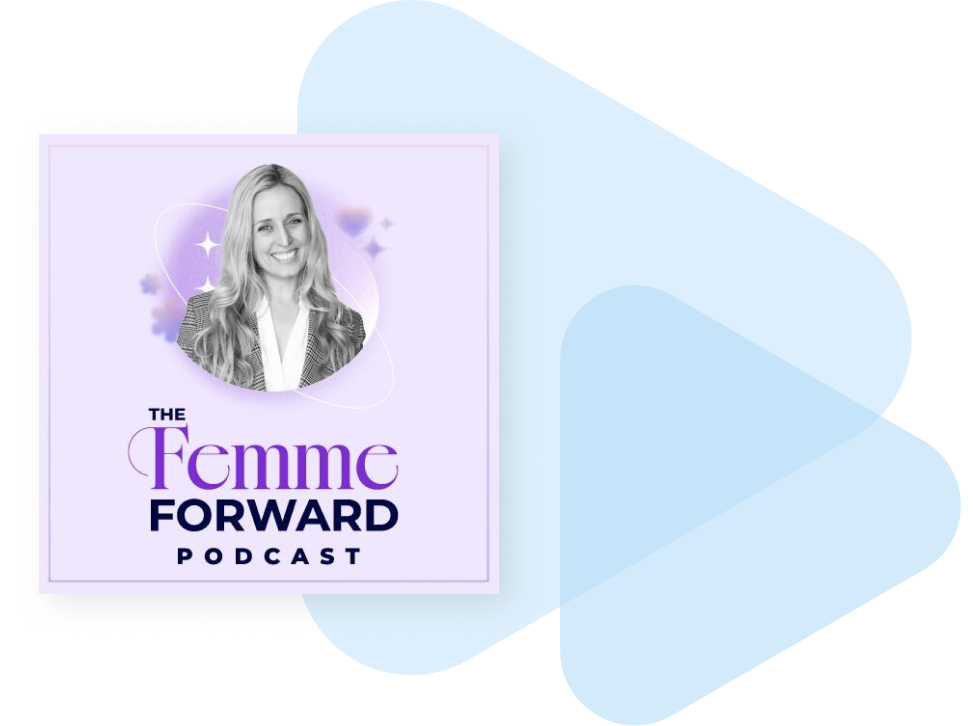
The Femme Forward Featuring Bayer's Khara Hutchinson
Listen now
Click to listen on:


Read the transcript
Amanda Glen Smith: Welcome to the Femme Forward podcast. I have a very exciting guest with me today, the Director of Commerce Media and Programmatic Innovation from Bayer Healthcare, Khara Hutchinson. Khara is an award-winning digital strategy and operations leader with over 15 years of experience at the intersection of high-stakes marketing and complex CPG activation. Currently, she serves as Head of Commerce Media and Programmatic Innovation at Bayer Healthcare, where she successfully built and transitioned a world-class, award-winning in-house activation team. Recognized as a 2024 AdExchanger Changemaker, she is a powerhouse in the industry, known for her hands-on-keyboard expertise and her ability to own cross-channel strategies, spanning programmatic, e-commerce, retail media, HCP, and more across consumer health verticals. Khara, welcome to Femme Forward. Thank you for joining us.
Khara Hutchinson: Thanks for having me.
Amanda Glen Smith: Will you tell us a little bit about your current role and your journey to where you are today?
Khara Hutchinson: Sure. I'm in my seventh year at Bayer Healthcare, and I can't believe it's been seven years. I came in in 2019 as part of the OG squad to move all of Bayer Consumer Health from an agency model, hands on keyboard, to an in-house, hands-on-keyboard model. We have actual traders who work for Bayer Healthcare, and they run these campaigns end to end. We also have strategy, and every channel is covered. It's been quite a journey as that's expanded over the last seven years or so.
How I got here: I was thinking about this in preparation for our conversation, and I had an aha moment. I was almost 30 when I got my first job in what would eventually become programmatic, so you can do the math. I'm definitely aging myself, but I started out when the internet didn't really exist in any way, shape, or form the way it looks today. I worked at very early dot-coms in roles that were very different from what I do now, which meant that by the time I got to ad network and RTB, I had enough dot-com experience to get my feet in there. Programmatic was never something I thought I would do. I think I took the job because it was out there and nobody wanted to do it. Back in the day, you had owned-and-operated, and nobody really wanted to work at an ad network or in an exchange environment. I raised my hand, and there you go.
Amanda Glen Smith: I love it. We start Femme Forward with the same question: what's your biggest differentiator as a woman?
Khara Hutchinson: As a woman, I don't know that I've ever thought about it as just being a woman.
Amanda Glen Smith: Or as a person, you know?
Khara Hutchinson: No, because I actually think it does matter. The older I get, and the further along I get in my career and as a mom, watching little humans become bigger humans and solidify themselves, it absolutely has to have an impact, right? It's been negative in some ways for me, in the way I approached work, and very positive as I get further along in my career. I'm not saying there are men out there who don't do this, but the women I've worked with, which are few and far between, approach things a little differently. Maybe it's not walking into the room thinking or feeling like you have to know everything or present that to everybody. Maybe that's part of me being a woman. I don't know. I'm a boy mom, so I only see boys turning into men.
Amanda Glen Smith: I'm also a boy mom, but I'm also a girl mom. I feel like they're very different paths to raising your children.
Khara Hutchinson: They are so different, and I have become different raising boys. Half the meetings I join, I think I'm known for this in the industry. I'm known for a lot of things, but I know they're all good. Half the meetings I'm in, I'll say, "Dude, what do you think if we..." I used to be talking to a bunch of 10-, 11-, 12-, 13-year-old boys, and I don't even know how to talk to little girls normally. I have a niece, and she'll come over, and I'll say, "Hey, buddy, how you doing?" and she kind of looks at me, and I'm like, "Hey, sweetheart." It's a very different tone. I could go down a rabbit hole with the question you just asked about being a woman and how we speak to each other and how we were spoken to. It is very different.
Amanda Glen Smith: It's wildly different. Okay, we might get there organically, but I'm going to keep us on track with your career journey so the audience has the full picture. We obviously had the privilege of working together in your former life when you ran the media team for Spunshell. You just told us about the journey you had, but talk specifically about the pivot to go brand side, because that had to be a sharp one, right? Going from being part of the dot-com era, partners, tech, buying media, to actually being hands on keyboard operating for a brand.
Khara Hutchinson: It was a sharp pivot, but it took me about five years to get there. A lot of people on the ad tech and agency side ask me on the side how I got to the brand side, and I say, I was very intentional about it. I started out on the ad tech partner and publisher side, really in the nets, and then moved into the startup world, when the sky was the limit and our eMarketer was doubling every quarter. We were getting more and more money coming in through those pipes. When I was probably in my mid-30s, I had my first child. I came back from my first maternity leave 12 weeks to the day and thought, I don't know that I can keep doing this speed. You're working a ton, you're never really off. That is the way work always was for me. I started to look around, and there were fewer and fewer women that I was working with. I'd asked another one who still miraculously was around, "Where are all the women? Where are they going? Where am I going to be?" Your mid-30s are not old by any stretch of the imagination, and I didn't feel old, but I started feeling like I was becoming unique. Also, remember, I grew up and came of age in this business, and programmatic is still to this day heavily male-dominated. I joke that it's usually me and nine guys on a call for my entire career.
So I started thinking, I've got to figure out what's next for me. And this is really important: it's not like I made this leap for self-preservation. Over time, I'd been working with clients and getting to know them, and the business outcomes from my work were so far away from what I was doing. Social was exploding, and I didn't work in social. I always wanted to know what was really driving business value in other places. The brand people I worked with seemed, number one, to have a lot of women. Number two, they seemed sane, and they actually went home sometimes at night to their families, which I was not always doing in my job. And they knew a lot about the business things I really wanted to know. So I made a very conscious effort and thought, how do I get there? I needed to go to the agency side for a little while. If you were working on the ad tech partner side 10 or 12 years ago and you told a peer you were going to move to the agency side, they'd have an intervention: "What are you thinking? It's terrible there. Don't go there." I said, it doesn't matter, I've got to do what I've got to do. It's like that children's book, "We're Going on a Bear Hunt". You can't go over it, you can't go under it, you've got to go through it.
Amanda Glen Smith: We're going on a bear hunt. I'm reading it now for you, so yeah, that's it.
Khara Hutchinson: So I went to the agency side, and it took me three years on the agency side, and it was difficult. When I talk to other people who want to make this move, I say the agency side is not easy for a lot of different reasons. Some people thrive in it, and some people don't. But what I learned there, the good and the bad, was invaluable for my career. It also gave me something on my resume, so that when Bayer Healthcare, which I'd been hearing about, was hiring in New Jersey, where I live, I thought, I'm going to get in there. I worked at Bayer Healthcare and another company in New Jersey that was also hiring for two years. I looked at people on LinkedIn, I messaged people on LinkedIn, I sent my resume to people, and I tried to get meetings, and I was successful in a bunch of cases. I'd say, "Hey, I know you're not ready for me now, but can I take you out for a cup of coffee and talk about what you're doing and what I do, and see if there's a fit?" That paid off. I got the job at Bayer Healthcare. We hired our in-house, hands-on-keyboard Bayer Healthcare employees, and between six and 12 months after I started, we had a transition period. I've been on the brand side ever since. I say this is my only brand I've worked at, as if I just got here, but I've been here for almost a decade, which is crazy. I love it.
Amanda Glen Smith: Long time. Wait, let's talk about this hustle mentality you had. You're not ready for me yet, but you will be, and when you are, I'm going to be here. Did you approach your other job searches that way, or was this pivot one where you knew you had to put in extra umph? I'm not sure it's even extra. I'd love to hear if that's natural to how you've approached every job, or if you really knew this needed extra attention.
Khara Hutchinson: I think it's always been there, and there are a couple of different reasons. At points in my career, my father, who is successful, now retired, and a big-scale operations leader, coached me. He coached me in negotiating salary. He talked to me about networking. He was, and is, a guy on the golf course who knows everybody in his business, and I saw that through him. And then there's also the necessity, right? I was very much on my own, living in New York City, and you have to pay rent and you have to eat. Not having a job was not an option, so necessity drove it. But what I say now, looking back and mentoring other people, men and women, especially women, is to have no pride. There is no pride in networking. Don't be annoying or arrogant, but good people in the industry exist, and very few people are going to think, why are you emailing me and asking me that? This is a small industry.
Amanda Glen Smith: Totally. Good people just want to work with other good people. I have a mentor who's going to be on the podcast in the coming months, and she's incredible. She said, networking is not who you know, it's who knows you. That is so true. At the end of the day, you want somebody to say, "Oh, this name, Khara, would be great at this. Let me give you her email." That's what networking is, versus the other way around. You can know all these people, but it's a different kind of value exchange.
Khara Hutchinson: You have to be giving as your part of the networking. I don't mean you help everyone who comes across your desk, because at some point you can't. People have asked me if I consult on the side, and the answer is no. I don't have time to finish my day job and my family anyway. But if somebody says, "Hey, I want to pick your brain on something," I say, "Sure, I'll tell you everything I know for free. Let me help you out." That's paid off for me a lot, because I have places to get information. If I was looking for a new job, there are probably 20 people I could text tomorrow who would help me, which is great.
Amanda Glen Smith: A thousand percent. You get what you give, too, right? If you make the time to meet with people, especially the many who hit my desk, or who are looking for a job, I'm not trying to work with you, but I want to understand what the industry is like, and where you think your skills are best suited in this industry. It all comes back around. It's like a boomerang.
Okay, so you pivot to the brand side, then you go to a large CPG, which has to be a different landscape than the one you're used to. What was most surprising about this vertical that we wouldn't expect?
Khara Hutchinson: I really did not think, even the first day I walked into Bayer Healthcare, that I would get so invested in a brand like Lhotreman. I didn't know I could get so fired up about building a strategic activation framework for a painkiller. I had worked in every single vertical you can think of, from auto all the way down to tier three, which is hell, to beauty and travel, all these very glamorous, exciting things. When this job came up, and you know how I said I worked at another organization at the same time? I had offers from both Bayer Healthcare and that other company within a month of each other. I took maybe two weeks to decide, and I took Bayer Healthcare because I was so inspired by the hiring manager and the people I met in the process. I didn't think it would be as much about culture as it was, but I wrote a thank-you letter to my hiring manager, who's no longer at Bayer Healthcare, but it was super impactful for my career forever. And I totally did a Khara, which afterward I thought maybe wasn't a great idea. I'm either going to get this job because of that thank-you letter, or I'm not going to get it. I literally wrote, I have the music up really loud in my car on Route 80, the windows are open, and I am just so pumped from meeting this whole team.
Amanda Glen Smith: Jazz.
Khara Hutchinson: Like, so jazzed, and I got the job. So I guess it ended up being okay. I really didn't think I could get so invested in brands. I've said this internally when I'm talking to vendors: I have never cared so much about weekly shipment numbers and top-line reports and profit reports. When I wasn't on the brand side, I thought I might get to see those things, and I really do get to see them. I'm literally next to that data whenever I want, and it's always next to the work I'm doing. That's crazy when you work in programmatic. Your work in programmatic literally moves the needle on things coming off a shelf. It's amazing.
Amanda Glen Smith: So do you think that's the most rewarding thing about being the end marketer versus being a partner? It takes so many of us in this ecosystem to make it all go round. What would you say is the most rewarding part about being the marketer yourself?
Khara Hutchinson: I tell people I am really nosy and I have no pride. My boss now is a woman, and I've never had a woman boss before, which is great. She said, "You need to rebrand that a little bit. You're curious and collaborative, or something like that." I said, yes, that makes sense. I am curious and collaborative, but I'm also very nosy and I have no pride. That's the most rewarding thing about being on the brand side: I get to fill that cup of curiosity, or nosiness, all the time. It's different at every company. Spunshell was really small, and I think there are pockets at a big company like yours where you have longevity, and the coworkers you've been with have built something together, and we have that at Bayer Healthcare. There's a different kind of rapport and culture where you can be nosy, you should be nosy, why aren't you being nosy? Pick it apart, pull the report apart, ping someone four teams away from you that you don't normally talk to, and get a question asked. I infinitely get that itch scratched here.
Amanda Glen Smith: I love that. Especially seven years in, you don't hear that all the time, so that's great. Okay, you've worked across all these diverse channels, and the main goal for any of us is how you drive profitability, right? What are some of the rules you live by, regardless of channel or role, as a leader?
Khara Hutchinson: In terms of the business, I'm going to steal a little from one of the super-valued OGs here at Bayer Healthcare, who's making a name for himself in the business and in his niche of ad tech and advertising. He put it in such great words that I was like, I'm going to steal that. It's about value creation for the business. You could extract that and expand it to value creation for your coworkers, for your boss. Fundamentally, how you're successful at work is the value you bring, and it's different pools of value. It's value in driving a lever off the shelf profitably, or, if you're looking for growth, it's understanding the direction you need to go, the value you're bringing to get there, how you're interfacing with your coworkers and your team, and the value you're giving them. That's the overall package of leadership to me. Does that make sense, Amanda?
Amanda Glen Smith: It does. I think if you're driving the business forward, which is your main goal, and doing it in a kind, respectful way with all of your colleagues, then the rest usually follows. There's all this other stuff.
Khara Hutchinson: Yes. I'm not saying we know this person in common. It's a general thing. We've both worked with people in our business who drive value and who suck the life out of a room and a team. In the long term, I couldn't have stayed at Bayer Healthcare for seven years without the intention of leaving in the future. Maybe I'll get my 30-year watch from Bayer Healthcare when I retire. It's true, and I think you see this all over, where people follow managers. Culture eats strategy, right? What's that phrase?
Amanda Glen Smith: Culture needs strategy for breakfast. That's a common one, but it's true. You can move the business forward, you can drive a ton of impact and value, but at what cost? Some people have a ricochet effect, and it can have a downstream impact, and a negative one. So I think it's great to hear that in your role, especially at Bayer Healthcare, you feel like you've found that balance. I want to touch on what you said earlier, where you encourage people to go four teams over, pick apart the report, and break down silos. I can only imagine at a company like Bayer Healthcare there are a lot of those, with a lot of cross-functional teams. How do you go about breaking down barriers, and what's your golden rule for making sure everybody is swimming in the right direction, especially if they're not speaking the language of the channel you're overseeing at the time?
Khara Hutchinson: One of the biggest pivots I had to learn, because I didn't grow up in this kind of culture professionally, is that I still consider myself someone who works in ad tech, and I consider myself an advertiser. I work in advertising, and I happen to work in-house at a really large CPG. Translating all the things that come naturally to us, all the acronyms and minutiae of programmatic, social, search, and media in general, into business terms did not come naturally to me, and it won't come naturally to most people who come out of our business and go into a brand. I never understood brand marketers, because even when I was on the ad tech or agency side, the people I interfaced with were still in our Venn diagram, strategy people in media. But now I'm talking to brand marketing people who have MBAs and went to school to learn marketing. Early on, I'd find a friendly face on the brand team and develop those relationships. I'd ask, "What do you actually do every day?" Not saying it that way, but, what do you do every day? And when you're not talking to me about GRPs, what do you do in the rest of your job? They'd start telling me these things, and I'd think, wow, I had no idea that happened, and I'd pick up that little piece. The next time I'm having a conversation about performance, I'll start talking about supply and distribution and the impact of that on media. Over time, finding people who are not like you, learning from them and their skill set, you snowball into these conversations. So now, seven years later, I get to go into meetings with brand people, and I speak their language, and sometimes they speak my language back, and I think it's been really beneficial to both sides.
Amanda Glen Smith: That is something that's often forgotten. You expect everybody at the table to speak your exact same language, even if you're in the same industry. We experience this a lot, especially in the most recent year with mergers and everything going on. I had a couple of people say, "Please speak to me like I'm a fifth grader," and they'd ask me to make sure they were fully understanding. It's a good reminder for everybody: even though you're the expert, and it's your job to be the expert in the industry, make sure everybody is coming along on the same ride with you. A lot of times they're not, and that's okay. People don't necessarily want to be vulnerable and ask those questions, so you start at the beginning, take your time, bring people along, and make sure you're speaking the same language.
Khara Hutchinson: I do periodically check in on it, because on our side of the business, we can plummet into tech-speak without even realizing it. When I'm talking to non-programmatic people, and the other digital channels aren't like programmatic either, they sometimes talk about things, and I'll stop and say, "Do you understand what I just went over?" If you don't, no biggie, I'll stop. But if you don't get that part, it's going to be hard for us to continue the discussion. Fifty-seven point eight percent of the time, somebody will say, "I don't actually know what that is." But you also don't want to assume people don't know anything. Going into a room and asking, "Do you know what a DSP is in 2026?" to people who are spending tens of millions of dollars a year on programmatic is a dumb way to go about it, right?
Amanda Glen Smith: It's pretty condescending, you know? Okay, let's go to in-housing. Obviously, you transitioned from an agency-led model at Bayer Healthcare to in-housing. That requires a ton of discipline to build out an internal trading team. How did you make this shift at Bayer Healthcare, and why was it vital for you all to do so?
Khara Hutchinson: I wasn't around in the very early days. The first and foremost thing was identifying a path with the transition agency. The big holdcos will do this today, but seven or eight years ago, they weren't really eager to be part of a transition to an in-house model. We had a very specific transition agency whose business model was to do exactly that. I was hired, the other channel leads were hired, and I managed a team of transition-agency traders along with their channel lead. Then we started hiring and putting out job recs. This was before COVID, and we were all out in New Jersey. Hiring was not easy. I live really close to New York City, but the Bayer Healthcare office, where we were five days a week before COVID, is not that close to New York City. We got through it, and my first hire started the day we shut down for COVID. He came to the office, I gave him his computer, and then they all said, at about one o'clock in the afternoon, get out, go home, we'll let you know when it's safe to come back. We did not come back for two years.
Amanda Glen Smith: Two years? Wipe that computer down with Lysol and get out of here.
Khara Hutchinson: Two years. I met him at the interview, then I met him in the office when I gave him the computer, and I was like, I'm sorry you just moved to New Jersey for this job. You're going to work in your apartment that has no furniture in it, because we're shutting down for a global pandemic. We then hired all the other traders over the next six months, and everybody was completely remote. You're connecting to a whole new team you've never met in person, and you're not going to meet them in person. I felt a little bit of an advantage, because before Bayer Healthcare, I worked from home quite a bit for a global company. I was often on calls at six o'clock in the morning, so I took them from home. It felt pretty easy for me, but I don't know that it was easy for anybody. Nothing about the COVID shutdown was easy. But we onboarded, transitioned, and took over all the campaigns, and everything was working. I was working in this room I'm working in right now.
Amanda Glen Smith: So insightful. I know you're a change maker. I know you move fast and break things, and one of the things I love about you is that you do it in a very authentically Khara way. What is one marketing rule you felt Bayer Healthcare had to break in order to build an award-winning, hands-on-keyboard team?
Khara Hutchinson: Wow, let me see. I think the in-housing transition for a big global pharma healthcare company, we had to work on both sides. Maybe this is a good example. When we first started getting called back to the office and were going to meet in person, which was really exciting at first, I thought, my God, I worked with you for two years and I've never met you in person.
Amanda Glen Smith: Co-workers.
Khara Hutchinson: People would ask me what it was like, and I'd say, listen, it's not like ad tech. It's not like the places you've come from before. It's not cool and hip like an agency. There are no big wide wood-plank floors and no snacks in the kitchen. I'd tell them you could walk in and be your authentic, real self. The media team is authentic and real, and I felt really secure in that. But you will know, walking in, that you work for a big global pharma company. The campus is just different from ad tech. People would joke inside Bayer Healthcare, "I can tell you're on the media team because you're wearing jeans and a hoodie." You'd stick out if you were on the media team, and I don't think we ever encouraged anyone to change that.
Amanda Glen Smith: I was going to say jeans or sneakers. Do you think your team is still able to be totally themselves seven years later?
Khara Hutchinson: Yes, they are. Everybody who works at Bayer Healthcare, and I want to reiterate that I said this about myself coming in, has to make a pivot to speak the language of the company they're in. Everyone has had to do that, and I don't know that it was natural. The majority of the people on the media team don't come from the brand side. Bayer Healthcare is also their first brand job. Our average tenure is probably something like five and a half years, and it's been five and a half years since we did our last final transition off the agency model. We don't have a lot of attrition. I'm really authentic with the team, maybe too authentic, and I think they feel like they can be themselves with me. But we also freely talk about the context of the room we're walking into together. Here's my advice on how I want you to think about this meeting, or, hey, it's a good idea to just listen in this meeting, take notes, and we'll follow up with the team. It's not always about media, and it's not always about your individual work. In our seat, the individual work is so technical and so different from the org's work. You have to get a sense of when you drop something like, I'm making this up, click tags or pixels or cookies or actualization discrepancies because of ad server and DSP hops. You don't want to go there in a meeting with the brand team. It's unnecessary for them.
Amanda Glen Smith: It's probably unnecessary for our listeners too. They're like, wait, what? This is creative, media, tech. I felt like your advice translates. Anytime you take on a new job, whether it's corporate, brand side, or not, you should ideally absorb some part of that culture, because that's why you're there, for it to fuel you and for you to be invested and hopefully motivated by what you're doing. And the authenticity part has taken me a while to learn. There was this whole movement, which I talked about before, about bringing your whole self to work, but then, wait, not all of it. What about your journey? I've always known you as authentically Khara. Is that something you've had to work on with the different roles you've assumed?
Khara Hutchinson: Yes, but I don't know that it's been tied to work. Honestly, it's been experience rounding me out, and a prioritization of what really matters. I've changed a lot. I used to be very visibly annoyed, which is not to say some people who know me really well are going to listen to this, laugh, and roll their eyes and say, you're still visibly annoyed. I'm pretty much known for what's on my face being exactly how I'm feeling. But I've never not been kind, I don't think. I do it with humility and kindness, and just by being real. A lot in our business, in ad tech and advertising, just isn't real. It's different iterations of the right message at the right time, said over and over for 20 years. You might think that's impatience as you get older or further in your career, or have more things you need to do. I'm like, let's cut to the chase. Tell me yes or no. Can you do this? If you can't, tell me what you can do. Let's do something together. The partners we really like, and really value, are the ones who come to the table with, here's what we can do, and they tell me no really fast, or they tell me yes and they make it happen. But I think I've changed more than I had to learn for work, because I see it in my personal mood too.
Amanda Glen Smith: What did you do to change, do you think?
Khara Hutchinson: Some of it is learning. I have kids, and they're 13 and 10 now. I never try to get in front of them in scenarios, because I think social reaction is a really big teacher. If you go in hot, whether you're walking into a PTO meeting or into a meeting with your brand team, your agency partners, or clients, whatever you say, and the reaction you get is not the reaction you want, the only common denominator is going to be you. Then being really intentional, which we talked about. I'm really big on intention. I had a boss, the person who hired me at Bayer Healthcare, who said, "You need to focus more on the outcome you want than on how you get there." That was him walking me down from being super frustrated over something, and it stuck with me for years. I have to sift through it. It's the bear hunt, right? How do I get to what I want to happen here? My interactions have changed too. I try really hard to think about other people's intentions. Emotions run high in any job I've ever had. I don't think there's a job where people aren't human beings with stuff going on. I try to think about the intention of the person causing me friction. Is it something I'm not giving them? Is it something they misunderstood? To be honest, Amanda, I just started saying, "I feel like you're really frustrated, and you don't like something I'm doing. Help me understand. I want to get past this." I'll literally say that. It takes people getting to know me, and they're like, Khara's so aggressive. Then eventually they're like, no, she's just direct. Direct gets a really bad rap, especially for women.
Amanda Glen Smith: Direct, yes. I want to talk about that. Before we do, I think intention is such a big one. I'm a very positive person, as you know, but I've had to shift to assuming positive intent from everybody else. When I shifted that mindset, saying this person is coming into this meeting with a totally different agenda than mine, and we need to align on what it is, and, to your point, let's focus on the outcome and where we're going, and we don't really care how we got there on the bear hunt. That is massive. The more you do this, and the more you work with all types of people, whether they're difficult or not, you realize that usually about 1% of the time it has to do with you. It almost never has to do with you or what you're trying to achieve. It's something completely separate: their identity, their challenges, their day, who knows? That's a massive shift I've worked on in the past several years: assume positive intent, and you can go so much further, especially when you're meeting a lot of new people and don't know them. Similar to you, I've had the pleasure of working with certain people for a very long time, and that's a different relationship. When you know people in and out, you can speak and say things in a very different way than when you're meeting people for the first time, whether they're clients or internal. So coming in with that mentality, that we're going to assume positive intent here, is really helpful.
Khara Hutchinson: I'm going to add to that. It also has to do with the confidence I've gained. When I'm talking to people I manage, formally or informally, by seniority or longevity, whatever you want to call it, I give them advice, and sometimes they'll say, "I can't say that." I say, I recognize my privilege. I've been here a long time. I have really good relationships with people I've built organically and in good faith, so I can be really forthright. But you still have to say these things in the right way. You can't...
Amanda Glen Smith: You have to say them to build your own rapport and your own relationship.
Khara Hutchinson: Right, and your own confidence. I'm also a big believer, and I don't know if this is related, but I have a bunch of things I'd put on a T-shirt or needlepoint on a pillow that my team will say, "Here she goes again." One of them is, you've got to fill your cup.
Amanda Glen Smith: I agree. You recognize the position you're in, the trust you've built, or even the clout that comes with certain titles, which in some cases is great and sometimes unnecessary. I say the same to my team sometimes: I can say these things, and I'm happy to, but you have to build that relationship. You have to reach across the aisle, and it will only help you the next time this happens. That's how you build trust, by having healthy conflict. That's what I'd probably put on my needlepoint pillow, that healthy conflict is required for you to get to the next stage of your relationship with any person.
Khara Hutchinson: I think there are two things I did. I just wrote them down so I wouldn't forget them again. Confidence comes from doing. That's a blanket statement I say all the time: confidence comes from doing. Consistency matters more than blowing it out of the park twice a year. And healthy conflict has driven innovation in our industry for 20 years. I actually love a spirited conversation. It's not conflict to me. Sometimes it can come across as conflict. I have so much energy for this business. I want to build something new, and someone telling me no just makes me think, well, what if we did this other thing? Good partners, the people I really respect in this business, are always trying to find a path forward to the end state, and some of that comes from healthy conflict.
Amanda Glen Smith: Yes, I think we need to rename it. It's just healthy discourse. You're having a discussion. I had to define the word "tiff" for my six-year-old, what it meant. I said it's a disagreement, not a fight. If you get in a tiff with somebody, or a spat, you both say your side while you're on the playground and things are rough. She thought it was comical and asked, "But aren't we fighting?" I said, not necessarily. Maybe someone heard someone wrong, maybe she didn't say that, you don't know. I think that's the difference: healthy conflict doesn't need to be conflicting. Sometimes it can just be a general discussion where you have different viewpoints and want to get to a mediated state.
Khara Hutchinson: Yes, and I'd also say, I think Anne said this too, all these things I learned: it's okay most of the time to say, "I need a break from this conversation," if you feel like you cannot control yourself. I've probably done that more times than I can count on one hand, in 20 years for sure. I'm sure I did it when we worked together 12 years ago. I've been so agitated and so frustrated. Remove yourself from the situation if you can at any point. Don't just walk away. Breathe.
Amanda Glen Smith: I remember specifically. I don't know if you remember this, but you would walk around the block.
Khara Hutchinson: I probably would, and you know what's crazy? When I look back to that time, I can't remember a single thing I did working there. I don't know what it is.
Amanda Glen Smith: I'm like, I don't know if she's a smoker or not, but it was like, I need a smoke break. I'm out of here for this combo.
Khara Hutchinson: Yes, and I probably was a traitor to start, and I'm a traitor who doesn't trade anymore, so I have a lot of their personality quirks. Most traders in the nets smoked cigarettes, wore hoodies, jeans, and flip-flops to work every day, swore a lot, and listened to really loud music. It was a high-intensity, high-pressure job, and I think it still is. That's another discussion. I don't think they get the nod for the pressure they're under doing the job they do very often, but it is a high-pressure job.
Amanda Glen Smith: Listen, they all deserve it. Everyone to their own. Okay, one of the things you just mentioned that I think has been really integral for me is listening to your body, which I feel sounds weird. But to your point, if you get those physical cues that tell you, I don't want to respond right now, because I'm going to say something I don't necessarily agree with, or that's very heated or very passionate. Passion is great and welcome in all shapes and forms, but that's another big thread I think people need to remember, because you often have physical cues. Don't you think?
Khara Hutchinson: 100%. And listen, this isn't going to work 100% of the time. It should be your 10% fallback, break-glass option, if you have to remove yourself from a conversation and you're a professional. But there are times when, and on a Monday morning, my favorite time to have a meeting, I promise you, I truly mean this, if you ask the people I've worked with for a long time, they'll say, "This time, I love Monday mornings at 9 a.m." I don't dread going to work on Sunday nights. I get up on Monday mornings and I'm happy to go to my computer or wherever I need to be for work, because every time it feels like I get a chance to start all over. I have a chance to look at the week. The world is my oyster. I can make my list and start working on it. But if you get me on a Friday afternoon at 4:30, and there is conflict, healthy or not, you're going to get a very different reaction from me than you do on Monday at 9 a.m. I'm tired, my brain is overrun, and I feel mentally incapable of regulating your emotions and my emotions. A lot of the time, and maybe this is a woman thing, I do a lot of regulating other people's emotions. So if I don't have it in me, I'll say to the person, "Buddy, remember, I'm a boy mom, so I call everybody buddy. Buddy, can we please pick this up on Monday morning?"
Amanda Glen Smith: The tank is empty. The tank's empty.
Khara Hutchinson: I'll say something along those lines. Or if it's someone I'm really close to, I'll say, "I will happily talk to you over the weekend. You can call me and we can chat about this, but I really need to sign off here and go." They're like, "Okay," and I switch care as I'm done.
Amanda Glen Smith: How great that you're able to say that. You're basically saying, do you want the Pollyanna who's ready to go Monday morning, or do you want Darth Vader? It's up to you, and I'm going to give you both options. You can stay on this call, but it's something you know about yourself. I think to your point, you don't have to walk away or walk around the block for your smoke break, but you can mute and listen to the rest of the conversation. Sometimes what I used to do is white-knuckle my point and try to navigate it through, and it's like, no, your own body is telling you to take a break, listen to the other points of view, or whatever else is happening. Or maybe you move past that topic, and what's really great is discussing that challenge one-on-one outside the meeting you're in, so you can have perspective and walk it back. There are a lot of different ways to do it. I think that's a very interesting point.
Khara Hutchinson: There are. And something I do sometimes, which I say to people because I don't hide anything, probably to my detriment. I should be more mysterious, Amanda, than I am.
Amanda Glen Smith: Ha ha!
Khara Hutchinson: I'll say, "We're at time, or we're running out of runway for this topic. I'm going to put my thoughts together and send them over so you can think about them." Sometimes you can't get it out, or...
Amanda Glen Smith: Or it's hard to think that quickly about something that someone else might be equally passionate about, but hasn't had their thoughts prepared the way you have.
Khara Hutchinson: Yes. And when you're writing things out, guys, for real, you've got to learn business writing. You do not send a novel to someone. I'm also at a point in my career, with longevity and comfort with my coworkers, where I'll literally respond to an email and write, "TL;DR, what do I need to know?" and nobody gets that from me and thinks I'm being a jerk. I'm literally like, guys, this email could have been a novel.
Amanda Glen Smith: I want to use that, because I totally agree. My team knows this. I'll say, "Really loved your manifesto. There are a lot of good points there, but I had to put it in Claude to give me a summary." Then I use voice memos to write back to you, because that's how long it was. "We got it." I think that's great. I'm going to start saying that.
Khara Hutchinson: Listen, someone on your side took one of my rants, my crazy, what I call my Kramer, like the Seinfeld Kramer. I get like that sometimes. If you ask anybody on the account team that works with me, they'll say, "Yeah, we totally know when she's going to do that." I sent them a manifesto, a big technical thing I'd been trying to get out, and someone on your side said, "I put it into ChatGPT to see if I could summarize what you wanted." And I said, "John, that breaks my heart. I'm sorry I sent you that kind of email." He said, "What are you talking about?" And I said, "You should never have to summarize. I failed. Let me try again. I'm going to write it cleaner. I'm going to draw a picture. My bad."
Amanda Glen Smith: I'm just going to say that now: too long, didn't read, try again. It's true, though, in this world where we get so much information in so many different formats. You're getting texted by colleagues and clients, you have Slack, Teams, Zoom, email. You want the important things in email, 100%, but I want to be able to read and respond to people, not have something marked unread for five days, because then I'm also failing you, since I'm not responding to you.
Khara Hutchinson: But telling your team what you're working on also matters. As you move up and over, and you stretch over things the rest of the team might not see, I'll often give them an update: here's what I'm doing this week, here are the meetings you don't know about, and here's the context. At the foundation, I always want them to understand what's going on in the org and how it affects them, our business, and our strategic goals. But sometimes it comes across that we're removed from the day to day. What are you working on? That's fair, because they don't know about all the meetings. So when I say TL;DR, it'll be someone I've said many times to, "Dude, you're my 45th meeting this week. What can I do for you?"
Amanda Glen Smith: That's such good advice. I need to get way better about that too. It's actually feedback I've gotten from my team: we'd love to know all that you're working on, what it means, and what your goals are. It's really hard to do, especially in this fast-paced ad tech environment, but it's so important, because the second you take the time to sit down and do it, there are head nods: "Yes, okay, amazing, I'm so happy you're already working on that. I didn't realize that was an entire executive workstream." It's not shared anywhere. Nobody is saying it. It's in the other 14 meetings that happened last week, but that's totally fair. I think your point about context is absolutely true. There are so many asks we give everybody every day, regardless of what sphere of life they're in, and without context, they fall short sometimes. People think it's almost a give-and-get, and you have to explain why you're even asking in the first place.
Khara Hutchinson: Yes, because I never want the people I manage, or work with, or have a position where I can ask them to do something, to expect it comes back to me without understanding that there's a difference. We've all had it done to us. I want them to understand why I'm asking, because otherwise I've had bosses who just pile on what seems like busy work. "Why can't you go in there and pull that report? You must be so busy." If you don't know what those people are doing, that's what it comes across as. But when I ask and say, "Oh my God, I really need this report, and it's not running, can you run this while I do this other thing?" they're like, "Yeah, Khara, no problem."
Amanda Glen Smith: Or the urgency of, this client needs this, or this executive or board member needs this. That's very different from just saying, "Hey, can you pull that report?"
Khara Hutchinson: I know. I always want to be seen as a leader or a person on the team who's with them. We do different things now, but I've really been intentional about that, not without hiccups, but I think it's helped me a lot.
Amanda Glen Smith: Did you ever grapple with it? It's something I've had a really hard time with. I used to be the expert, and I used to be able to pull everything. Think about the Spunshell platform. That was eons ago. I was up until 2 a.m. building out Zappos ads. A click-through URL wasn't working, and I was going to find which one it was. You're in the trenches doing all these things. But as you go into different roles, especially in leadership or with larger teams, a lot of that subject-matter expertise is still there, and you have to know everything, but some of the actual doing, you simply can't do anymore. There's not enough time in the day. That's been a big struggle for me over my career. I was wondering if it's been one for you too.
Khara Hutchinson: I think we could both go into any tech platform and figure our way out of it, except a Google platform. I still can't find my way around those. What was hard for me was asking other people to do things. Delegation was really hard for me, and it made me feel like I was acting above them. I don't know the right word, but I took a women's leadership course that Bayer Healthcare put me through a number of years ago. There was a module about it, and it's basically that delegation is how you create space for yourself to take on more work. Delegation is also where you teach, coach, and mentor other people. If you're always saving them, you're failing them and yourself. I was literally in this course during COVID, when it was all virtual, and it was a great time to do it because my kids were home. I remember thinking, my God, this is literally going to change how I approach work, and it did. I let people fail. I didn't save them. I didn't QA them to the point where they could never make a mistake that I didn't catch. They got smarter, faster, and more error-free. They learned and grew, and it was great for me, because I had 45 meetings a week, at least.
Amanda Glen Smith: I love that. It's true. I got that feedback directly from some of my direct reports: "We'd love the opportunity to run that project." I always thought it was a burden. That's where I was coming from. I didn't want to ask, or I knew how busy they were, the whole team, overseeing clients day in and day out, and there's no way they could take this on. It came from a place where I needed a shift, and what really shifted it for me, Khara, which is ridiculous and bonkers, is every maternity leave. That has been my catalyst and forcing mechanism. I've gotten better, I think, and I'm more intentional about what else I could delegate that creates space and opportunity for somebody else. Leaving really does that for you, because you're like, all right, here are all the things I think are really important to drive the business forward. Who's going to own them? And what are the things that aren't important, that if no one does them for three or four months, is that going to be okay? Is that non-negotiable? It's a great time to find out.
Khara Hutchinson: Listen, maternity leaves were really hard for me. My first child, I was at the place before Spunshell, and I was literally in a hospital in New York City in labor. Sometimes you have time on your hands while you're waiting for the baby. I was literally texting someone at work, and they said, "Aren't you having your baby today?" I said, "Yeah, but I'm cool right now." Then my husband came in, and I had a doula, and they said, "What are you doing?" I said, "I forgot to set up this report." They said, "Khara, put the phone down and deep breathe with us." I can't even remember the rest, but maternity leaves were hard. I'm going on a really long vacation this summer. I'm married to a Brit, and this is our year to go to the UK for a long vacation. I put my out-of-office on, vacationing like a European, in euros. I'm going to be gone for 10 business days, and I'm working remotely for three or four of them, and I think, I can't take that much time off. Then I think, maybe I'll let it all fall apart, or they'll realize how unimportant I am. It'll all be fine, and I'll come back.
Amanda Glen Smith: Khara, yes, you can. It'll all be fine. For my first maternity leave, I didn't set my out-of-office until I got back. I literally worked up until...
Khara Hutchinson: Were you checking your email?
Amanda Glen Smith: No, I just didn't put on my out-of-office. I'm pretty granola and crunchy, so I was like, it's totally going to be like the movies, my water's going to break when I'm at the mall. You'd think that would make me a type A person who puts on the out-of-office, but instead I thought, I'll just keep working and keep responding. Then I remember I got home with this newborn, trying to find my computer, and my husband asked, "What are you doing?" I said, "I need to put on my out-of-office. I didn't even tell anyone I gave birth." How the times have changed, but it's a very impactful time. We're going to round this out.
Khara Hutchinson: Okay.
Amanda Glen Smith: If you had to think about the value you bring as a leader, maybe back to your needlepoint pillow, how do you think your team would define you?
Khara Hutchinson: I'm super authentic. I am what I am. I think I'm self-aware, I hope I'm self-aware, and I'm really approachable. They've all said this to me: you can tell me anything and we're going to find a solution. I might have a moment, if it's a bad thing. I over-delivered a lot of money, and I'm like, ugh, why did you do the QA? Okay, write me up what happened, and I'm going to see if I can find money to cover this. There's always a solution. You have to prioritize and put things into perspective. I can remember being a traitor and making very large mistakes. One time I broke out in hives at dinner with my dad, my whole face and body, and I was freaking out. I had my BlackBerry, checking my email, and he said, "Khara, you can't live like this." I've given that advice to people I've worked with: if you feel like this all the time, do yourself a favor and don't do this to yourself, however that comes about. I'm very calm about work. I'm passionate about it. I have moments, because I'm human, but I'm generally where there's a will, there's a way. I love my job. I think that's what they'd say. You can count on me. You hope so?
Amanda Glen Smith: I think it comes back to what you said earlier: you get confidence by doing. The more mistakes you make, the more confident you get, in not making them again, but also in realizing that, to your point, we are not saving lives. We are in the wonderful industry of advertising. It's hard when you're young and ambitious and motivated to separate those things. You want that to fuel you, right, if you want to do a good job. Before I forget, because I do want to go back to this one, I want to talk about the difference between being perceived as difficult versus decisive. I think there's a key differentiator we need to define there.
Khara Hutchinson: I know when I'm being difficult. I literally said to someone, verbatim, "If you think what I'm saying is harsh, you should hear what's in my head, because what comes out is so filtered sometimes." This is true in all aspects of my life. My brain is too full not to be decisive, if that makes sense. This is probably just the rubber meeting the road. The responsibilities I have now, the prioritization, the end goal I want to reach, my passion for driving the business forward, and the way I and the teams I work with do it through media. Even when I'm talking to a media partner, I know some partners think I'm difficult, and I don't think that's true. We have different end goals. You have to be decisive. There's so much to do and not enough time to do it. There are a million things to do.
Amanda Glen Smith: That shift for me came with motherhood, if I'm honest, because you have to ruthlessly prioritize in a way. I had a boss who would always say, "Fail fast, learn, and move on," but I didn't know how to do that, because for a long time I was harnessed by perfection. Progress didn't matter; I had to get it perfect. Now I'm the opposite, and for me a lot of it is having kids. I'm like, progress over perfection always. Let's keep it moving. Let's fail if we need to. If we make the wrong decision, we make it, but we learn something along the way, and then we can put our eggs in a different basket. You never hear someone say, one of the best qualities about that leader is that they take a really long time to make decisions. They make decisions fast, they stand by them, and they enable high-performing, amazing teams to go try it out.
Khara Hutchinson: I also want to say I wrote a LinkedIn article a couple of months ago, maybe last year, I can't remember. I got sick and tired of listening to people talk about in-housing who had never in-housed. Everybody had opinions. In the article I said there's confidence I've gotten from working at Bayer Healthcare that I never had before, 100%. The team I have, and the team I was put on with, are all so different. I am very decisive. It took some Myers-Briggs-type exercises over the years to get to, okay, I'm really decisive. I'm partnered even today with someone who is risk-averse. I'm not risk-averse. I'm the opposite. I'm like, let it all ride on black, we'll get more money somewhere. He's very risk-averse. Then we have someone who is very moderate and can go either way. The three of us are a trifecta. I'm super decisive and I go forward fast, and I get held back a little, but I bring someone with me, and someone else makes sure we're not all losing our minds. When I'm hiring for a team I oversee, I'm looking for that diversity. In the article, I wrote that I want somebody who says, let it all ride on black, and I want a project plan coupled with somebody who knows someone from a startup I love. That mix of personalities, not everyone being the same. Yes, you can fail fast, but don't be dumb on your way to failure. You don't just let it all ride on black if you haven't paid your rent. Did you pay your rent? You need money. So...
Amanda Glen Smith: That's key too: the diversity of the team around you, and leveraging their superpowers and strengths. Going back to the theme of progress over perfection, if everybody's doing what they do really well, you're moving faster together. If you're all trying to do this perfect thing and not fail and not decide, you're just going to be stalled out.
Khara Hutchinson: Yes. If nothing bad happens, sometimes nothing happens, right? Nothing's happening if you don't have that.
Amanda Glen Smith: Yes, did anything happen at all? Okay, what advice would you have for women rising in their careers today? If you had to look back at Khara ten years ago?
Khara Hutchinson: I'm going to repeat these, because I think they really matter. Confidence comes from doing. If your belly doesn't have a twinge in it anymore at work, maybe it's time to find something new. I am powered by that. I want to be uncomfortable and have to work for things. Even seven years in, I've asked for new responsibilities because I felt like I'd either given all I could give, or somebody else needed a fresh perspective, or frankly, I just wasn't challenged anymore. Confidence comes from doing. I've struggled with confidence for most of my career. Little secret: I actually hate public speaking, and I don't like presenting. When people find this out, they say, "You're not shy at all." I'm like, I know I'm not shy at all. I don't know what it is. I do not like it, and I make myself do it.
Amanda Glen Smith: I've said the exact same thing. I navigate from a place of fear almost always, but in a good way. I use it to fuel me and to harness what I want to do next.
Khara Hutchinson: I wasn't nervous about this today, Amanda, and it made me nervous that I wasn't nervous. I literally said that to my friend, and she said, "You're going to be great." I said, "Why am I not nervous?" It was just funny. Maybe it's because it's you. Okay, so confidence comes from doing.
Amanda Glen Smith: That is a really great compliment, by the way. I hope that's it, because I'm with you. I get nervous about all these things.
Khara Hutchinson: It's crazy, but you've got to power through it. Consistency will drive you further in your career than perfection. Being consistent and being someone people can come to is huge. Be authentic, but also don't be a jerk. Lots of people talk about bringing your authentic self, being vulnerable, and sharing emotions. I'm known for not caring for that. I share my caring in a different way than a lot of other people do. I think it's important to read the room on those things, especially as a woman. I'm not a hugger, and everyone knows I'm not a hugger. I have rules for people who can hug me. Hugging is a really big thing in the corporate world, which blows my mind. I don't get it at all. People I just meet will try to hug me in a meeting, and I'm like, why are you hugging me? Be authentic, but read the room. I never make anyone feel bad about that, but I really do not like being hugged.
Amanda Glen Smith: Yes, but you're being authentic by doing that. I'm such a hugger. I'm the opposite. I'm like a Texas bear hug, back to our bear hunt theme.
Khara Hutchinson: Totally fine. And as a woman, I'd say all the things I said, the regulating my own emotions, walking away from a conversation that's driving a big emotional feeling or a physical cue for myself, I don't think that's unique to being a woman. Wrong or not, I am a woman, so I can say this: don't beat yourself up. You can be human. You can be awkward. I say to people, sometimes I leave calls and think, did I say something remotely like the time I carried a watermelon in "Dirty Dancing"? You can be all those things. You have to move on from them. Don't beat yourself up. Honestly, I do think women's emotional responses are held to a different standard, and I think people forget that.
Amanda Glen Smith: I think they're held to a different standard, and I also think part of it is ourselves. We hold ourselves to this standard of replaying the guilt, replaying whether I said the right thing. Men that I know and wildly respect are like, why do you even think twice about that? I don't even remember that. Moving on. I do ask, "Hey, in this scenario, what do you think?" I think the level of empathy women can have, and caring about our work, and it being wrapped up in who we are, can be a negative too, because we hold onto it longer than is necessary.
Khara Hutchinson: Yes, and I find that women who... I was just talking to my family about this. I have two children, one sporty and one not. He just had his big premiere in the drama musical, and somehow the family came to see it. We were talking about studies showing that people who were in sports can be more successful. I was not a sporty person at all. I didn't even want to play kickball in gym. When I used to hear that, I'd think, well, I'm pretty successful, and I'm not sporty. But I think a lot of the confidence-busting and rebuilding that happens in youth sports, in high school and college, I probably went through in my twenties and thirties on the job. People who play sports lose a game or miss a goal and have to keep going to the next game and keep trying for the next goal. I talked about how I give that to my older son, who is not sporty, so that he has those things, because I recognize it in the people I've met in this industry. You can tell there's a lot of confidence in our industry, maybe too much sometimes. Giving advice is an interesting thing. You have to read the room. We're going on a bear hunt, and all of us will make it.
Amanda Glen Smith: I need to tell you this: they have every iteration of that. In case you don't like bears, my son is obsessed with dinosaurs. We're going on a dinosaur hunt. They have a dragon hunt. They have everything you can imagine. They're all just songs you can put on in the car, but they all have the exact same tune and message. You just have to figure out where you're going.
Khara Hutchinson: It is a life lesson. I packed away all my kids' books, and this will come for you one day. I pulled out the special ones, the ones we said together, and we're going on a bear hunt came out. My kids are too old for it, but they were like, "We love this book so much." I'm a reader. If reading were a sport, I'd have been D1. As I'm having this conversation with you, I'm thinking, yeah, you just have to go through it.
Amanda Glen Smith: Yes, you do. I think with children, because of our state of being with technology and everything, I don't want to frame myself as a type of mom, but you're all over it, and you make sure your kid has what they need when they need it. A lot of times kids don't have the opportunity to fail, and they need to. That's your whole point, which I agree with. How do you make sure they fail, in a comfortable environment right now, versus on the job in 20 years, when that may be a harder lesson? You don't have to go through it, to your point, but it's good to say, listen.
Khara Hutchinson: I have a seventh grader, and there are times I think, how are you ever going to be an adult? How am I ever going to let you into the world? Over the last year or so, I've let him fail more. These are safe failures, safe to try, safe to fail. Like he doesn't charge his laptop for school. Oftentimes I'd charge it for him. Then I thought, you're 13 years old, dude. I talk to him this way because I'm a boy mom, remember? "Thirteen-year-old dude, if you care about your laptop being charged, I suggest you charge your laptop." Then I let him go to school with the laptop uncharged. He comes home and says, "I got in trouble because my laptop wasn't charged." I said, "You think you're going to charge your laptop now?" He said, "Maybe." The laptop's charged now. The other kid doesn't want the lunch he said he wanted in the morning, so I don't bring him another lunch anymore. It used to kill me that he'd be hungry at school. "My God, this poor kid's going to starve." Now I say, "Eat it or don't eat it, buddy. You know you're going to feel better if you eat. Let me know."
Amanda Glen Smith: Your choice. I hope you eat the lunch that I made, you know?
Khara Hutchinson: I think you're a better mom that way, Amanda. I did a lot of wrong things with food and charging.
Amanda Glen Smith: No, listen, my daughter, I did the same thing. I said, "If you don't bring your library book back on Tuesday, you don't get to check another one out." We went three weeks without checking out a book, and I couldn't find her library book. That's so hard. I hope you find it.
Khara Hutchinson: Oh man, my back just went up when you said that. Go find the book.
Amanda Glen Smith: We found it three weeks later, and it was turned in. There was a small fine, but I thought, that fine is worth the lesson that you have to bring your library book back every Tuesday. Okay, Khara, we could talk for hours.
Khara Hutchinson: Yes. I know. You know we could.
Amanda Glen Smith: I want to thank you for being on the Femme Forward podcast. It was an absolute pleasure. Before you go, I want to do a quick lightning round, just the first thing that comes to mind.
Khara Hutchinson: Sure.
Amanda Glen Smith: Productivity hack: zero inbox, or do you have managed chaos over there?
Khara Hutchinson: It's managed chaos, but I triage every few hours. I think triage is a really important part of managed chaos that people need to be intentional about, especially when other people are waiting for you and need you.
Amanda Glen Smith: Okay, I love that. Your desktop folders are like a million screenshots.
Khara Hutchinson: My God, a million screenshots. It's really bad.
Amanda Glen Smith: Fuel: iced coffee, hot coffee, or something else?
Khara Hutchinson: Iced caffeine, year round.
Amanda Glen Smith: Book preference: hard copy or Kindle?
Khara Hutchinson: Kindle, for immediate gratification. I read a lot, so I need the Kindle. When I love a book, I'll buy it and put it on my bookshelf.
Amanda Glen Smith: What's the last book you read?
Khara Hutchinson: I'm trying to think. The books I read are a direct result of my brain and the state of the world. The calmer the world, the more fancy-pants literature I can read. I have a degree in English, so I'm serious about literature, but the last year has been super fluff, chick lit. However, my favorite book I've ever read is probably "Eleanor & Park" by Rainbow Rowell. It's a coming-of-age story set in the 1980s. I've given this book at least 30 times. I can't even keep a copy of it, and I order ten copies every Christmas. All my partners get it. I'm pretty sure the Innovid team has gotten this book for me. I love this book. Has anyone read it? Want to read it?
Amanda Glen Smith: I love it.
Khara Hutchinson: I'll meet you in New York City, and we'll wax poetic about Rainbow Rowell. She's great.
Amanda Glen Smith: Okay, I love it. I also love the name Rainbow. Khara, thank you so much for joining Femme Forward.
Related resources

IAB's Chris Bruderle sits down with Dan Mouradian to discuss the changing live TV landscape.
Raj Muhar, startup founder & CEO, joins host Dan Mouradian to discuss AI's role in creative.
C16 Biosciences' Shara Ticku dives into having confidence, intuition, and navigating male-dominated spaces.
Host Dan Mouradian and Chief Creative Officer Walt Geer discuss taking career risks, emotional storytelling, and more.
In the latest episode of Creative x Tech, host Innovid's Dan Mouradian sits down with Klick Health's Devon Taylor.
Host Amanda Glen Smith sits down with Zeta Global's Nicole Muscatello.
Xumo's Eli Zang joins host Ziggy Zografakis on the debut episode of The Other Side of the Screen.
Amanda sits down with Lynn Utter to discuss executive presence, career growth, and the double bind.
Amanda sits down with The Defined Dish's Alex Snodgrass to discuss her career and what she's learned along the way.
Amanda sits down with Miracle Mama founder Whitney Rowell to talk about building a business from the kitchen table.
In this episode, Amanda Glen Smith sits down with Lori Goode, CMO of Index Exchange.
In this episode, Amanda Glen Smith sits down with Jen Dass, Chief Operations Officer of WPP.
In this episode, Amanda Glen Smith sits down with Brooks Miller, Global Head of Creator Strategy at Edelman.
Listen to Gay Gaddis on confidence, risk & reinventing success.
Deborah Wahl shares her leadership lessons, career-defining risks, and personal philosophy.
Tune in to this episode breaking down perfectionism, empathy and confidence.
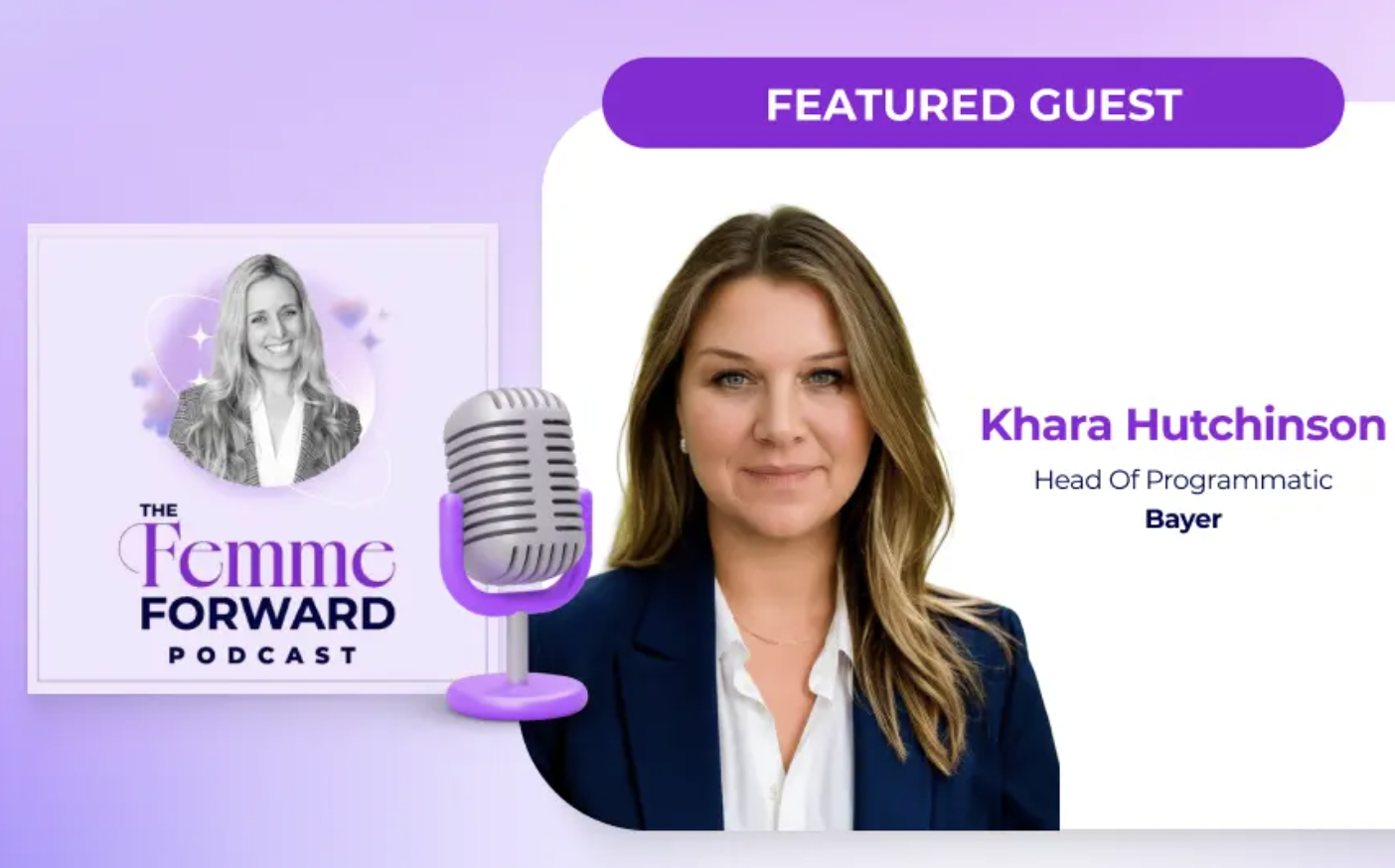
Amanda and Khara talk juggling work with motherhood, managing delegation, and being your most authentic self.
From the evolution of AI to how it can lessen the mental load, Sarah & Amanda dive into the future of an AI-assisted life.
Amanda sits down with Publicis' Sara Newton to dive into what it really takes to lead, grow, and thrive.
In the first episode, Dan Mouradian sits down with Caroline Levere, SVP, Performance Creator of New Engen.
Listen to host Amanda Glen Smith and Basis CMO Katie McAdams discuss the power of intuition in leadership.
Innovid's Claire Middleton, Juli Goldman & Prisma's Steph Watson dive into the current "eras" of their career trajectories.
Listen to Amanda Glen Smitha and Unilever's Rachelle Schuimer discuss their careers.